Molly’s Pregnancy and Difficult Breech Birth
The Drover's WifeMolly’s pregnancy and difficult breech birth expose how an ordinary hope for a child can become a life-threatening crisis when care is distant and the mother is isolated. The birth ends with a stillborn daughter and leaves Molly unwell; its immediate aftermath also binds her to Yadaka, the injured Aboriginal man who helps her, in circumstances that neither can safely treat as ordinary.
Late Pregnancy and Maternal Hope
At about eight months pregnant, Molly struggles with the physical demands of washing clothes at the river. She sits back to relieve her aching back, then turns from the work to quiet Danny, Joe Junior, and Henry James, who have been arguing while bathing in the shallows. The scene places pregnancy inside the daily labor of caring for her children, rather than apart from it: even as her body makes routine work harder, she remains responsible for managing the household’s needs and the children’s quarrels.
The following morning, Molly finds a rare interval of calm in a hidden hot spring. Floating in the water, she feels briefly released from worry and weight. She hopes the bath and the climb home will bring on labor that day, and looks forward to the new child as a gift for herself and her children. She secretly wishes for a daughter who could be a sister and playmate for Delphi. That hope is shaped by her own childhood without a mother: Molly wants her children to receive the affection she lacked and to know they were loved, even if anything should happen to her.
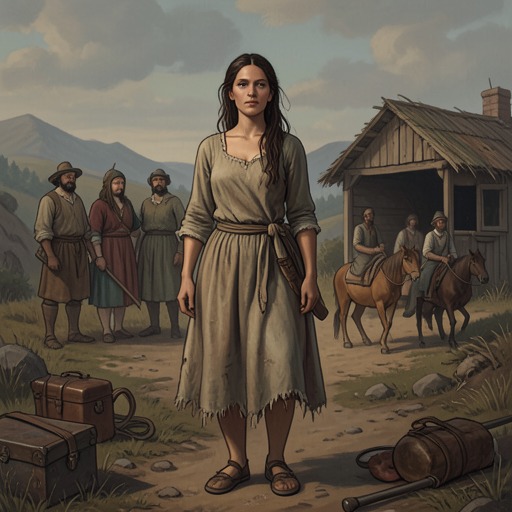
The contrast between this deliberate preparation and what follows gives the birth its particular force. Molly sets out refreshed, dressed in ochre-red, and carrying her shotgun; the walk is meant to help labor begin. Instead, when she reaches home, she finds an injured stranger lying outside. Her first contraction arrives at the same time as this unexpected encounter, and she has to reckon with labor while deciding what to do about a man whose identity and intentions she does not yet know.
Labor Without Safe Assistance
The encounter sharply restricts Molly’s choices. When the man rises with an axe, her fear is heightened by the pains and by concern for her children. He then makes clear that he means no harm, but Molly remains aware of the racial danger surrounding contact between them. As labor intensifies, she recognizes that the baby is presenting feet first. Although the man offers help, she fears the consequences of a white woman allowing a Black man to assist with the delivery and knocks him unconscious with the shotgun.
Molly’s action is not a simple rejection of aid. It occurs under acute pressure, when the birth is already going wrong and she sees no safe way to accept his help. Once she can no longer manage alone, she calls for assistance. The man wakes, observes the situation, and takes up the shotgun and a dropped bullet while Molly continues in labor. Her fear that he might shoot her remains present, but the immediate need to deliver the child has overtaken the earlier question of whether she can trust him.
The delivery ends with Molly’s daughter stillborn. The loss overturns the hope she had carried from the spring: the anticipated sister for Delphi and new member of the family is not able to live. The man helps Molly bury the baby. He expresses sympathy, while Molly insists that she owes him nothing. Their different responses do not erase the practical fact that she has depended on his help at a moment of extreme vulnerability.
Illness, Trust, and Mutual Need
The birth leaves Molly visibly unwell. She sweats, sways, and breathes uneasily, and she must also decide whether the stranger can remain near her home. She fears that he may go to town for the reward and bring troopers to her doorstep. His presence, she knows, could expose both of them to danger; at the same time, after the difficult birth, she needs help, and Danny alone cannot do everything required.
The man explains his situation in terms of the injustice of being treated as a criminal for existing while Black. Molly recognizes the conditions he describes: Aboriginal people in the district are blamed, arrested, imprisoned, or driven away, while whites have unofficial permission to shoot them on sight. This knowledge gives their encounter a political dimension without making their positions identical. Molly is a vulnerable woman in labor, and he is an injured fugitive facing racialized violence; each has reason to fear the other, and neither has the protection of reliable institutions.
Molly ultimately frees him from his iron collar by striking its hinge with an axe. Her decision follows his assistance with burying the stillborn child and his help during her labor, but it is also a practical calculation: the collar could implicate them both if anyone arrived, and she needs help while recovering. She sets a limit on the arrangement, telling him he may stay briefly to fell a tree before he must leave. He asks for two nights, until the full moon, so he can travel. The exchange shows trust beginning not as an uncomplicated bond but as a negotiated response to shared danger and need.
Consequences and Narrative Significance
Molly’s late pregnancy and difficult birth connect private grief to the wider pressures shaping the novel. Her wish to provide the children with the love she lacked stands beside a loss she cannot prevent; her body’s need for care meets isolation, danger, and the absence of dependable medical support. The stillbirth is not treated as an abstract symbol: it changes Molly’s immediate capacity to care for her family and helps determine whether she will shelter a wounded man whom the authorities would pursue.
The consequences extend beyond the birth itself. Later, when Nate Clintoff considers sending troopers to check on Molly, he is told that it would take two days for them to reach her, and that responsibility for her welfare would then be considered over. That delay underscores the distance between official oversight and actual care. It also places the earlier episode in a larger pattern: Molly’s needs are recognized only within limited, conditional systems, while racial suspicion and the threat of child removal continue to shape the lives of her family and Yadaka.
The episode’s movement from the spring’s quiet promise to labor, loss, and an uneasy alliance makes reproduction a source of both hope and exposure. Molly wants many children partly because she knows the emptiness of growing up without maternal love; the difficult birth forces her to confront how little control a mother may have over survival, even as she continues to make decisions for the children who depend on her. The daughter’s death and Molly’s illness thus deepen the stakes of her later choices without reducing them to a single explanation.