Ngarigo clan (2241dc28)
The Drover's WifeThe Ngarigo clan is an Indigenous community with ancient ties to the high country, represented in the novel as a people whose knowledge of Country, obligations to kin, and cultural continuity survive amid colonial dispossession. Its relationship to the Johnson family becomes crucial when Molly and her children face racial persecution and the threat of separation: the clan offers not merely refuge, but a community in which the family can learn who they are and carry inherited practices forward.
Country, Knowledge, and Early Encounters
The clan’s connection to its country reaches back to the beginning of time. Before settlers established themselves in the high country, Ngarigo people knew its tracks and terrain through generations of belonging. In the early 1820s, Charles Edwards and the other white men who came seeking grazing land befriended local people and learned from them. King Jimmy, the name troopers used for the Ngarigo elder, showed the newcomers hidden tracks that an untrained eye could not see. The exchange was unequal in its consequences: settler access to Indigenous knowledge helped make the country more legible to those who would claim and alter it.
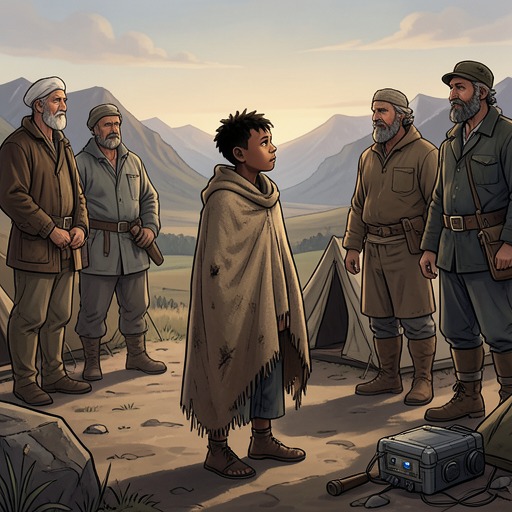
The first encounters are presented through contrasting ways of interpreting difference. The Ngarigo had heard stories about pale-skinned people from other nations who gathered for the bogong moth celebrations. Some had initially imagined them as lost relatives returning from the clouds, but those accounts had changed into warnings that dealings with newcomers required caution. When King Jimmy saw the settlers, their skin, clothing, hair, eyes, and bodies struck him as unfamiliar. His curiosity did not mean that the Ngarigo were ignorant of their own authority or customs: he considered the newcomers from within Ngarigo standards, while recognizing that it was not his role to impose those standards on another people.
That initial curiosity unfolds against the accelerating loss of Ngarigo land and freedom. More settlers arrive, fence the country, and drive Aboriginal people from their homelands. Seasonal movement, once a way of life, becomes dangerous; survival increasingly depends on remaining out of sight. The settlers’ asserted right to shoot Aboriginal people on sight and their stated aim of dispersing them turn territorial expansion into an organized threat. Charles Edwards participates in district meetings about developing the outpost of Cresthill, arguing that a town could prosper along the stock route if Aboriginal people were dispersed. The plan receives approval and is applied rapidly, making the clan’s dispossession part of the region’s development rather than an accidental consequence of it.
Exile, Kinship, and Refuge
The clan’s importance also emerges through the separation of individuals from their people. Yadaka, taken far from his home in Far North Queensland, longs to return to his mother’s country and his clan. Even after receiving shelter and learning to read and write in the household of Father Matthews, he remains drawn toward home. At twenty-five, he escapes and travels north through the mountain ranges. He encounters other clans moving in the same direction and, conscious of the risks of approaching people outside his own tribe, follows at a distance before reaching a gathering of nations, tribes, and clans. There he approaches the hosting people, explains his plight, and receives the elders’ attention. The gathering offers a glimpse of collective life persisting across displacement and distance.
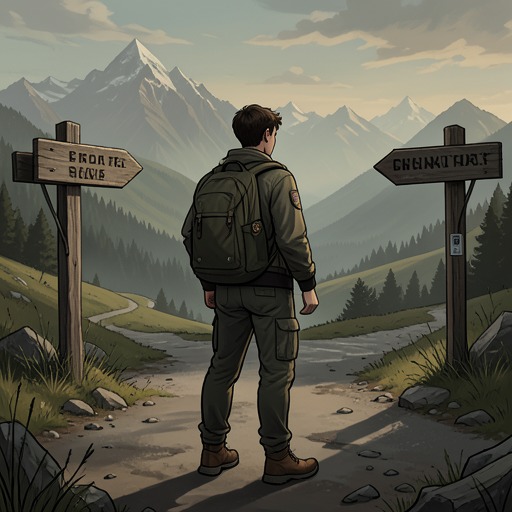
Later, Yadaka’s knowledge of the mountains becomes a practical route back toward community for Molly and her children. He tells Molly where he will shelter for winter, north-east of her home and two and a half days’ walk away, and gives her landmarks to follow: the Great Waterhole, a circular bald patch, and three large boulders resembling emu eggs. Beyond them, he says, are food, blankets, and shelter, and, in spring, people—her people. His directions turn the landscape into more than a route through difficult country: they connect survival to a social world and a possible return to kinship.
The need for that refuge is sharpened by the danger Molly faces as a woman, a mother, and someone marked by Aboriginal ancestry. After a stillbirth, she worries that helping Yadaka could bring troopers to her property if he seeks the reward offered for him. Yadaka understands the danger attached to his own position and says that his only crime is existing while black. Molly recognizes the treatment he describes: Aboriginal people in the district have been imprisoned, moved on, or left vulnerable to unofficial permission for lethal violence. His request to remain and work for her is thus made within a society that threatens both of them, though through different forms of racial and gendered vulnerability.
The threat becomes immediate when Miss Shirley calls Molly’s children octaroons and pleads for their removal. Judge Eisenmangher signs an authorization for the children to be taken, ostensibly for their safety. Danny later tells Molly what has happened, and the word recalls an earlier episode from Molly’s childhood: Miss Shirley had discussed sending her away because of her mixed ancestry, using a racial classification to justify separation. Molly understands that the same logic now endangers her children. The official language of help cannot erase the consequence: a state-backed order would sever children from their mother and family.
Return to Community and Cultural Continuity
When Molly decides to flee, Yadaka’s directions give her a way to act before the removal order can divide the family. Danny repeats the route to the cave, and Molly conceals the children beneath a horse blanket in the sulky. The escape is not represented as a guaranteed rescue; the conditions ahead are likely to be difficult. Its possibility rests instead on the prospect of shelter and collective care, where the children may remain together and learn about their identity within an extended family. The clan’s significance lies in this alternative to colonial authority: belonging is grounded in kinship and Country, not in official permission.
The novel’s later account of the Johnson family shows cultural transmission continuing across generations. Danny and his brothers undergo the final stages of men’s business in the high country with their Ngarigo family. Their uncle Bulbarai passes on the ceremony in haste because he knows that modern ways are invading and undermining practices the Ngarigo regard as essential to survival. The brothers value this inheritance and stand up for their culture and countrymen. Their participation makes the clan not simply a place where the children once found refuge, but an active community through which knowledge and responsibility are carried forward.
The Story of the Bullock demonstrates how the clan can receive an individual family’s history and make it part of collective memory. Danny tells the story to the Ngarigo, who incorporate it into their established practices of mimicry and dance, developing it with song and movement. The performance honors Molly’s bravery and recognizes her plight; for Danny and his siblings, it also brings their mother into the family clan. The story therefore works in two directions: it preserves the Johnsons’ memory of Molly while allowing the clan to share in that memory on its own cultural terms.
In a later generation, the story is retold in a simpler form by Danny’s children, who act out its central events. This domestic version differs from the performance with paint, singing, and traditional instruments, but it continues the act of transmission. Through the clan’s acceptance of the story and the family’s retelling, remembrance becomes a cultural practice rather than a private recollection alone. The Ngarigo clan stands at the meeting point of the novel’s losses and continuities: its country has been targeted by settlement, its people have been forced into concealment and movement, yet its kinship networks and practices make a future imaginable beyond the settler order.