Racialized threat of child removal
The Drover's WifeThe racialized threat of child removal is the danger that colonial officials will use the children’s mixed Aboriginal ancestry to separate them from Molly Johnson. Its force lies in the collision between intimate family knowledge and bureaucratic classification: Miss Shirley calls the children “octaroons,” Judge Eisenmangher authorizes their removal “For their safety,” and Molly recognizes that the official language of protection conceals a familiar threat to family continuity. When the order reaches her, she binds the adults who secured it, burns the paper, and escapes with her children rather than submit to its terms.
Classification as a Removal Mechanism
Miss Shirley introduces the children’s ancestry as evidence of danger, not as a connection deserving recognition or care. After asserting that Black Mary was Charles Edwards’s daughter and suggesting that Molly is sheltering a wanted man, she calls the children “Octaroon” and pleads with Judge Eisenmangher to help them. The appeal frames removal as an urgent benevolent intervention, while the racial label makes the children legible to authority as a group to be taken from their mother.
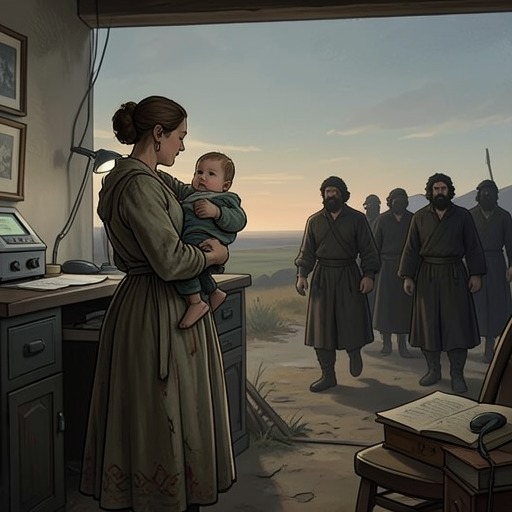
The judge turns that claim into an enforceable decision. He signs a letter authorizing the children’s removal “For their safety,” folds it, and hands it to Miss Shirley. The formal wording matters: the separation is not presented as punishment but as protection, although Molly and the children have neither chosen it nor been shown to need it. Danny sees the authorization and is frightened, unable to understand where the children would be sent or why anyone would take them from a mother who loves them and cares for them.
Molly Recognizes the Pattern
The threat becomes clear when Danny returns to Molly and tells her that Miss Shirley called the children “octaroons.” The word triggers Molly’s memory of a conversation she heard when she was eight, during time spent with Miss Shirley. In that earlier conversation, another woman proposed sending Molly away to a home because she was mixed-blood and claimed she needed to be cleansed of what was described as inherited “filth.” The remembered discussion had treated her father’s account of her ancestry as a reason to remove her from his care and keep her uninformed.
Molly now understands that the label applied to her children can serve the same purpose. What once threatened her as a child has returned as an official danger to the next generation: a category imposed from outside the family can make separation appear administratively justified. The story connects that childhood memory to Yadaka’s account of Molly’s ancestry, presenting the past as the explanation for why the children’s classification is so consequential in the present.
Escape and Destruction of the Order
Molly’s response is practical and immediate. She goes to the McGuinnesses’ home and church, where she ties up Miss Shirley and Father McGuinness. Furniture is scattered and a vase has been broken in the struggle, but Molly leaves both alive. She confronts Miss Shirley over presuming to know what is best for her children, then gathers blankets and food for the journey.
The signed paper is the instrument that makes removal possible, so Molly destroys it directly. She throws it into the fire, where the words describing the children as “octaroons,” declaring removal necessary, and granting permission are consumed along with Judge Eisenmangher’s signature. The destruction does not erase the power behind the order, but it prevents Molly from treating the document as an uncontested decision she must obey.
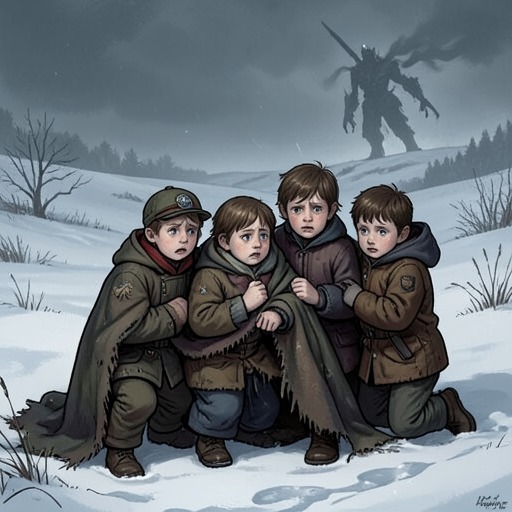
In the backyard, the children wait in a wagon. Molly gives them blankets and food and sees their fear after they have been woken by the disturbance. Danny had already hurried them to dress and gather their bedding. Molly gathers the younger children close, tracing each face; the narration raises, without resolving, whether she is looking for their Ngarigo features. She then leaves with them, carrying the danger from the courthouse into a flight intended to keep the family together.
Colonial Context and Narrative Significance
The removal order belongs to a wider climate in which racialized judgments shape the family’s safety. When Molly fears that a reward-seeker may bring troopers to her property, she describes Aboriginal people as having been arrested, imprisoned, or “dispersed,” and notes that white people have unofficial permission to shoot them on sight. Against this background, an official claim to protect mixed-heritage children is not neutral: the people who classify them also possess the power to displace them, while the family’s own account carries little institutional authority.
The threat intersects with other vulnerabilities rather than replacing them. Molly is a mother responsible for her children, a woman exposed to violence, and a person whose Aboriginal ancestry has been concealed and denied. The children’s classification gives that ancestry an immediate legal consequence, while the protection offered by officials is framed as separation from their mother. In the later account of Molly’s case, Nate recalls that Miss Shirley declared Molly’s mixed-blood heritage in court and that an all-male jury heard the Crown describe her actions through the language of generational hatred and alleged influence by Yadaka. The court’s treatment of Molly shows how racial interpretation can follow the family beyond the threatened removal itself.
The episode’s significance also resonates with the author’s account of cultural loss. The author describes seeking to understand their Aboriginality and the history lost when government policy prevented their mother and grandparents from passing on culture. That reflection does not collapse the novel’s 1893 events into a later policy history; it clarifies why the story treats threatened separation and disrupted transmission as material harms. In the plot, Molly’s escape is a refusal to let an imposed racial category decide who may raise her children or what family and cultural ties they may inherit.