The development of Everton
The Drover's WifeThe development of Everton is a gradual process through which an alpine outpost becomes a planned town and stock-selling centre. Its beginnings are tied to district plans for removing Aboriginal people from their homelands; its later construction is financed by Edwards family wealth and organized around the pastoral economy. The same expansion that promises roads, services, and commerce thus carries a history of dispossession, while a worldwide economic depression puts the town’s unfinished future at risk.
Plans for a Settler Town
As more white settlers arrived, the Ngarigo and neighbouring nations faced fences, loss of land, and pressure to leave their homelands. The account describes a colonial policy that treated Aboriginal people as obstacles to settlement and sanctioned shooting them on sight or driving them away. Seasonal movement and residence on Country became increasingly dangerous, while survival depended on staying out of view. This political climate forms the background to Everton’s proposed development: the town is not introduced as a neutral project, but as part of a colonial effort to clear and claim land.
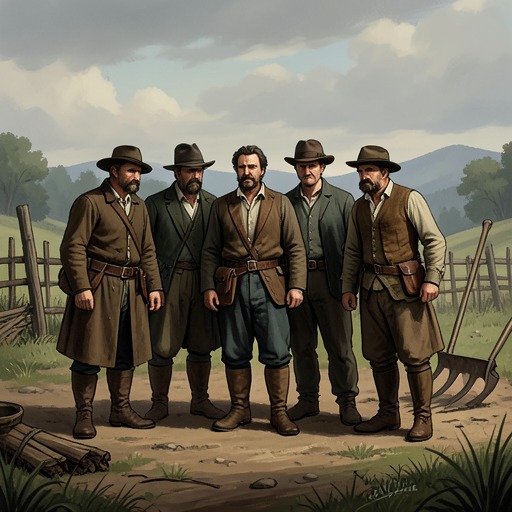
Charles Edwards regularly attended district meetings and often led their discussions. He proposed that the outpost of Cresthill be marked for possible development, reasoning that the existing stock route and the arrival of more farmers and settlers could support a town. He also offered to help finance it, while insisting that Aboriginal people had to be managed. The proposed town therefore joins commercial calculation to coercive administration: the stock route offers a practical foundation for growth, and the proposed removal of Aboriginal people is treated by the meeting as a condition of that growth.
The district consensus was approved and implemented with haste. The account links the decision to the clans of the alpine country, whose ability to remain on and move through their homelands was directly threatened by the settlement programme. Everton’s development consequently begins before construction: it is first an agreement among settler authorities about who will control the district and who will be displaced.
From Outpost to Stock Centre
Over the years, the Edwards family accumulated wealth and contributed to local development, gradually putting the plans for a town into effect. The settlement was initially to be named Evelyn, after the Edwards family matriarch. By then, the area had become a busy stock route and a destination for sales, drawing people from elsewhere on sale days. The need for a town was presented as practical, but turning that need into a functioning settlement took time.
Pastoral trade supplied the economic logic for the new centre. The district’s livestock routes brought drovers and stock to sale, and the town’s proposed infrastructure was designed in part to serve that traffic. The account also shows how the business of moving sheep shaped household circumstances beyond the town site: the economic depression severely affected sheep production, while droving and the sale of stock remained vital sources of work and income. Everton’s development is therefore connected to a wider chain of labour, livestock, and markets rather than to construction alone.
The Edwards Fortune and the Depression
Two generations after Black Mary stood on the Edwards property, the family’s commercial position was carried forward by Frank Neville Charles Edwards, the only son of Eleanor and Neville. Frank’s business, which sold local wool in Melbourne to overseas markets, had increased the family fortune and helped keep other farmers and drovers employed and financed. But the worldwide economic depression was weakening that business. The Edwards family was also in difficulty, and the downturn affected the final stage of Everton’s development.
The town’s name changed during this later phase. The all-male council preferred Everton to Evelyn, considering the masculine name more appropriate. The local community, anxious that Frank might move his money elsewhere, wanted him to remain in the district; he and his wife, Ulla, had at one point discussed leaving. The naming decision and the dependence on Frank’s investment show that the emerging town was shaped both by local political authority and by the fortunes of a single family’s enterprise.
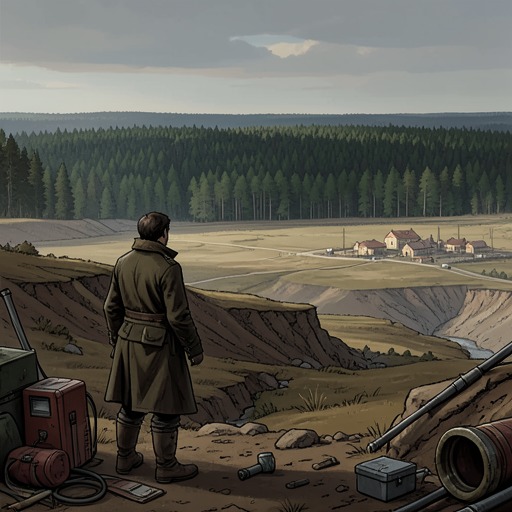
Frank had been educated in Melbourne and was more drawn to city life than to the high country, but he had promised his dying grandfather that he would complete Everton and keep the property prospering as he saw fit. Despite harder conditions, the property was doing reasonably well in the depression, and construction finally began. The account marks a new phase through the arrival of infrastructure: plans were drawn, work started, and draught horses hauled telegraph poles along the newly formed street. The growing settlement added a jailhouse, former troopers’ quarters, the Stanlow Inn, a general store, and a postal house.
The Saleyards and the Meaning of Expansion
Among Frank’s priorities was the construction of new saleyards, which he wanted named before the district’s next major sale day. He planned a public celebration for the first of the thousands of sheep expected to pass through the gates of the Charles Edwards Saleyards. The project gathers the town’s economic purpose into a single piece of infrastructure: the stock route that had helped justify development now led into a purpose-built market bearing the Edwards name.
Everton’s progress is thus marked by both practical provision and concentrated power. Telegraph poles, a store, a postal house, and an inn make the settlement more connected and serviceable; the jailhouse and former troopers’ quarters also embody the authority through which the district was governed. Meanwhile, the proposed town arose amid the dispossession of the Ngarigo and neighbouring nations, whose access to Country and seasonal movement were being restricted. The development of Everton presents settlement not simply as a sequence of buildings, but as a reorganization of land, commerce, and authority whose costs fell unequally.
The depression leaves that process incomplete and uncertain. Frank’s wool business loses traction, local people fear the loss of his investment, and the final stage of construction remains exposed to wider economic conditions. Yet work proceeds, and the planned saleyards promise to connect the town more firmly to the pastoral trade. Everton’s emergence is therefore both an achievement of settler infrastructure and a record of the political and economic pressures that made such expansion possible.