Yadaka’s flight from the authorities
The Drover's WifeYadaka’s flight from the authorities is both a physical escape and an attempt to return to his mother’s country after a life shaped by colonial custody and persecution. The episode follows him across the mountain range as he tries to reach Guugu Yimithirr country, despite the danger of his injuries and the pursuit of the authorities. Its immediate encounter with Frank Edwards turns the journey into a confrontation, but Yadaka survives the meeting and continues north. The flight also establishes the conditions under which he later seeks shelter from Molly Johnson: he is not simply a stranger passing through the bush, but a wanted man trying to make his way home.
Escape and the journey home
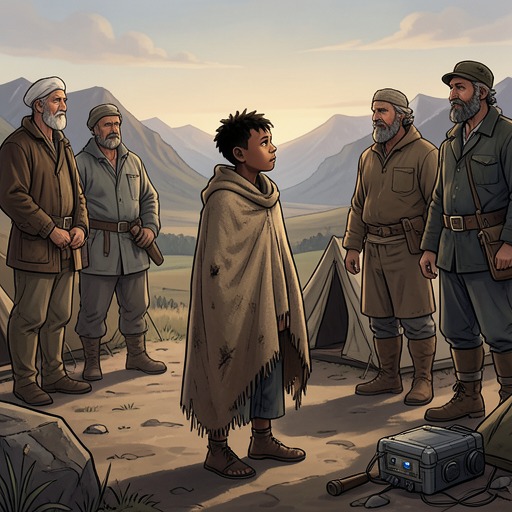
Yadaka is introduced on the track to Everton after days of running. He is about forty, athletic, and seriously injured; an iron collar around his neck and the convict clothing marked Government property indicate that he has been in custody. The collar is more than a sign of his immediate predicament: it makes visible the authority from which he is fleeing and the injuries and deprivation that have accompanied his escape.
His intended route gives the flight a destination beyond mere survival. He hopes to clear the southern range, join the Great Dividing Range, and head north toward Guugu Yimithirr country, his mother’s country. The journey will take months, but he is willing to undertake it to return to Country. His determination to go home persists even though he is exhausted, has not eaten for days, and carries a wound that has become dangerously infected.
The encounter with Frank Edwards
Before Yadaka can steady himself on the track, Frank Edwards arrives on horseback. Frank sees the collar, Yadaka’s blackness, and his bloodstained clothes, then accuses him of murdering Frank’s wife and children and reaches for his pistol. Yadaka responds by throwing debris into Frank’s face and retreating into the snow gums. The encounter is brief, but it places Yadaka in immediate danger from a man who treats his appearance and custody status as evidence of guilt.
Frank follows cautiously, then becomes disoriented when a crow flies up behind him. He turns with his pistol raised but does not shoot the bird. He retreats to his horse, repeats his accusation, and rides toward Everton. Yadaka is left alive and temporarily beyond Frank’s reach. The episode does not resolve Frank’s charge; it records the accusation as part of the pursuit Yadaka must escape while continuing his journey.
Colonial persecution and the cost of flight
Once Frank has gone, Yadaka reflects on a life without peace and on the danger Aboriginal people face in a society that hunts, massacres, imprisons, and disperses them. He has learned to read by examining diaries and journals left open by the people he has worked for and by officials who arrested him. Those records reveal the gap between colonial authority’s written accounts and the life of the man it has confined: Yadaka can read what his captors do not expect him to understand.
His brief despair grows from the immediate cost of escape and from the wider racial violence surrounding it. Pain, hunger, fear, and the possibility that his next breath might be his last lead him to close his eyes and address death. The crow’s call then draws his attention back. He recognizes the bird as his grandmother and answers that he is coming. The moment connects his flight to ancestral kinship, without removing the physical danger he faces.
Flight’s continuation and narrative consequence
Yadaka gets up and runs again, putting distance between himself and Frank’s encounter because stopping could mean death. The flight is therefore not a completed escape but a continuing effort: home remains months away, and his infected wound and exhaustion remain unresolved. His movement north brings him into the narrative circumstances of his later meeting with Molly Johnson, where he exchanges kindness for shelter and tells her a truth that helps her imagine another path.
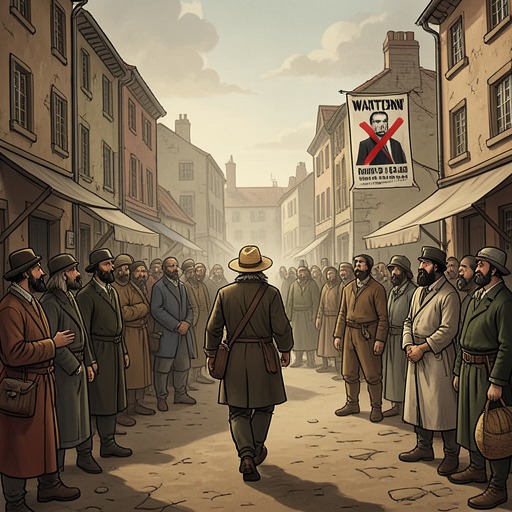
The episode also gives context to the danger that follows him into Molly’s life. In Everton, Yadaka is described as a wanted Aboriginal man, and officials consider checking on Molly while planning how a search party might move through the area. Later, Miss Shirley invokes the accusation that Molly is harbouring a wanted murderer when she urges the removal of Molly’s children; the judge authorizes their removal, and Molly ultimately burns the order. Thus the pursuit reaches beyond Yadaka himself: the presumption of his guilt becomes part of the pressure placed on Molly and her family.
Significance
The flight binds a personal journey home to the novel’s account of colonial power. Yadaka is at once a fugitive from custody and a person seeking return to his mother’s country, while the iron collar and the authorities’ pursuit expose how the law structures his movement and danger. His encounter with Frank shows how quickly suspicion becomes a threat of armed violence; his reflection on written records reveals that he can also read and understand the systems that record, arrest, and condemn him.
The crow’s appearance offers a different relation to the journey: where the colonial world marks Yadaka as a prisoner and fugitive, he recognizes an ancestral connection. His decision to rise and keep moving does not erase the hardship or promise a safe return. It sustains the journey that carries him toward Molly, making his flight a turning point in the connected stories of his survival and her family’s exposure to racialized authority.