
Molly and Louisa’s Unequal but Growing Connection
The Drover's WifeThis thread traces Louisa’s effort to reach Molly across class and experience, and Molly’s gradual insistence that real solidarity must begin by listening to her story.
increasing Bearing strength in each event
 decreasing
Bearing strength in each eventdecreasingA Meeting at the Shanty
A Meeting at the Shanty
Hospitality Under Suspicion
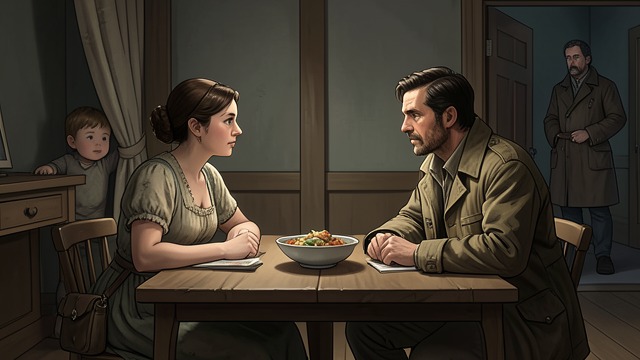
Louisa meets Molly while traveling with Nate and Samuel, and the contrast between their lives is immediate. Molly is guarded and poor, accustomed to treating visitors as potential threats; Louisa is road-weary but still carries the confidence of a woman who has seldom been left entirely without support.
Despite her reluctance, Molly offers the travelers food and shelter. Louisa responds with gratitude and notices Molly’s children, while Molly watches the ease and affection between Louisa, Nate, and Samuel with a mixture of curiosity and envy.
A Practical Beginning
Louisa asks whether they might meet again, hoping for companionship and a connection with women in the district. Molly makes no promise of friendship; instead, she asks for help getting her children to town.
Their first bond is therefore practical rather than intimate. Louisa’s generosity matters, but Molly remains wary of the assumptions behind well-meaning attention from someone whose circumstances are so different from hers.
A Farewell of Unequal Knowledge

A Farewell of Unequal Knowledge
Women Sharing a Road
Louisa travels with Molly’s children and listens as they talk about London, the journey, and the world beyond the shanty. Molly watches the family leave with relief, but also with the ache of sending her daughter and younger sons away for the birth.
Louisa speaks enthusiastically about women’s groups and her mother’s movement. Molly understands that the enthusiasm is sincere, yet her own experiences have taught her that good intentions do not make hardship easy to understand.
A Connection Still Waiting
The exchange leaves both women with an opening rather than a settled friendship. Louisa wants to return and help; Molly is not ready to disclose the truth of her marriage or the risks surrounding her home.
Their different expectations become important later. Louisa approaches Molly as someone she hopes to support, while Molly will eventually require her to listen without presuming that support alone gives her access to Molly’s life.
A Writer Meets Her Subject
A Writer Meets Her Subject
An Offer of Help
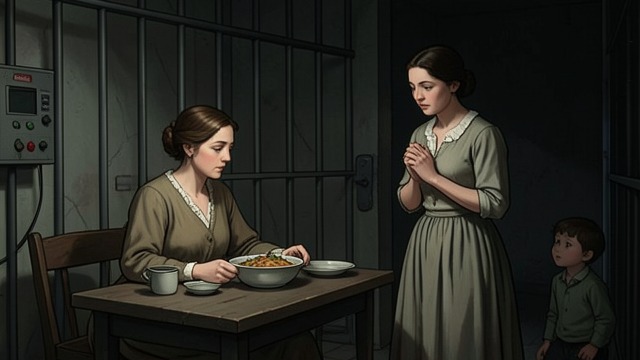
Louisa visits Molly in the jailhouse with food and clothes, hoping to comfort her and persuade her to identify where her children have gone. She wants to help Molly survive the case, believing that Daniel’s testimony might make a difference.
Molly refuses to reveal the children’s location. Her silence is not a rejection of care; she fears that bringing them into the legal process could expose them to harm and leave them without protection.
The Limits of Speaking For Others
When Louisa explains that she is trying to give women a voice, Molly answers that she can hear only Louisa. The criticism forces Louisa to recognize that a writer’s advocacy can reproduce the very imbalance it hopes to correct if the subject’s own experience is crowded out.
Louisa accepts the rebuke and changes her approach. She asks to hear Molly’s story, not to supply its meaning in advance, and Molly gives her first name and agrees to speak for her children’s sake.
A Shared Public Witness
A Shared Public Witness
Solidarity at a Cost
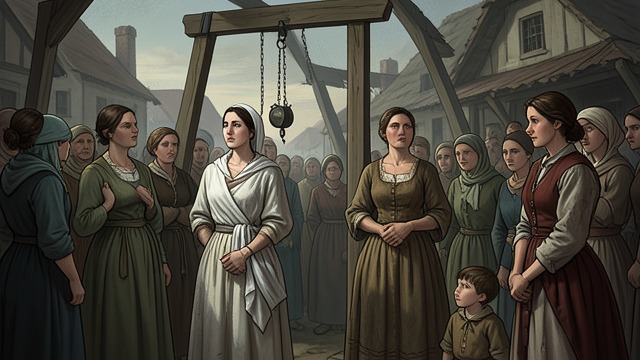
At the gallows, Louisa stands with other women and wears a protest calling for battered wives to be heard and women’s rights to be legislated. Her protest does not free Molly, but it makes visible the injustice that the proceedings have treated as private or irrelevant.
Molly and Louisa exchange a subtle nod. Their connection is no longer only a hopeful wish for friendship; it has become an act of public witness, built on Louisa’s willingness to acknowledge what she did not understand at first.
The Voice That Remains
Molly has chosen to tell Louisa her story so her children will know her love and will not be defined by her alleged crimes. Louisa’s writing becomes the means through which that account can reach beyond the jailhouse.
The women remain divided by circumstance, but their final exchange grants each a measure of recognition. Louisa cannot save Molly, yet she can refuse to let Molly’s experience disappear into a one-sided official account.
A Story Outliving Its Tellings
A Story Outliving Its Tellings
A Written Record
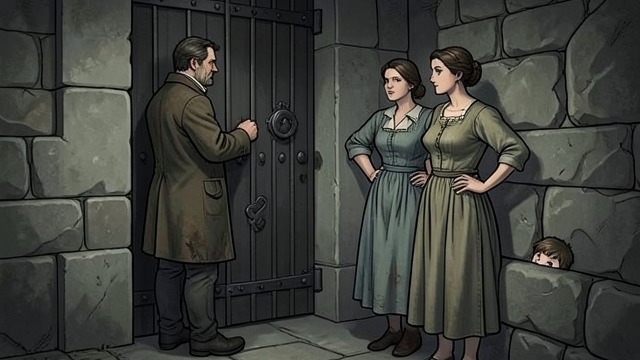
Years after Molly’s death, Daniel keeps a newspaper account by Louisa that bears Molly’s story. The article does not undo the verdict or restore their family, but it offers a record distinct from the courtroom’s version of her life.
Daniel calls Molly’s actions survival. His judgment reflects the intimate knowledge Louisa sought when she finally listened: Molly’s choices were made in a world where violence and the threat of child removal narrowed the available paths.
Recognition Across Time
Louisa’s account and Daniel’s memory work together to preserve Molly’s humanity. One comes from the woman who asked to hear her; the other from the son who lived the story and continues to pass it on.
Their connection reaches beyond the brief encounter between the women. It becomes a collaboration in remembrance, ensuring that public advocacy does not replace Molly’s voice but helps it endure.
Late May 1893, when the Clintoffs arrive at Molly’s home
The day Molly sends her three younger children toward Everton
The days following Molly’s arrest and before the execution
The morning of Molly’s execution
1913, when Daniel reads Louisa’s account of Molly
