
The Edwards Family’s Founding Legacy
The Drover's WifeThis thread traces how the Edwards family’s settlement, wealth, and public standing grow from colonial violence, then become vulnerable when the family is murdered and Everton’s future is questioned.
increasing Bearing strength in each event
 decreasing
Bearing strength in each eventdecreasingArrival in the High Country
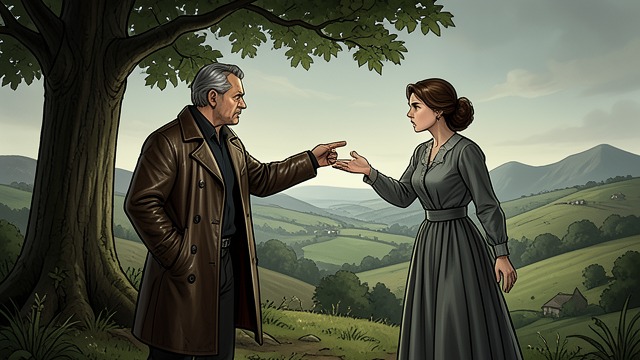
A Settlement Built on Misreading
Meeting the Ngarigo
Charles Edwards leads a party into the high country seeking grazing land. The newcomers rely on the Ngarigo for knowledge of hidden tracks and local conditions, while each group interprets the other’s gestures through different assumptions about land and agreement.
The Ngarigo understand their country through enduring relationships and songlines; the settlers see pasture to be used for livestock. Their apparent agreement conceals incompatible expectations.
The cost of occupation
The settlers’ presence changes from inquiry to appropriation as they take land, build fences, and seek to displace the people who already belong there. Charles Edwards becomes a leading voice in plans to develop the outpost of Cresthill into a town, arguing that Aboriginal people must be “managed.”
The family’s later reputation as founders and benefactors grows from this early foundation. The narrative makes clear that prosperity and civic development are not separate from the dispossession that enables them.
Waraganj’s Hidden Lineage

Kinship Concealed in a Household
A child survives
Waraganj is born to a Ngarigo woman after Charles Edwards assaults her. Her survival through the night under a snow gum earns her a name, but she and her mother are later pushed to the margins of their community because of her mixed ancestry.
When Waraganj leaves her clan rather than accept a promised marriage, she reaches the Edwards homestead seeking shelter. Eleanor Markland welcomes her as a worker and teaches her English, without knowing that Waraganj is her husband’s half-sister.
Recognition and rejection
Evelyn Edwards notices Waraganj’s resemblance to the family and begins to suspect the truth. When Charles returns, he recognizes the likeness to his daughter Bertha and understands that the young woman may be his child.
Instead of acknowledging her, Charles expels her from the property. The episode exposes the distance between the Edwards family’s public standing and the private consequences of its patriarch’s violence, while leaving Waraganj to survive under the identity of Black Mary.
Wealth and a New Town
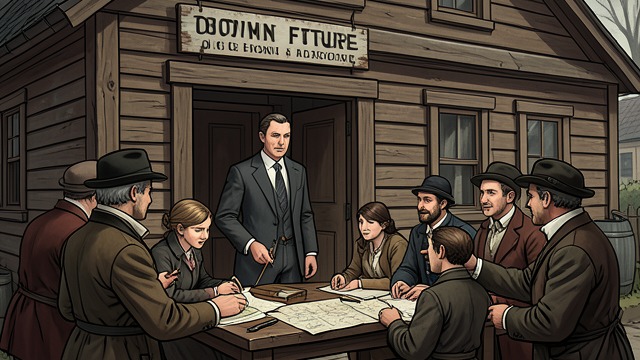
From Pastoral Station to Everton
Family fortunes
Over generations, the Edwards family’s holdings and influence expand. Frank Neville Charles Edwards develops a wool-selling business that links local producers to overseas markets, making him central to the livelihoods of other farmers and drovers.
The family’s wealth supports the development of Everton, whose name is preferred by the town’s male council over the earlier proposed name honoring Evelyn Edwards. Buildings, a post office, an inn, a jail, and saleyards begin to turn an outpost into a town.
Prosperity under pressure
The economic depression weakens the wool trade and makes the Edwards’ continued investment uncertain. Local residents fear that if Frank takes his money elsewhere, the town may fail before its development is complete.
The family’s civic role is therefore practical as well as symbolic: Everton’s future depends on private wealth created through pastoral expansion. That dependence makes the town’s celebration of its founding family fragile, even before disaster strikes.
The Murdered Household
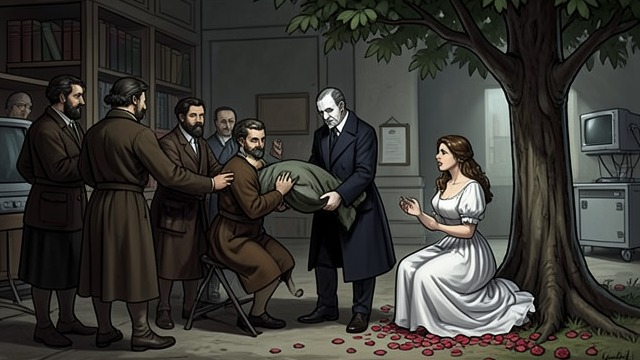
The Family’s End
A home left silent
Frank Edwards returns from Melbourne expecting his wife and children to greet him. Instead, he finds Ulla Edwards and their three children arranged beneath a tree, dead for days, with rose petals scattered around them.
The scene destroys the household’s apparent order. Frank’s grief is immediate, while the unusual arrangement and the deaths of the Chinese household workers deepen the horror of the crime.
A town’s new burden
The murders become the first major test of the new authority in Everton. Nathanael Clintoff must investigate without a settled force or much local experience, while Frank tells Father McGuinness that he intends to leave for Melbourne because the property holds nothing for him now.
The killings threaten more than one family: they put the future of the town and its dependence on the Edwards’ money at risk. The case also becomes the pretext for the pursuit that will eventually reach Molly Johnson’s isolated home.
Founding Memory After Loss
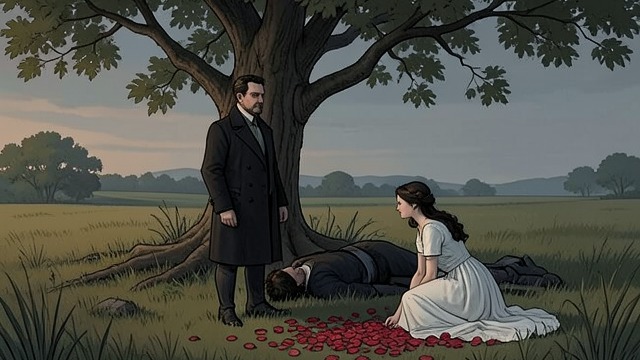
A Legacy Under Strain
Public mourning and private retreat
The bodies of the Edwards household and their Chinese workers are carried away while Frank grieves and contemplates leaving the district. Father McGuinness urges him to remember the family property and its importance to the town, but grief outranks civic duty for Frank.
The authority of the founding family cannot protect its members, and its accumulated wealth cannot erase the violence embedded in the district’s past.
The town’s uncertain future
The murders force Everton’s officials to treat law and order as more than a ceremonial promise. Nate’s investigation is shaped by pressure to find a culprit and preserve the community’s confidence, while local leaders fear losing the Edwards’ support.
The family’s story thus shifts from a tale of expansion to a warning about the cost of the order that expansion claims to establish. Its history continues to affect who is believed, protected, or pursued in the high country.
The 1820s, during the Edwards family’s first settlement
The years after Waraganj’s birth and before Charles Edwards returns home
The generations between the 1820s settlement and June 1893
About one week before Yadaka reaches the southern range, 1893
The days after the Edwards murders in June 1893
