Australian Natives Association
The Drover's WifeThe Australian Natives Association is a white men’s organization whose use of “natives” refers not to Aboriginal people but to the first generation of Australian-born white men. This distinction overturns Louisa Clintoff’s initial hope that the Association represents Aboriginal interests: its name makes an expansive claim to belonging while excluding the people whose prior connection to the country the word might suggest.
Name and Membership
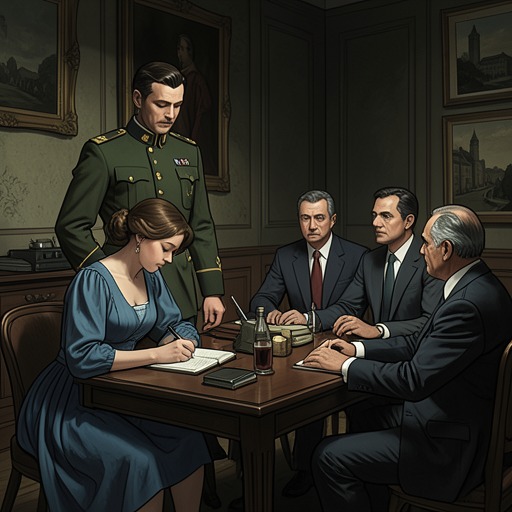
At a formal ball, Louisa meets Rosa, the wife of Senator Turner, and learns that Turner belongs to the Australian Natives Association. Louisa, already interested in Aboriginal customs and the hardships Aboriginal people face under colonization, is initially pleased by what she takes to be support for their advancement. The conversation instead reveals that the Association is for white men only and that “natives” means Australian-born white men of the first generation.
The correction is a small exchange with a large consequence for Louisa’s understanding. She recognizes that the organization’s language does not include Aboriginal people, and decides she will not raise their circumstances with Turner. The Association’s identity is therefore conveyed through the gap between the apparent meaning of its name and the narrower racial category its members apply to it.
Civic Reform and Exclusion
The encounter takes place amid discussion of political reform and economic hardship. Rosa describes Turner as committed to strict economy and balanced budgets, including raising taxes and cutting spending, and says that these policies are restoring confidence among Victorians, though their effect on the depression remains uncertain. Louisa and Rosa also discuss women’s suffrage: Rosa speaks of progress in South Australia and hopes Turner will support women’s voting rights if elected in Victoria.
That reform-minded setting makes the Association’s restriction especially revealing. Louisa’s enthusiasm briefly links Turner’s political standing to the advancement of Aboriginal people, but the membership rule separates that possibility from the organization itself. The novel thus distinguishes advocacy for one group’s political rights from inclusion of Aboriginal people in the body claiming the name of Australian nativeness.
Colonial Belonging and Narrative Significance
The Association’s racial definition resonates with the novel’s wider account of settler expansion. The Edwards family, among the early white settlers in the alpine country, learn about the land from the Ngarigo people; as more settlers arrive, Indigenous communities lose land and freedom of movement, and face violence and displacement. Against that history, an organization that reserves “native” identity for white Australian-born men represents more than a narrow membership rule: it shows how settler institutions can claim national belonging while marginalizing Aboriginal presence.
The novel gives the contrast a personal as well as political dimension through Yadaka’s account of being treated as criminal simply for existing as a Black man, and through the threat that racial classification will be used to remove Molly Johnson’s children. The Australian Natives Association is not shown carrying out those actions; rather, its exclusionary definition belongs to the same narrative landscape in which colonial authority determines who counts as a legitimate member of the community. Its significance lies in that contradiction between the language of nativeness and the exclusion of Indigenous people.