Eleanor Markland
The Drover's WifeEleanor Markland is Neville Edwards’s wife and a member of the Edwards family, one of the early white settler families in the Snowy Mountains high country. Her defining action occurs when Waraganj, separated from her people and uncertain where she has arrived, reaches the Edwards homestead: Eleanor asks that she be allowed to stay and makes her own responsibility for the young woman clear. That welcome does not erase the household’s racial hierarchy, but it distinguishes Eleanor from those who regard Waraganj as a source of trouble.## Identity and the Edwards Household The Edwards family came to the high country in the early 1820s in search of more grazing land. Charles Edwards led the journey with his youngest son, Neville, and five other men, leaving his mother, Evelyn, his wife, Florence, and Eleanor, his daughter-in-law, at home with hired help. Eleanor had married Neville, Charles’s only surviving son. The family’s other children had died or moved away: Charles Junior died in a farming accident, Phillip died shortly after birth, Mavis died after her marriage, and Bertha settled in Perth. Neville and Eleanor therefore represented the household’s remaining immediate prospect of a younger generation.
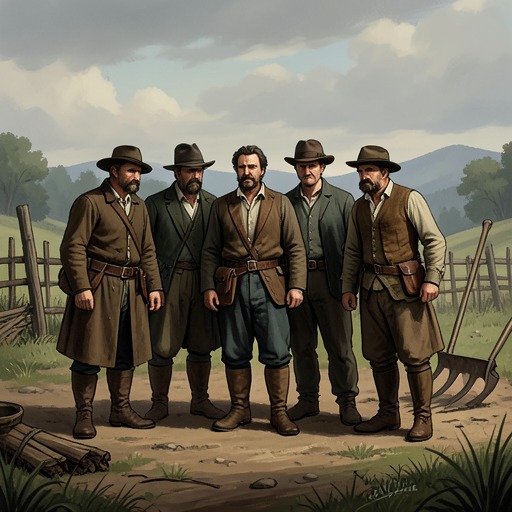
The family’s position as respected early settlers rested on a history of expansion into Ngarigo Country. The Edwards men had initially befriended local Ngarigo people and learned the high country’s hidden tracks from them, including from King Jimmy, an elder whose knowledge made settler movement through the area possible. That history gives the household’s later encounter with Waraganj an added significance: the family’s apparent status and security exist within a landscape to which the Ngarigo have ancient connections, while Waraganj herself belongs to the Indigenous kinship history the settlers do not recognize.
Waraganj’s Arrival
Waraganj arrives at the red-brick homestead in a state of confusion and distress. The scale and unfamiliar materials of the building make it seem to her like a place in another world. She does not speak English, so her first attempts to explain what has happened rely on signs, movement, and drawings in the dirt. Florence initially mistakes her for a white woman in trouble, then recognizes her as a person of mixed ancestry. Evelyn gives Eleanor a pistol before Eleanor approaches, an action that places caution and fear alongside the possibility of welcome.
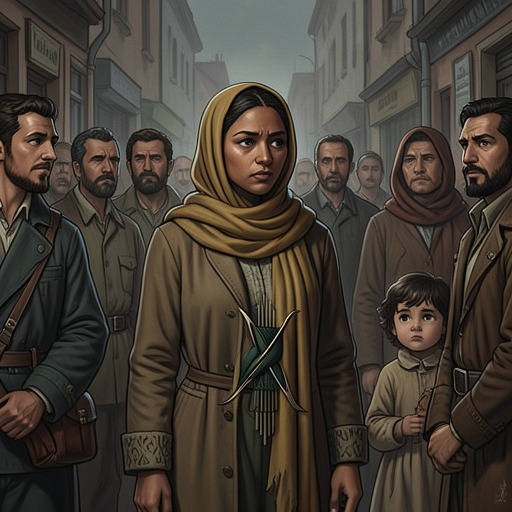
Once Waraganj communicates that she fears unfair treatment by her new husband and the other women because of her fair skin and ancestry, Eleanor is appalled. She asks Evelyn for permission to let Waraganj stay as a housemaid. Evelyn dismisses the young woman as someone who will bring trouble, but Eleanor stands her ground and accepts responsibility for her. The disagreement establishes a real limit to Eleanor’s authority: she can advocate for Waraganj, but the older matriarch’s disapproval remains part of the household’s conditions.
Kinship and the Name Mary
Eleanor’s response has an irony that Waraganj cannot initially know. The women at the homestead are her own white relatives: Evelyn is her grandmother, Florence is her stepmother, and Eleanor is her sister-in-law, married to her half-brother Neville. Waraganj is Charles Edwards’s daughter. The family connection is present before anyone at the homestead explains it to her; what she first encounters as possible shelter is also her father’s family, though its members do not recognize her as kin.
Eleanor teaches Waraganj English, and the household calls her Mary, a name to which she becomes accustomed. She settles in among the women who run the property and understands that hard work and obedience will bring care. Eleanor is keen to educate her in white ways, an impulse that combines practical assistance with an assumption that the settler household’s customs should shape her. Evelyn tolerates Waraganj chiefly for Eleanor’s sake, while Florence is often away. Eleanor’s welcome therefore offers shelter and instruction, but it takes place within a household where care is entangled with unequal authority and the renaming of an Indigenous woman.
The Later Child-Removal Crisis
The novel’s later events echo the tension between personal care and racialized judgments of belonging. Miss Shirley identifies Black Mary’s father as Charles Edwards and uses the possibility that Molly Johnson is sheltering Yadaka to argue that Molly’s children need urgent intervention. She labels the children octaroons, and Judge Eisenmangher signs an authorization for their removal. The paper turns racial classification into official power: the children’s identity is used not to affirm family ties but to justify breaking them.
When Danny returns to Molly and tells her that Miss Shirley called the children octaroons, Molly recognizes the term from an earlier episode in her own childhood. She understands that the label threatens to have her children taken from her. Eleanor’s earlier decision to speak up for Waraganj provides a distinct, individual instance of intervention within the Edwards household; it does not prevent the coercive system that later acts against Molly’s family. At the end of the confrontation, Molly binds Miss Shirley and Father McGuinness, takes the authorization paper, and throws it into the fire before leaving with her children. The burning order makes the stakes of classification concrete: a document signed in the language of safety could have separated children from their mother.
Narrative Significance
Eleanor is chiefly defined by a brief but consequential act of advocacy. When Waraganj has no shared language with the household and is viewed with suspicion, Eleanor listens through gesture and drawing, grasps her predicament, and insists that she be given a place. Her intervention is not an escape from the colonial hierarchy: Waraganj is employed as a housemaid, renamed Mary, and expected to learn the settlers’ language and customs. The scene holds compassion and paternalism together rather than treating welcome as equality.
That complexity matters alongside the novel’s later portrayal of threatened child removal. Miss Shirley and Judge Eisenmangher use racial categories and official authority to present separation as protection; Molly sees the danger in that claim and destroys the signed order. Eleanor’s story offers a contrast at the scale of a household, not a resolution of the wider injustice. The novel also frames the history of cultural loss as a matter of family memory: in the author’s note, the author describes seeking knowledge of Aboriginality through historical research and elders’ oral stories after government policy had interrupted the transmission of culture from her mother and grandparents. Within this larger concern with kinship, memory, and identity, Eleanor’s welcome is significant but limited: it opens a place for Waraganj in the family home without undoing the structures that have obscured their relationship.