Frank Neville Charles Edwards
The Drover's WifeFrank Neville Charles Edwards is the only son of Eleanor and Neville Edwards and the eventual heir who takes the family’s commercial success to new heights. A Melbourne-educated businessman rather than a conventional farmer, he builds a wool-export enterprise that supports the district and helps finance Everton’s development. His return to the family property, however, brings him face to face with the murder of his wife and children and places him at the centre of the suspicion directed at Yadaka.
Identity and family background
Frank is the only son of Eleanor and Neville Edwards; after Charles Edwards had waited for an heir, Frank eventually fulfilled that role in the family. His connection to Melbourne began in childhood, when he often accompanied his grandmother Florence Edwards on her frequent trips there. He later received his education in the city and graduated with honours in business. These experiences help explain why he is more attached to city life than to the high country, even as family obligation draws him back to the property.
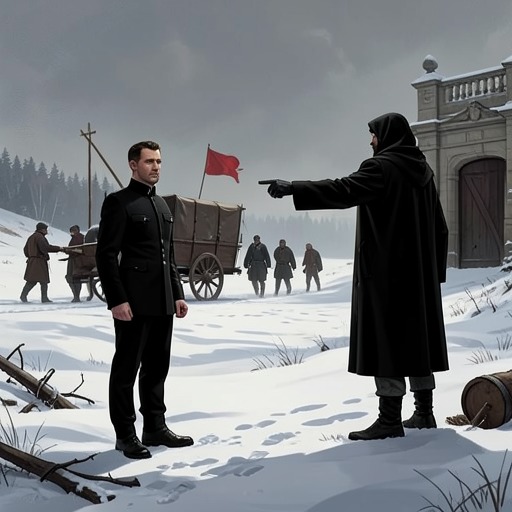
Frank is around forty-five when he returns home from Melbourne. He is slight in build, wears a pinstripe business suit and his much-loved Staker hat, and does not look like the usual image of a farmer. His appearance makes visible the difference between his commercial, urban experience and the pastoral world on which his family’s wealth rests.
Business and Everton’s development
Frank’s business depends on selling local wool in Melbourne to overseas markets. The enterprise brings money back to the community, keeps other farmers and drovers working, and extends the Edwards family fortune. It is also vulnerable to the worldwide economic depression: as wool commerce loses traction, the Edwardses face difficulty alongside the rest of the district. Local people fear Frank may take his money elsewhere; he and his wife, Ulla Edwards, have at one stage discussed leaving.
Despite that possibility, Frank honours a promise made to his dying grandfather: he will finish Everton and return to the property, keeping it prosperous in whatever way he considers necessary. The town’s name itself reflects the Edwards family’s influence. The original proposal was to name it Evelyn, after the clan’s matriarch, but the all-male council prefers the more masculine name Everton. Frank’s commercial interests and inherited obligation thus converge in the town’s expansion, while the naming decision also shows how public authority is exercised locally.
By the time Frank comes home, development is finally underway. Everton already has a jailhouse, former troopers’ quarters, the Stanlow Inn, a general store and a postal house; construction adds telegraph poles along the newly formed street. Frank makes the new saleyards a priority, hoping to have them built and named before the next major sale day. He intends their opening to mark the arrival of thousands of sheep at the Charles Edwards Saleyards. The plans connect his family’s wool business to the infrastructure and sale-day economy of the town.
Return to the Edwards property
Frank rides home from Melbourne with a small supply of provisions tied to his saddle. He expects his children to run down the track to greet him, as they usually do, but finds the house unnaturally quiet. Seeing his wife and three children sitting beneath a tree, he initially takes the scene for a picnic and calls to them. There is no answer. As he approaches, Ulla topples over, and he understands that his family is dead.
The bodies have been arranged around the base of a tree, with rose petals scattered nearby. The small basket Leaellynn had used to collect petals lies on the ground. The family appears to have been dead for about a week, though the crisp mountain air has limited decomposition. Frank drops to his knees in grief, then runs to his horse and races to town for help. The careful arrangement of the scene and the family’s long absence make the discovery both a personal catastrophe and an urgent matter for the district.
Encounter with Yadaka
On the track toward Everton, Frank encounters Yadaka, who has been travelling for days while carrying an infected wound and trying to reach Guugu Yimithirr Country. Yadaka is exhausted and in pain when Frank’s horse comes to a halt before him. Frank takes in the signs of Yadaka’s appearance: he is Aboriginal, wears an iron collar and has bloodstained clothes. Concluding that this is the man responsible for his family’s deaths, Frank draws his pistol and accuses him.
Yadaka throws debris into Frank’s face and escapes into a stand of young snow gums. Frank dismounts and follows cautiously, but a crow takes flight behind him. He turns with his pistol raised, then stops when he sees the bird; disoriented, he backs away, mounts his horse and rides toward Everton. He continues to accuse Yadaka as he leaves, but the encounter does not establish Yadaka’s guilt. Instead, it shows how Frank’s immediate grief and the visible signs of Yadaka’s racialized fugitive status combine to turn suspicion into certainty.
Narrative significance
Frank’s story links the Edwards family’s economic power to the construction of Everton. Wool moves from local pastoral labour through Melbourne markets to overseas buyers; the resulting wealth supports the town’s infrastructure and Frank’s effort to complete his grandfather’s plans. Yet the same frontier setting is governed by the dispossession of Aboriginal people. Charles Edwards had advocated the development of a town on the condition that Aboriginal people be managed, while the district’s policy treated them as people who could be shot or driven from their Country. Frank’s encounter with Yadaka unfolds within that established climate of coercion and racial suspicion.
The murder scene sharply reverses Frank’s public role as entrepreneur and town-builder. He returns as a man expecting a family welcome and instead becomes a bereaved witness whose accusation helps direct attention toward a wounded, collared Aboriginal man. His grief is immediate and real, but his conclusion is made before the evidence is established. The contrast makes his homecoming a hinge between the Edwards family’s commercial story and the novel’s wider account of frontier violence, suspicion and unequal exposure to law.