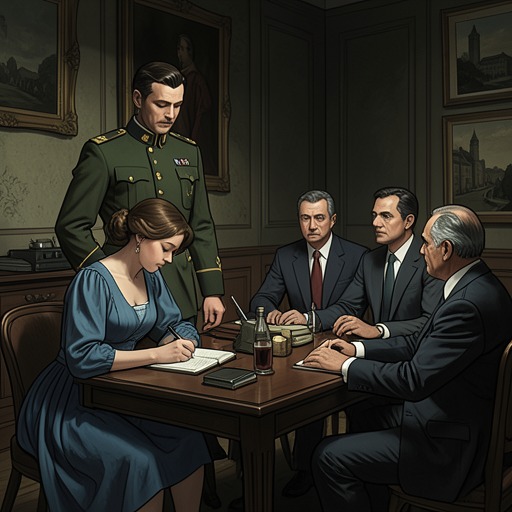
Hannah Lorens
The Drover's WifeHannah Lorens, the older sister of Eleanor Markland, is absent from the novel’s present-day action but remains a decisive presence in Eleanor’s memories and commitments. Her childhood separation from her family, emotional distance, and early death in an unsafe marriage become the personal history behind Eleanor’s work for battered women and her plan to give women a public voice through a journal.
Identity and Family Background
Hannah was three years older than Eleanor. Their mother, Dawn Lorens, and father, Reginald Lorens, were frequently away as their publishing business and political interests expanded. When Eleanor was about eight, Clara became her carer and close friend; Clara also reminded Eleanor that she had an older sister. Hannah, meanwhile, was living with her mother’s older, unmarried sister, Bethany.
Bethany had taken a strong interest in Hannah from birth, nursing and bathing her and taking her on walks in the park. Their closeness was so apparent that people sometimes assumed Hannah was Bethany’s daughter. When Hannah was five, Dawn sent her to stay with Bethany for what was supposed to be a holiday. The stay kept being extended. Bethany’s letters described Hannah as a treasured companion and a great help, but the family did not ask Hannah what she wanted or how she understood the arrangement.
Separation and Estrangement
Although Hannah returned for holidays, Eleanor remembers her as distant from the rest of the family. Eleanor cannot tell whether that distance arose from resentment at the separation or from adopting Bethany’s reclusive habits. Their mother had already observed that Hannah resembled Bethany, even before Hannah went to live with her; in retrospect, Eleanor connects that likeness to the isolation that marked Hannah’s later life.
The account leaves Hannah’s own view of her childhood largely unheard. Eleanor’s recollection instead emphasizes the adults’ decisions: a holiday that became an extended separation, letters that described Hannah’s usefulness and companionship, and family visits that did not restore closeness. Eleanor’s later regret rests in part on recognizing that no one made Hannah’s wishes central to those choices.
Marriage and Early Death
Hannah died young, and Eleanor associates her death with the reclusive habits that had grown out of Hannah’s life with Bethany. She also regrets failing to build a closer bond as the sisters grew older, believing that greater trust might have allowed Hannah to share what was happening in her marriage. Eleanor specifically looks back on the possibility that she might have recognized that Hannah was not safe with her husband.
The narrative does not supply further details about Hannah’s marriage or death. Its emphasis is on what Eleanor believes she failed to do: reach across their distance, invite confidence, and notice danger. Hannah’s fate thus reaches beyond private grief, becoming a warning about the costs of silence around violence against women.
Legacy and Narrative Significance
Hannah’s death deepens the commitment already present in the Lorens family’s work on women’s issues. Dawn had written about women’s education, economic and legal rights, and temperance; after Hannah died at the hands of her husband, she and Eleanor became more active in bringing the danger faced by battered wives into public view. Eleanor understands that activism as an answer to a loss that cannot be undone: the family cannot change what happened to Hannah, but it can try to prevent similar harm to others.
That purpose informs Eleanor’s decision to establish a monthly women’s journal after the family travels to Australia. She intends the publication to address women’s lives broadly, including education, childbirth, economics, and battered-wife syndrome, alongside poetry, knitting, and cooking. She plans to call it The Dawn, after her mother and after the middle name of her sister, making Hannah’s family memory part of the journal’s public identity.
Hannah’s story also gives Eleanor’s reforming ambition a personal limit and a source of urgency. Eleanor hopes to give other women a voice, but her remembrance of her sister is marked by the recognition that she could not secure Hannah’s safety or recover the closeness they lost. The novel uses that unresolved regret to connect family separation with a wider commitment to listening to women and challenging the silence surrounding domestic violence.