El Niño
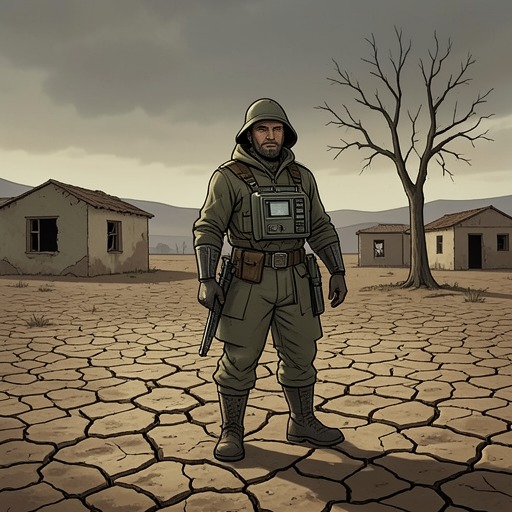
The DryEl Niño names the weather pattern associated with the drought that bears down on Kiewarra, making climate more than a distant forecast: it shapes farm decisions, intensifies economic strain, and raises the danger of bushfire. The novel contrasts the pattern’s uncertain pronunciation on Melbourne television with the increasingly undeniable conditions on the ground.
Naming the weather
The drought is already part of daily life when the narrative introduces the weather pattern. In Melbourne, forecasters refer to El Niño in their evening broadcasts and describe the conditions as officially the worst in a century. Their presentation is distant and measured, delivered from air-conditioned studios; in Kiewarra, the drought is immediate. Even the name seems slightly remote: its pronunciation is never quite settled, while its effects need no explanation to the people living through them.
Drought in Kiewarra
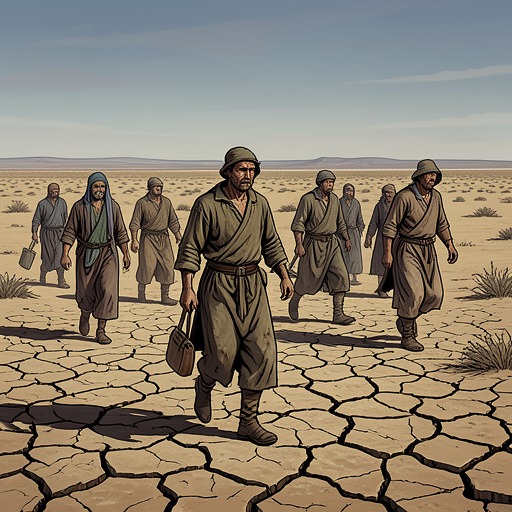
That summer, a lack of rain means a lack of feed. Farmers face difficult choices as livestock grow thin, and the prolonged dry conditions alter the ordinary work of farming. The drought is thus registered not only as a weather statistic but as pressure on animals, livelihoods, and decisions made under scarcity.
The gap between official reporting and local experience becomes especially clear when Aaron Falk realizes that the river near the farms has run dry. He had assumed freshwater still flowed there; the dead animals in the fields make that assumption untenable. The dry riverbed gives the drought a concrete geography: water scarcity is not an abstraction but a changed feature of the landscape Falk must reckon with.
Economic and civic pressure
At Luke Hadler’s funeral, a farmer connects the century-scale weather crisis with proposed cuts to subsidies. His complaint places farm survival within a larger political argument: those trying to produce food, he says, are facing both extreme conditions and the possibility of reduced assistance. The scene shows how drought becomes a public grievance as well as a private hardship, though it does not establish that the weather alone explains the town’s other financial conflicts.
Escalating fire danger
The dry conditions also form the backdrop to the novel’s mounting bushfire risk. A roadside warning is at severe when Falk arrives; later, as he drives toward the cemetery outside town, the alert has risen to extreme and the wind is up. These changes turn drought into an immediate emergency, not merely a season of agricultural loss.
Falk recalls a neighbor losing a home and forty sheep after a controlled burn escaped. In the later fire threat, that memory informs his assessment of the danger: the land is drier than before, and the community, its school, homes, and livestock lie in the threatened area. El Niño’s significance in the novel therefore rests in the chain of consequences around it. A named weather pattern is translated into depleted water and feed, disputes over support, and a landscape in which fire can imperil the whole town.