Gretchen Schoner
The DryGretchen Schoner is an old friend of Aaron Falk whose reunion with him brings the novel’s buried personal history into a Kiewarra shaken by drought and the deaths of Luke Hadler and his family. A farmer trying to make a living from sheep, she speaks both as someone exposed to the town’s economic strain and as a friend who hopes Luke did not commit the killings but warns Falk to be careful.
Identity and Background
Gretchen appears first in Falk’s recollection of their younger selves. In an old image, he and Luke Hadler are long-limbed, acne-freckled teenagers standing with two girls: Luke’s arm around a slim, baby-blond girl, while Falk’s hand rests more tentatively near the shoulder of a dark-haired girl. The scene places Gretchen among the close-knit group’s shared past, with Luke as her teenage sweetheart and Falk as an old friend. Its contrast between youthful ease and Falk’s caution gives their history a visual outline without resolving what later changed between them.
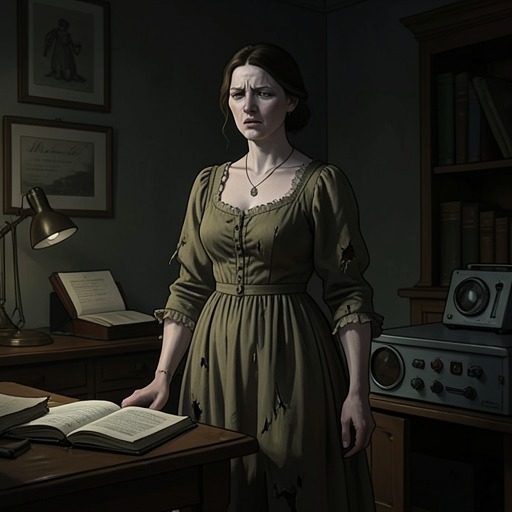
As an adult, Gretchen has returned to farming. She tells Falk that she bought Kellerman Farm a couple of years earlier and is trying to raise sheep there. Her matter-of-fact description carries a qualification: farming is what she does, but even that is something she is trying to manage. The detail situates her within the same rural economy that is under pressure across Kiewarra, rather than presenting her only through her connection to Falk or Luke.
Reunion with Aaron Falk
When Gretchen greets Falk, she pulls him into a hug and presses her forehead against his shoulder. He rests his chin on her blond head, and they remain together, rocking gently for a long minute. The embrace is reciprocal and unhurried, a moment of familiarity between people whose shared history precedes Falk’s return. It distinguishes their reunion from a merely formal exchange of condolences, while the silence of the gesture leaves the history between them largely unspoken.
The scene also establishes the emotional register in which Gretchen speaks about Kiewarra: intimacy is present, but it does not make the town’s grief easy to articulate. Later, she gives the situation a stark assessment and taps a fingertip to her lips with the nervous energy associated with an ex-smoker. The small gesture accompanies her difficulty in finding adequate words, making visible the strain that her account describes.
Farming and the Town’s Crisis
Gretchen connects the Hadler family deaths to a pressure that was already accumulating. Money was a source of fear, and the drought had made ordinary life harder before the news about Luke and his family intensified the town’s distress. In her account, the deaths do not replace the drought as the community’s central hardship; they compound it. Economic insecurity and environmental strain form the background against which the loss becomes almost impossible for the residents to absorb.
She describes people as moving through their days in a dazed state, unsure what to do or say and watching one another for signs of who might be next to lose control. This is Gretchen’s perception of a community living under prolonged stress, not a claim that she knows what will happen. Her words convey how grief has altered ordinary social attention: neighbors monitor one another, and uncertainty about the next crisis displaces the confidence of everyday life. As a sheep farmer, she is herself part of the rural setting she describes, though the evidence does not specify the precise effect of the drought on her farm.
Luke Hadler and the Unresolved Case
Gretchen’s feelings about Luke’s guilt remain qualified. She tells Falk that she would like to know Luke did not kill his family, but immediately advises him to be careful. Her hope does not become a declaration of certainty, and her warning does not amount to an accusation. The distinction matters: Gretchen can grieve and wish for an exonerating answer without claiming to possess one.
Her response reflects the uncertainty surrounding the case as Falk returns to Kiewarra. The town’s distress, the deaths, and its watchfulness make investigation socially charged as well as factual. Gretchen offers Falk neither a solution nor a confident interpretation; instead, she identifies the atmosphere in which he will have to work and urges caution within it.
Narrative Significance
Gretchen links three strands of the story: Falk’s remembered adolescence, his present relationship with an old friend, and the rural community’s response to catastrophe. The youthful photograph fixes her within a foursome whose relationships belong to the past; the embrace shows that personal familiarity remains; her account of the drought and the Hadler deaths registers the conditions that now surround their reunion. Her measured uncertainty about Luke resists an easy division between loyalty and suspicion. Through her, Kiewarra’s crisis appears not as a single event in isolation, but as a loss arriving in a place already burdened by fear about money, water, and what might happen next.