Karen Hadler
The DryKaren Hadler’s murder is the personal tragedy at the center of the Hadler family’s story, but her final days also set the investigation on a new course. A careful accounts worker and mother, she recognized that money was missing from a school grant and that the farm might be failing. She tried to keep both worries contained: first by asking Scott Whitlam not to tell Luke Hadler about the farm’s condition, then by quietly preserving Aaron Falk’s number as a possible route to advice. After she was shot at her own front door, the small paper she had used as a bookmark became a clue to the financial crime behind the killing.
Identity and Family Life
Karen was Luke’s wife and the mother of Billy and Charlotte Hadler. At the funeral, her name appeared among the dead, spelled in flowers beneath a photograph of the family of four. The image belonged to the public record of the murders; the family home, when Aaron Falk later saw it, offered a more intimate and unsettling counterpart. Family photographs covered the walls, but the house had been cleaned after the killings, and the bedroom Falk entered remained recognizably lived in.
The bedroom’s details suggested a shared domestic life rather than an estranged couple living apart. Both sides of the bed appeared regularly used. On Karen’s bedside table were reading glasses, night cream, books, and a toy robot; on Luke’s side sat a phone charger and a dirty coffee cup decorated with a child’s hand-painted “Daddy.” Clothes for both were still in the wardrobe. These traces mattered to Falk because Luke had been suspected of killing his family, and the room did not support the idea that he had been sleeping separately from Karen in the days before their deaths.
The Farm’s Financial Crisis
Karen was known for precision in her work, which made her recent mistakes in the accounts conspicuous. In the final weeks before her death, she had seemed unusually stressed, distracted, and snappish. She went to Whitlam, the school principal, because the irregularities troubled her. Her initial concern was that she herself had made errors; after checking the records, she came to understand that the discrepancies were Whitlam’s, and that he had stolen money.
The financial discovery coincided with a separate fear about the Hadler farm. Karen told Whitlam that she thought the farm had six months left, perhaps less. Luke, she said, did not believe it was in such danger and remained sure that circumstances would improve. Karen worried about the farm’s prospects, but also about Luke’s response to hearing that she had discussed their troubles with someone in town. She apologized to Whitlam for being distracted and asked him not to tell Luke. Her effort to shield her husband from the conversation did not mean she had mistaken the situation: she had seen the warning signs in the accounts and understood that the family’s finances were under pressure.
Seeking Help and Leaving a Clue
Karen’s conversation with Whitlam did not bring the reassurance she had hoped for. After leaving his office, she went to the girls’ toilets, locked herself in a stall, and leaned her forehead against the door before allowing herself to cry. She had wanted Whitlam to look at the Crossley Educational Trust paperwork and explain the apparent problem away. Instead, she recognized that the missing money was real and that the accounting errors she had worried about were evidence of Whitlam’s deceit.
The discovery did not immediately translate into a report. Karen believed suspicion was not the same as certainty, while Luke’s view was more black and white. When she told him about the problem, he urged her at least to seek advice about obtaining proof. He gave her his phone and selected a contact: Aaron Falk, a friend working on financial matters with the federal police in Melbourne. Luke told her Falk was trustworthy and would help.
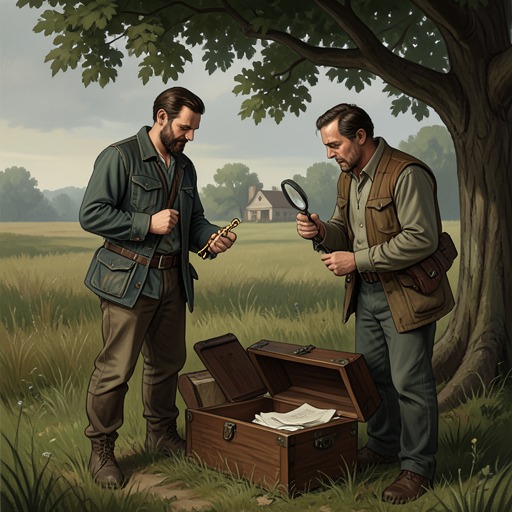
Karen did not call Falk at that moment. Instead, she took a library receipt that had been marking her place in a book, wrote a reminder on its reverse, and copied down Falk’s number while Luke watched. She tucked the receipt into the book so it would not be lost. The gesture was practical and discreet, but it left a fragile record of what she had intended to do. In the days before the murders, she had borrowed a crime novel from the library; four days before her death, she used its receipt as a bookmark. When Falk later found the slip, the word “Grant??” appeared above his own phone number. The receipt connected Karen’s financial concern to Falk, even though it did not by itself explain the connection.
Death and Significance to the Investigation
On the day of the murders, Karen cancelled a planned playdate for Billy at Whitlam’s home, saying the boy was under the weather. Whitlam and his wife accepted that explanation, noting that a mild illness had been circulating. The cancellation later became a detail in the investigators’ reconstruction of the family’s last day, though Whitlam treated it as a sad coincidence rather than a warning.
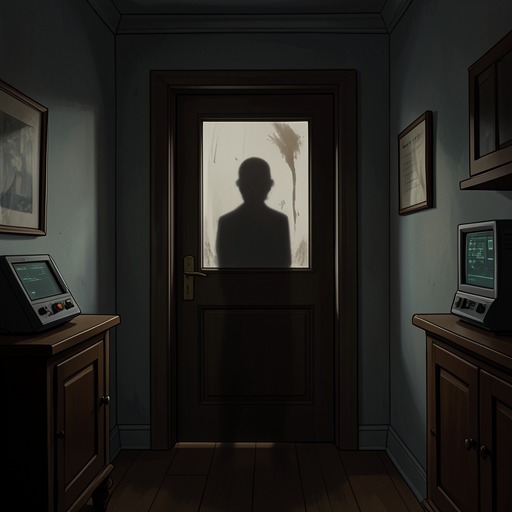
Karen was killed in the hallway when she answered the front door. At first, Falk tried to imagine Luke chasing her through their house. Greg Raco pointed to the position of her body and the open door: she had been answering it, not fleeing from her husband. The scene’s ordinary domestic action—responding to a visitor—thus became the point at which the assumption of a household pursuit gave way to a different account of the crime.
That account is revealed when Whitlam reaches the Hadler home carrying Luke’s shotgun. He presses the doorbell because he does not know the layout well enough to search for Karen. She opens the door, recognizes him, and begins to speak; Whitlam raises the gun and fires. He closes his eyes as he pulls the trigger. The killing exposes the danger created by Karen’s discovery of the stolen grant money and makes her earlier attempt to contact Falk more than a stray note. Her accounts, her request for secrecy, and the receipt in her book form a chain of evidence: Karen had found the theft, had sought a way to get help, and was killed before she could resolve the matter openly.