Kellerman Farm
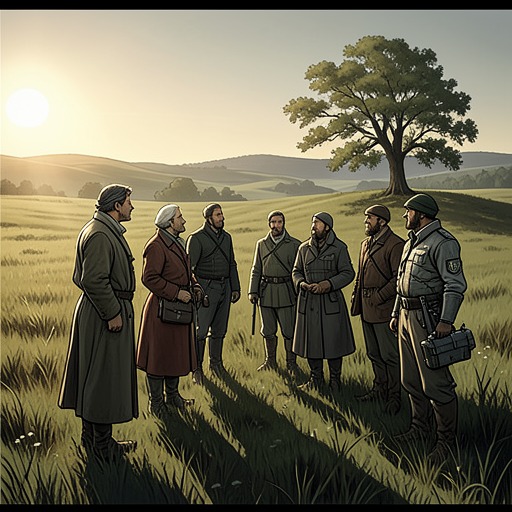
The DryKellerman Farm is the property Gretchen Schoner bought and made a home with her son, Lachie Schoner. Its expansiveness gives the farm a double character: open fields offer room to live and work, but the distance from other people intensifies the isolation that shapes Gretchen’s life. It also becomes a setting for a brief, restorative encounter between Gretchen and Aaron Falk.
Setting and Isolation
The farm lies across a vast rural property where being alone is not simply a matter of having few visitors. Gretchen explains that she can get neither reliable Internet nor consistent phone coverage, and says she did not learn of Luke Hadler’s death until the following morning. The delay makes the farm’s remoteness concrete: news that has transformed the town can take time to reach someone living on its outskirts.
Falk recognizes the force of that isolation through his own impression of the Hadlers’ farm. Although he prefers solitude, even a few hours with nothing around him but fields can leave him craving company. His response gives the landscape a social dimension: the open country does not merely separate properties but can make ordinary connection feel distant and uncertain.
A Place of Work and Routine
Kellerman Farm is also a working landscape. When Falk arrives, Gretchen is out shooting rabbits; she invites him to act as her spotter and retrieves ear guards and ammunition from her kit bag. The scene places their conversation within her practical routine rather than apart from it. She has an hour before she needs to collect Lachie from school, and the visit fits into that limited interval.
The ammunition offers a precise contrast with the Hadler investigation occupying Falk’s thoughts. Gretchen loads Winchester ammunition, while Falk automatically distinguishes it from the Remington ammunition found beside the Hadlers’ bodies. His immediate relief, followed by guilt at noticing the difference, shows how the case has entered even this ordinary farm activity. The property is not itself linked to the murders in these scenes; instead, it is a setting where Falk’s investigative vigilance follows him into an otherwise routine encounter.
Refuge and Narrative Significance
After leaving the cemetery, Falk phones Gretchen because he feels he needs to see a friendly face. He finds her at the farm, and she welcomes him before inviting him to join her in the field. The visit briefly shifts the farm’s meaning from isolation to companionship: its distance from town is real, but Gretchen makes room for Falk within her work and family schedule.
That welcome stands against the strained encounter Falk has just left behind. At the cemetery, Mal Deacon laughs over his daughter’s grave as Falk forces himself to walk away; at Kellerman Farm, Gretchen greets Falk and gives him a simple task to share. The change of setting does not resolve his distress, but it gives the scene a quieter counterpoint, grounded in company, routine, and the open fields that can otherwise make rural life feel cut off.