Kiewarra CCTV footage
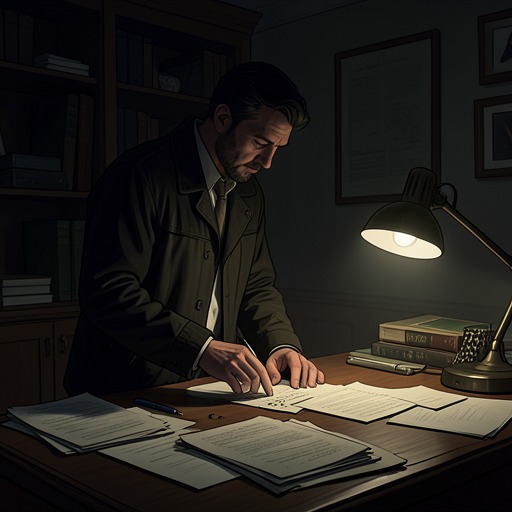
The DryKiewarra CCTV footage turns ordinary recordings into fragile evidence: cameras meant to watch school entrances and a pharmacy alley preserve fragments of the Hadler family’s final afternoon and place Jamie Sullivan near town shortly before the killings. The images are grainy, narrow in scope, and unable to establish what anyone was thinking or doing outside their frames. Their importance lies in that tension between what they show and what investigators need to know.
Sources and limitations
Scott Whitlam, principal of Kiewarra’s school, shows Aaron Falk and Greg Raco the school’s two camera views in his office on a Monday afternoon. One camera looks down from above the main entrance toward the steps; the other, mounted high over the staff parking lot, records a fuzzy row of cars. Whitlam explains that the school has no more cameras because it cannot afford them. The recording is also temporary: footage is usually deleted after a month, and this material remains available only because it has not yet been erased. Its survival gives the investigators a chance to examine Karen Hadler’s last day at work, but the limited angles and poor image quality leave interpretation uncertain.
A separate recording comes from a pharmacy camera aimed at a quiet back alley and the door to the pharmacy’s supply room. Constable Barnes has been searching this material while Falk and Raco investigate the Hadler killings. The camera captures little of the alley, and a vehicle passing through appears for less than a second. Yet the footage is retained long enough for Barnes to rewind it and slow it down. Together, the school and pharmacy recordings supply different kinds of evidence: the first allows the investigators to study a routine sequence over time; the second offers a brief, potentially significant glimpse of a driver.
Karen’s last afternoon at school
Falk and Raco ask Whitlam to locate Karen on her last day, although their inquiry is also directed at Grant Dow, whose associates have supported his alibi. On the staff-parking recording, a slim, bald man first crosses the frame, retrieves a bulky bag from a car trunk, and leaves. The investigators wait through more footage before Karen appears, pushing Charlotte in a stroller from the direction of the day-care facility. Billy follows a few steps behind, absorbed in a toy. Karen calls him back without speaking audibly on the silent recording, gathers both children into the car, secures them, and shuts the door.
Once the children are in the car, Karen straightens and stands still with one hand on the roof. Her head dips, and she makes two small movements near her face. Falk wonders whether she is crying and asks for the moment to be replayed. The image remains ambiguous: Raco thinks she may be crying, but acknowledges that she could just as easily be scratching her nose. The recording cannot settle the question. Karen lifts her head, appears to take a deep breath, gets into the driver’s seat, and leaves. Its timestamp establishes that she and Billy have less than eighty minutes to live.
The investigators continue through the silent footage. The receptionist leaves ten minutes after Karen, then the lot remains quiet for about forty minutes before teachers begin returning to their cars. The caretaker later retrieves his bag and drives away just after 4:30 p.m. Shortly after 7:00 p.m., Whitlam appears alone, walking slowly with his head down and shoulders slumped. The recording gives the investigators a sequence of departures and returns, not an explanation of what happened beyond the school grounds.
Repetition, scrutiny, and uncertainty
The images affect Falk not only as investigative material but as a view of a woman he knew only through the aftermath of her death. He studies Karen bending toward Billy and putting a hand on the boy’s shoulder, then cradling Charlotte as he watches her transfer the baby from the car seat to the stroller. He thinks of Karen as capable with children and finances and feels that he would have liked her. The recording cannot show her expression clearly, so Falk’s response rests on her gestures and the fragments of ordinary care the camera preserves.
He repeatedly rewinds the Thursday footage, searching for a sign that Karen noticed something or sensed danger. He considers whether she hesitates as she approaches the car or holds Billy’s hand more tightly, while recognizing that he may be reading too much into the image. His scrutiny cannot change the fixed sequence: he imagines Karen calling the number she had written on a receipt, but she does not. The footage makes the past newly visible without making it alterable; its repetitions expose the distance between watching a moment and being able to intervene in it.
Sullivan in the alley
As Falk considers ending the day, Barnes draws attention to the pharmacy recording. The timestamp reads 4:41 p.m. on Thursday, just over an hour before Karen and Billy are found dead. At first the alley appears empty. Then a four-wheel-drive vehicle flashes through the frame and is gone in less than a second. Barnes rewinds the clip and slows it down. Although the vehicle remains blurry and the angle is awkward, the driver’s face is clear enough for the investigators to identify Jamie Sullivan.
Falk and Raco go to the alley as the light fades. It is a narrow lane running parallel to Kiewarra’s main street, with businesses including a real-estate office, a hairdresser, a doctor’s office, and the pharmacy on one side, and makeshift parking areas on the other. It can be entered by car at either end and connects with roads leading east and west out of town. Falk recognizes that it could let a driver cross town without using the main road. The recording establishes Sullivan’s presence there; it does not show why he used the lane or prove what he did next. But the timing and the route make his appearance a new investigative question, and Raco agrees that the possible explanations are troubling.
The footage’s force comes from its partiality. Karen’s ambiguous pause cannot be converted into certainty, and the brief image of Sullivan cannot by itself establish guilt. Yet timestamps, movements, and a face preserved in a split-second passage challenge assumptions and direct the investigation toward new questions. These recordings do not deliver a complete account of the Hadler killings; they make the limits of an account assembled from fragments visible.