Rabbits
The DryRabbits have a double life in The Dry: they are vulnerable animals encountered in childhood, but also pests that people in drought-stricken Kiewarra hunt to protect what little remains to eat. This shift from a rescued young animal to a target in a planned shoot gives Rabbits a recurring place in the story’s memory, practical routines, and investigation. Most consequentially, a rabbit-shooting plan becomes the account Aaron Falk and Luke Hadler agree to give about their whereabouts in the past, and a later rabbit-control expedition provides a point of comparison as Falk investigates Luke’s death.
Childhood Encounter and Recollection
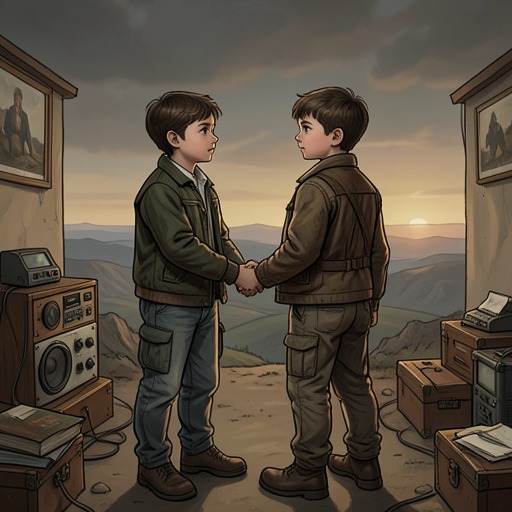
As boys, Luke Hadler and Aaron Falk find a baby rabbit in overgrown grass. Luke lifts it from the stalks, and the two take turns stroking it carefully, each cautioning the other not to press too hard. Luke claims the rabbit as his, and the boys argue over what to name it on the way to his house. Their attention is practical and affectionate: they find a cardboard box, examine their new pet, and Aaron goes inside for a towel to line the makeshift enclosure.
When Aaron returns, Luke is standing over the box with a hand inside. The rabbit is lying on its side, motionless, its eyes vacant. Aaron asks how it happened; Luke says he does not know, and further questions produce no different answer. The narrative does not settle what occurred. Instead, the abrupt movement from shared care to unexplained death leaves a blank in the memory, one that later matters less as a solved incident than as a troubling pattern of recollection.
Years afterward, driving alone on a country road, Falk hits a rabbit that darts across the road. The impact brings the childhood scene back to him. The dead rabbit on the road becomes an involuntary link between the boys’ old pet and Ellie Deacon, whose death Falk also cannot stop thinking about. The association does not establish a connection between the animals’ deaths and Ellie’s drowning; it shows how the present encounter releases an unresolved memory, and how that memory in turn draws Falk toward the past.
The Shooting Plan and the Alibi
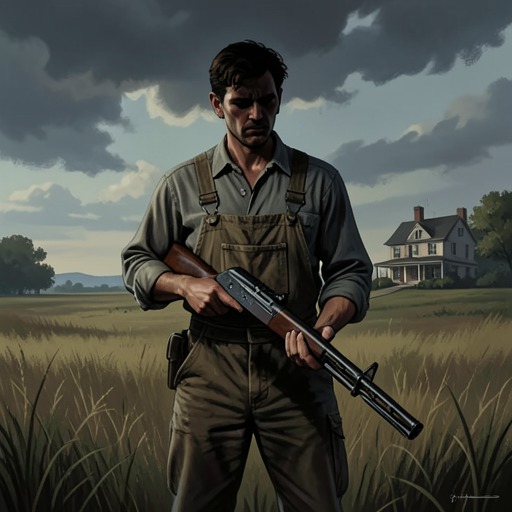
Rabbits also enter the investigation through a specific account of Luke’s final evening. Jamie Sullivan explains that rabbits were a problem during the drought: they threatened the food he was trying to grow, and he had complained about them at the Fleece. Luke offered to help. The next day, Luke arrived at the field five minutes early, greeted Sullivan, took his shotgun from the truck, and accepted ammunition from him. The two set off to hunt rabbits on Sullivan’s land.
This ordinary arrangement becomes important because Luke instructs Falk to say they had been shooting rabbits together on the back fields, away from the river, all evening. Falk agrees to the account. The planned hunt supplies a concrete shared alibi, including a location and a claimed activity; Luke even specifies that the story should be that they hit two rabbits. The contrast between that instruction and the actual meeting with Sullivan gives the rabbit shoot an investigative weight beyond pest control. It is not merely a plausible rural pastime but a prepared explanation intended to place Falk and Luke together elsewhere.
Sullivan’s recollection supports the existence of the shoot: Luke brought his own gun, used ammunition Sullivan supplied, and later departed in his silver truck. After deciding to leave, Luke puts the unloaded gun in the passenger-side footwell and waves as he drives away; Sullivan remains alone in the field watching the truck disappear. When Falk and Greg Raco question Sullivan, they revisit the arrangements and who might have heard them being made. Falk also confirms the plan with David McMurdo, who remembers Luke and Sullivan discussing a rabbit shoot. These recollections make the rabbit story traceable through separate conversations and actions, while leaving its function as Falk and Luke’s shared alibi distinct from the actual hunt.
Rabbit Control in the Present
The drought gives rabbit hunting a practical context beyond Luke and Sullivan’s account. Sullivan describes rabbits as attacking what was worth eating, making them one more difficulty in getting through the dry conditions. Elsewhere, Gretchen Schoner says rabbits are present on her land and that she needs to shoot more before stopping for the day. She invites Falk to act as her spotter, and he follows her across the field as she collects her equipment.
Gretchen uses Winchester ammunition, not the Remington rounds associated with the bodies at Hadler farm. Falk notices the difference and feels relief, then guilt at having assessed the ammunition in the middle of an ordinary visit. The detail folds the investigation into a familiar task: the shotguns and cartridges used for rabbit control are ordinary farm equipment, yet their calibres and ammunition also matter to the murder inquiry. Gretchen sights a rabbit near its warren and shoots; she then retrieves the limp animal. When she offers Falk the chance to try, he declines, saying it has been too long. Gretchen takes the gun back and explains that she will have to shoot it because she cannot have rabbits on the land. She fires, and Falk knows it has hit.
That scene places the animal’s death within a plainly stated land-management need, rather than the childhood boys’ attempt to keep a rabbit as a pet. The distinction is not presented as a simple judgment of one act as kind and another as cruel: the boys’ care ends in a death neither can explain, while Gretchen’s shooting is deliberate and connected to keeping rabbits off her property. Across these episodes, rabbits are not only symbols in Falk’s memory; they also have a material place in the choices and routines of people living through the drought.
Whitlam and the School’s Equipment
The rabbit-shooting plan reaches another strand of the story through Scott Whitlam. Hidden among the slot machines at the pub, Whitlam overhears Luke and Sullivan discussing their planned shoot and hears that Luke will bring his own shotgun. Whitlam has been waiting for Luke to mention the school money, but that secret remains unspoken. The rabbit conversation nevertheless catches his attention: he considers the planned meeting a possible opening and begins shaping a risky plan of his own.
Whitlam later goes to the school’s ammunition store, takes shells, and removes the school’s single shotgun for rabbit control, carrying it in a sports bag. He treats it as a last resort and hopes Luke will have his own gun because of the planned shoot with Sullivan; he does not know what ammunition Luke will have. The school weapon’s designated use makes the overlap especially concrete: equipment kept for controlling rabbits becomes part of Whitlam’s preparation. The evidence presented here establishes what he takes and what he expects about Luke’s weapon, not the eventual use of the school shotgun.
Narrative Significance
The rabbits’ recurrence connects several otherwise distinct registers of the novel: a childhood recollection, Falk and Luke’s old lie, the material effects of drought, Gretchen’s farm work, and Whitlam’s preparations. The animal first appears as something the boys try to shelter, returns as a road-killed creature that triggers Falk’s memory, and then occupies the language of routine pest control. Each return changes the emphasis without making the rabbit itself responsible for the human events around it.
The most consequential repetition is the pairing of rabbit shooting with concealment. Luke and Falk use a supposed hunt to construct a false account, while the real shoot with Sullivan leaves a sequence of verifiable details: a field, a truck, a shotgun, supplied ammunition, and a departure. The same pastime also gives Whitlam information and a reason to think about firearms and ammunition. Rabbits therefore link everyday rural necessity to secrecy and danger, while Falk’s memory of the dead pet gives the recurring animal a private emotional force that the investigation cannot resolve merely by establishing where a shoot took place.