Whitlam’s attempted bushfire and capture
The DryWhitlam’s attempted bushfire and capture is the climax of the search for Scott Whitlam: a confrontation in dry bushland where his threat to ignite a fire makes escape and negotiation equally dangerous. As he tries to keep Falk and Raco at bay, the lighter becomes leverage over not only the police but also the town, the searchers, and the family he says he wants to protect. The crisis ends when Falk and Raco charge him as he drops it, stopping the threat at close cost to Falk.
Causes and Setting
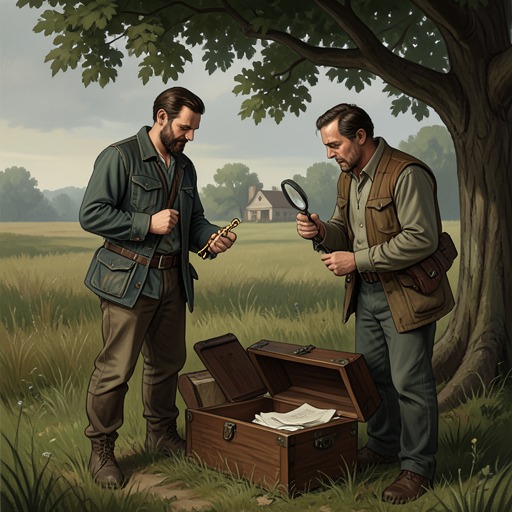
The confrontation takes place among trees and undergrowth during a search involving dozens of people. Falk spots a hand protruding from beneath a fallen log; Raco points it out and draws his police-issued pistol. Whitlam warns them not to approach and, when he rises, indicates that the police helicopter overhead may be watching. His position beneath the log gives way to a face-to-face standoff, while searchers in orange vests remain scattered through the bush.
The danger lies in the conditions as much as in Whitlam’s actions. Kiewarra has gone two years without decent rainfall, and the ground is dry. Falk recognizes that the surrounding vegetation links the bushland to the school and the town, making an ignition here a potential threat far beyond the people at the scene. His alarm is informed by an earlier fire: a neighbor lost a home and forty sheep when a controlled burn escaped control, and Falk and his father, Erik Falk, helped fight it with hoses and buckets. The present land, Falk judges, is even drier. The recollection makes the risk concrete rather than hypothetical, while the nearby school and town give the confrontation a wider set of possible victims.
The Standoff
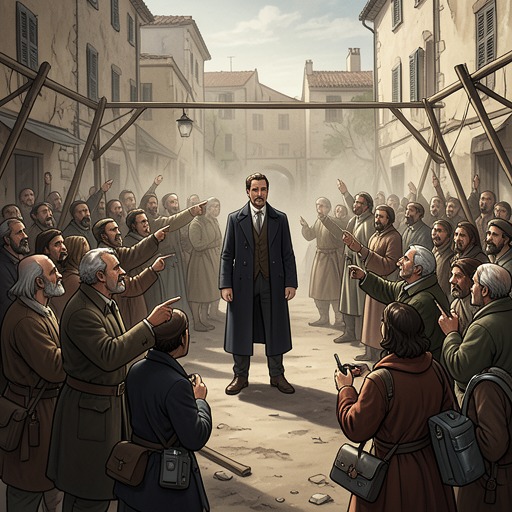
Whitlam initially holds the officers back by claiming that there is more than one way out and demanding that Raco lower his weapon and tell the others to withdraw. Raco refuses. When Whitlam rises, he announces that they are being watched by the helicopter, then extends a closed hand. Falk and Raco first take the object for a gun; when Whitlam opens his fingers, they discover it is a lighter. That reversal changes the nature of the threat: Whitlam is not simply resisting arrest but holding an apparent means of starting a fire over dry ground.
Whitlam opens the lighter and pours whiskey from a small flask onto the ground around himself. He describes the flame as an insurance policy and threatens to drop it if they shoot him. Raco keeps his pistol trained on him, but the danger now complicates any use of force: a shot could prompt Whitlam to release the lighter, and any ignition could endanger all of them. Falk thinks of Raco’s pregnant wife, Rita Raco, and of the searchers dispersed among the trees. The threat has made the officers’ ordinary task of arresting a suspect inseparable from protecting everyone within reach of the fire.
At Whitlam’s demand, Raco eventually places his gun on the ground. His hesitation reflects the conflict between maintaining control of an armed standoff and avoiding a move that could trigger the fire. Whitlam flips the lighter open and shut while the helicopter remains overhead and the searchers keep their distance. The flame is not yet a spreading bushfire, but the whiskey and the drought make each change in Whitlam’s grip consequential. The scene’s tension rests on that narrow margin: the threat is still preventable, but the officers cannot safely treat it as a bluff.
What Whitlam Reveals
During the standoff, Whitlam asks whether Falk and Raco have worked out what happened to the trust money. He insists that Sandra Whitlam knew about some of his gambling but not its full extent, the school funds, or the Hadler family killings. His account separates his wife’s awareness of his gambling from his assertion that she did not know about the other matters. He also apologizes for Billy Hadler’s death, saying that Billy was not supposed to be there and that he had tried to keep him safe. These statements reveal Whitlam’s concern with how his family will understand his actions, even as he continues to endanger people around him.
For a moment, Whitlam closes the lighter and Falk invites him to come with them and speak to Sandra. Raco reaches toward his gun, but Whitlam relights the threat before he can take it. The brief opening closes: the lighter remains the means by which Whitlam controls the encounter, and the officers must return to persuasion. Raco then tells Whitlam that his wife is pregnant and due in four weeks, asking him to close the lighter. That appeal gives the danger an immediate personal dimension, but it does not persuade Whitlam to surrender.
Whitlam argues that the children will be saved because firefighters will reach them first. Raco counters that the firefighters are among the people searching for Whitlam, not waiting elsewhere to protect the children. He warns that dropping the lighter could put the whole group, as well as Whitlam’s wife and daughter, at risk. Whitlam falters, then turns his anger toward Kiewarra itself, calling it ruined and declaring that it can burn. His stated wish to protect his family has become entangled with despair and hostility toward the town; the people he claims to care about are included in the danger he is creating.
Intervention and Significance
As Whitlam raises the lighter, Falk and Raco charge together, spreading their jackets as they throw themselves onto him. Whitlam drops the lighter. The attempt to smother the immediate danger leaves Falk with burns to his hand and leg; responders pull him away, cover him with a heavy blanket, and give him water. The episode’s resolution is therefore not a negotiated surrender: the officers act at the moment the threat is about to become an ignition, accepting personal risk to prevent a wider catastrophe. Whitlam is overpowered, and the attempted fire is stopped before it can spread through the dry bushland toward Kiewarra.
The standoff brings together several strands of the case. Whitlam’s reference to the trust money links the confrontation to the school funds, while his mention of the Hadler family killings connects his personal crisis to the deaths under investigation. His concern about Sandra and his apology for Billy coexist with threats against a community that includes his own family. The lighter sharpens that contradiction into a single physical choice: keeping it closed leaves room for a way out, while dropping it threatens people on both sides of the confrontation. Falk and Raco’s joint charge ends the impasse, and Falk’s injury records the cost of preventing Whitlam’s despair from becoming a bushfire.