Gotanda
The Earthquake BirdGotanda is the point of departure and return for Lucy Fly’s night-long walk around Tokyo along the Yamanote Line. The station gives the walk its circular shape: moving through familiar districts, Lucy revisits the city’s layers of personal memory, then completes a marathon-distance circuit and arrives back at Gotanda as morning begins.
Setting and Personal Geography
Gotanda matters less as a described neighborhood than as a location fixed by Lucy’s movement through the city. On the evening she sets out, she leaves her flat without a destination or route in mind, driven from home by the telephone’s persistent ringing. The following account establishes Gotanda as the station from which she begins walking counterclockwise around the Yamanote Line and, after passing through the city, the place where she finishes. The station also belongs to Lucy’s broader habit of making Tokyo legible through walking. Earlier, she describes taking the Yamanote Line to an arbitrary station and following the tracks toward the next one; that practice brought her to Shinjuku, where she met Teiji. Gotanda is thus both a concrete starting point for the later circuit and part of a larger personal map built by repeated travel rather than by detached observation.
The Night Walk Begins
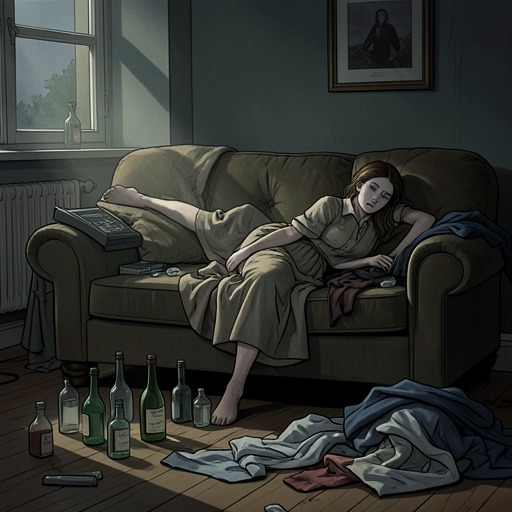
After three days spent mostly lying on the floor of her flat, Lucy hears the telephone ringing through the morning. She believes Lily is calling, but cannot bring herself to answer or disconnect the phone. In the evening she leaves, unable to remain with the sound. From Gotanda she walks toward Osaki along the quieter, darker road, glad to be outside; stopping there brings back Lily and Teiji, including the handkerchief and ice cream they exchanged and the moment they left Lucy on the cliffs of Sado Island. Walking becomes a way to keep those memories moving rather than letting them settle into a single, fixed wound. Lucy follows the railway from station to station, finding that each arrival feels like a kind of homecoming because different parts of her life have unfolded in those districts. She counts twenty-eight stations around the ring, imagining them as beads in a necklace, each one distinct despite their place in the same circuit.
Gotanda Within the Circuit
As the route passes through the city, stations and their surrounding landmarks call up particular relationships and episodes. At Shinbashi, Lucy remembers waiting for Natsuko before they travelled to Odaiba; at Yurakucho, the sooty railway arches recall dinners with Bob, who sought her advice while telling her of his ambition to become a rock star. Tokyo Station passes quickly, its converging tracks difficult to distinguish, before Lucy follows the line onward toward Kanda. Further around the loop, Akihabara recalls looking at cameras with Teiji, while Ameyoko brings back shopping for cheap food with Natsuko. At Ueno, Lucy remembers the crowds at the cherry-blossom viewing in her first year; at Yanaka, the cemetery recalls a visit before she went to Mrs. Yamamoto’s house. These memories are not stops in a planned itinerary so much as impressions gathered as she walks. The familiar route lets the city hold several versions of Lucy’s past at once, without resolving the losses that now accompany them.
Return and Significance
The walk carries Lucy through Shinjuku, near the place where she first saw Teiji. There she thinks of Sachi and wonders whether Teiji’s relationships with Sachi, Lucy, and Lily followed one another like stations along a line. The route makes the city’s geography feel inseparable from this unsettling possibility: places associated with separate periods of her life lie on the same continuous track. Lucy then passes Yoyogi Park, hears again the song she had sung there with Lily and Teiji, and cries as she walks on. She reaches her office in Shibuya, briefly imagining that it may be the only place in Tokyo where she can feel at home without either of them. As morning brings people out to work and school, she continues from Ebisu through Meguro and arrives at Gotanda, completing a distance she measures as a marathon and recognizing that she has circled Tokyo. The return does not undo the rupture that prompted her departure; instead, Gotanda closes the circuit while leaving the memories—and Lucy’s unresolved attachment to the people connected with them—intact.