Lucy Fly
The Earthquake BirdLucy Fly is a British translator living in Tokyo whose account of her life is also an argument over what can be remembered, invented, and confessed. After Lily Bridges disappears and Teiji vanishes, Lucy is arrested and questioned; she eventually describes a murder in persuasive detail, then insists that she made the story up. Her significance lies in that unstable space between factual innocence and moral responsibility, where memory offers no simple route to certainty.
Identity and Background
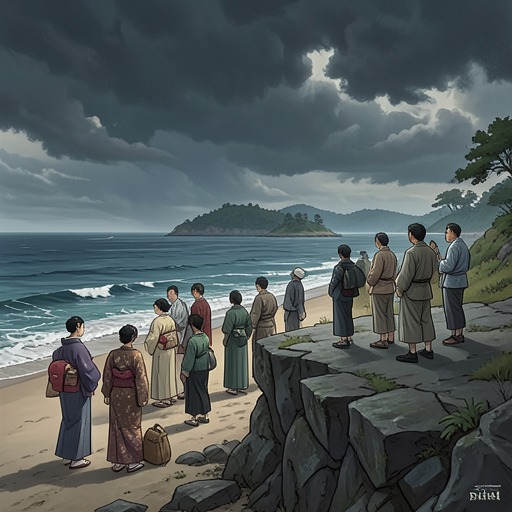
Lucy was born in Scarborough in 1965, the youngest of eight children and the only daughter of George Fly and Miriam Fly. The family lived in a Victorian terraced house of gray brick, reached by three solid steps, where the North Sea wind pressed against the front door. Her birth unfolded in darkness: the bedroom bulb popped as the midwife urged Miriam to make a final push, and George left the rugby downstairs long enough to replace it with the bulb from the outside toilet. Miriam, who had expected her eighth child to be a boy called Jonah, was disappointed to have a daughter.
That domestic beginning supplies Lucy with a vivid, carefully shaped origin story, but the book does not present recollection as a guarantee of truth. Even when she begins telling Teiji about her life, she says she starts with her birth and tells him almost everything; elsewhere, she distinguishes what she remembers from what she only supposes. The story of the darkened room is concrete, yet Lucy’s later narration repeatedly makes the act of telling itself part of the evidence.
Work and Life in Japan
Lucy left Britain for Japan and eventually settled into a position at a small industrial translation company. By the time she is questioned, she has worked there for four years as a translator and editor, turning Japanese documents into English. Her assignments include presentations and instruction manuals, despite her stated lack of knowledge of engineering, electronics, and even electricity. She describes the work as a transformation of language: articles and plurals must be supplied, vague statements made specific, and the sentence’s ending moved to its beginning.
That professional task of converting one language into another echoes the difficulty of converting experience into a stable account. Lucy can render written documents into English, but her own recollections resist equivalent clarification. When police come to her office, she attempts to manage the encounter practically, telling them that her alien registration card is in her pocket and that she has already answered many questions. The ordinary confidence of a worker dealing with an interruption gives way to the public humiliation of being taken away in front of colleagues.
Memory, Teiji, and the Photographs
Lucy’s relationship with Teiji is recalled through scenes whose details remain unsettled. The morning after their first encounter, she writes her address on a scrap of paper and leaves it beneath his camera, deliberately omitting her telephone number because she wants him to find her. A week later, she recognizes his quiet ring at the door. She opens it while still naked from the shower and lets him slip inside, conscious that her neighbor is nosy.
What follows is less secure in her memory. Lucy cannot establish what Teiji said, or even whether he spoke at all. She offers several possible versions: they may have gone straight to her room and made love without speaking; afterward, with a sheet around her, she may have looked into his camera as he photographed her. The uncertainty is not incidental. Lucy remembers the camera and the intimacy, but cannot reliably recover the words that would explain them.
She later tells Teiji the story of her life while lying in his bed. He holds his camera at arm’s length and takes one of the few pictures that includes his own image. Lucy remembers a whispered question, but the memory comes with qualifications: she cannot hear Teiji’s voice clearly and compares the lost words to rain passing between their mouths. The episode makes their closeness feel real while keeping its verbal record inaccessible.
Lucy’s unauthorized look through Teiji’s photographs produces another uncertain history. One image shows Sachi lying on a pavement. Lucy cannot determine whether Sachi is dead, asleep, drunk, or suffering an overdose; she also admits that the crying man she associates with the photographs may be something she invented. She considers searching for Sachi at a theater, but fears the intensity with which she enters performances. As a child, she experienced herself as every character, as well as the place and plot, and remained caught in the plays for weeks or months afterward. Her reluctance to seek Sachi is therefore connected to a reported vulnerability: entering a theater could mean losing the boundary between observer and scene.
Lily’s Disappearance and the Confession
The police take Lucy from her workplace for questioning about Lily Bridges’s disappearance. In the interview room she is aware of the physical behavior around her: she cracks her fingers one by one, while Kameyama grows tired of waiting and Oguchi rubs at the seam of his trousers. Lucy says that the night in question is a blur and that she must recover it bit by bit before she can answer. Her silence prolongs the questioning, but it also reflects her stated inability to produce a dependable account on command.
Eventually, Lucy tells the police that she killed Lily. The story she supplies has a clear emotional sequence: jealousy, rage when Lily lets her down, and an obsessive love for Teiji that prevents her from accepting that he no longer wants her. She describes using a pair of stockings as a weapon, catching Lily off guard because Lily still believes in their friendship, and dragging her warm body to a hiding place. The account is fluent and complete enough to satisfy the interviewers. Lucy then explicitly retracts its factual claim: she says she did not kill Lily, but is guilty of spinning a story.
Her denial does not restore an uncomplicated sense of innocence. Lucy says she may have been responsible in other ways: if she had taken Lily’s phone call, Lily might not have come to her street that night; Lucy had introduced Lily to Teiji and persuaded her not to return to Britain when she wanted to. She also recalls having killed Noah Fly, though the available account gives no circumstances for his death. These admissions place the fabricated confession amid other losses and acts of responsibility without making them equivalent. Lucy’s own formulation leaves guilt unresolved rather than converting it into a verdict.
Release and Unresolved Responsibility
While being held, Lucy accepts Mrs. Katoh’s invitation to stay at her house in Tokyo, saying yes to keep her happy even as she hopes to be convicted of murder. A day later, she learns that she will be released without charges. The case against her is circumstantial, and police have found no fingerprints or DNA on Lily’s body.
The change follows the arrival of an envelope containing two photographs. One shows Lily at a McDonald’s near Lucy’s home on the night of the murder, two hours after Lily was seen at Lucy’s front door. A cashier remembers Lily and a Japanese male friend struggling to communicate and appearing distressed; Lily leaves her cheeseburger untouched but drinks her Coke. The evidence also places Lucy outside for only about ten minutes that night, with her neighbor reporting that she did not hear Lucy leave again. Lucy’s brief venture outdoors with her stockings over one shoulder, which she had incorporated into the confession, is not connected to Lily’s death.
The second photograph shows a woman folded into close brown walls, her head lolling and her eyes empty. Lucy believes Teiji took both photographs, but they do not prove that he killed Lily; in her view, they show that Lucy did not. She speculates that Lily may have ended her relationship with Teiji in order to remain Lucy’s friend, and wonders whether Teiji killed her to remove an obstacle. She also connects the image to her unanswered questions about Sachi. Yet Lucy recognizes that the evidence remains circumstantial and refuses to treat suspicion as certainty.
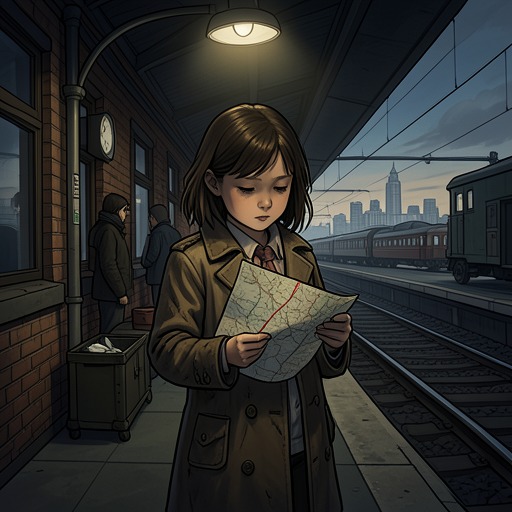
After her release, Lucy lies on the balcony at Mrs. Katoh’s house, looking through the railings toward an empty park and the local railway station. The quiet, ordinary view does not settle what happened to Lily or what became of Teiji. It leaves Lucy outside the cell but still inside the question that has governed her account: how far a person can be innocent of murder while remaining implicated in the lives and disappearances that surround it.