Lucy Fly's Childhood Mutism
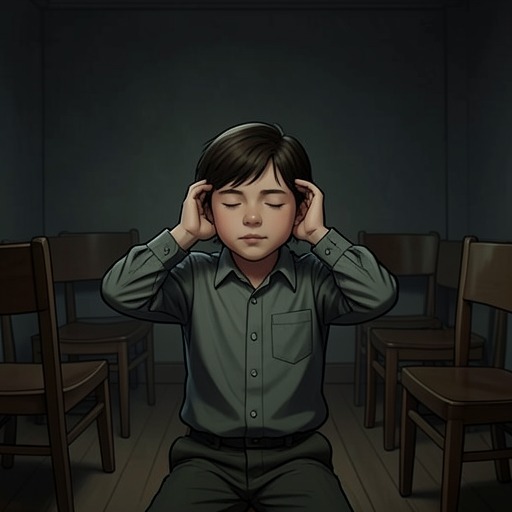
The Earthquake BirdLucy Fly's Childhood Mutism is the three-year period of silence that follows the accidental death of her brother Noah. It is both a consequence of that childhood catastrophe and a condition Lucy lives on her own terms: others interpret her silence for her, while she ultimately breaks it when they presume to know what it means.
The Accident and the Silence
After Lucy falls from an apple tree onto Noah, he is impaled on a rusty nail protruding from one of her wooden planks. He dies in hospital that night. Lucy had meant only to squash him, not puncture him, but the unintended consequence changes her place in the family and leaves her withdrawn. She no longer bothers anyone at home and stops sitting in the tree.
The last person Lucy speaks to is a nurse who takes her by the hand along a hospital corridor. The nurse asks whether Lucy understands that the accident was not her fault. Lucy answers, “Yes, no, yes,” because she does not understand the question and does not know which answer the nurse wants. Afterward, she cannot bring herself to utter another word. The exchange leaves the question of blame unresolved in Lucy's own understanding: her answer is not a settled acceptance of the nurse's reassurance.
Three Years Without Speech
At home, Lucy's silence either goes unnoticed or comes as a relief to her family. Her six surviving brothers no longer threaten her as they did before Noah's death. At school, teachers leave her alone, while other children whisper about her and keep their distance because they believe she can kill easily. The narrative describes the three years as blissful, setting Lucy's relative freedom from social demands against the fear and stigma attached to her.
The silence is not presented as an inability to communicate in every form. Lucy takes up chess partly because there is no need to speak: a check can be conveyed with the eyes and eyebrows, or written on the back of the hand. Her choice gives her a way to participate without having to resume speech, though it does not prevent others from turning her silence into a story about her.
Chess and the Return to Speech
After three silent years, Lucy wins the county junior chess contest. The local newspaper prepares an account of her as a tragic mute genius, imagining that loneliness drove her to chess as a last attempt to communicate with the world. Lucy cannot tolerate this presumption. At the prize-giving ceremony, she opens her mouth and says, “Thanks,” clearly and casually into the microphone, as if she had spoken every day.
The word overturns the newspaper's framing, but it does not restore her former silence. The narration casts the moment as checkmate and immediately qualifies the victory: Lucy has cornered herself, because once she has spoken again she cannot rediscover silence. Her return to speech is therefore neither a simple cure nor a surrender to the account others have invented. It is a deliberate public correction with an irreversible consequence.
Meaning and Aftermath
Lucy’s mutism is bound to the accident, but the story distinguishes her private experience from the explanations imposed on it. The nurse's question, the family's relief or inattention, the children's fear, and the newspaper's fantasy each offer a different interpretation; none can simply stand in for Lucy's own understanding. Her chess playing shows that silence does not erase communication, while her single spoken word demonstrates her capacity to interrupt other people's descriptions of her.
The episode also establishes a pattern in Lucy's relationship to being defined by others. She accepts the label of weird at school, but resists the newspaper's sentimental account of her silence. Speaking again wins her a moment of control over the public narrative, yet the ending preserves the cost: speech returns, and the silence that preceded it cannot be recovered.