Mrs. Yamamoto
The Earthquake BirdMrs. Yamamoto is a violinist and the host of the weekly string rehearsals that give Lucy Fly an unexpected sense of belonging in Tokyo. She opens her home and her musical group to Lucy after their previous cellist dies, and the ordinary instrument Lucy leaves in her spare room later becomes the cause of Mrs. Yamamoto’s fatal fall. Lucy’s grief and guilt persist beyond the rehearsals, while Mrs. Katoh’s later account challenges the way Lucy remembers the accident and its victim.
Identity and Introduction
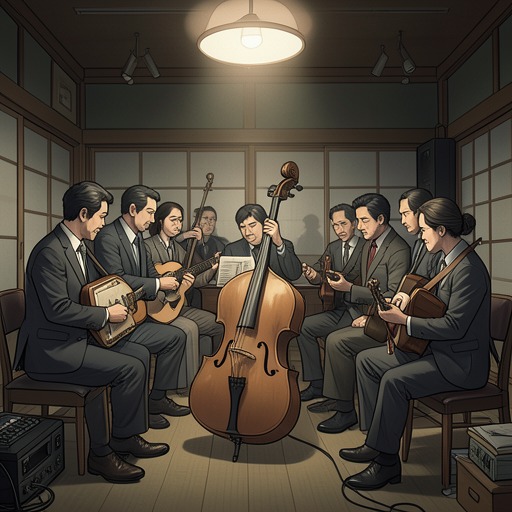
Mrs. Yamamoto is Natsuko’s former calligraphy teacher and a member of a small, long-running group of amateur musicians. She plays violin with Mrs. Ide, who plays second violin, and Mrs. Katoh, who plays viola. Their previous cellist has died of a brain tumor, leaving a vacancy in the group. They do not give concerts, and Natsuko describes them as capable but not so brilliant that a newcomer would feel intimidated. The group is willing to welcome Lucy, who is considerably younger than its members and unsure whether her conversational Japanese or playing will be adequate.
Mrs. Yamamoto first appears in person at the house where the group rehearses. She has short silver hair and small round glasses, and is tall and slim. She greets Lucy warmly at the entrance. The meeting offers Lucy an entry into domestic life as well as music: after months spent mainly in apartments and offices, Lucy is glad to enter a house, pass through its garden and wisteria-framed doorway, and follow Mrs. Yamamoto into the tatami room.
The Quartet and Lucy’s Return to Music
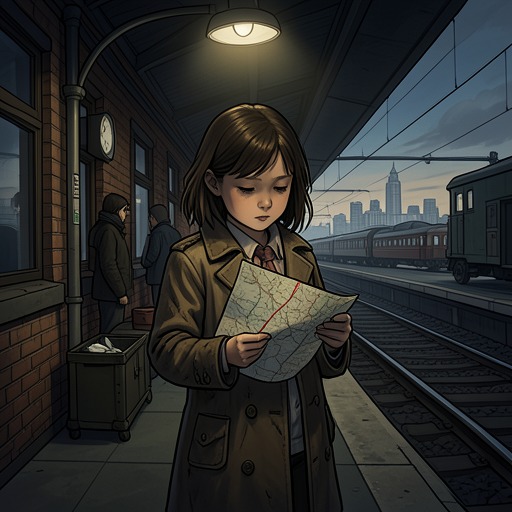
Mrs. Yamamoto makes Lucy’s participation practical by offering to keep her cello in the spare bedroom. That arrangement removes the obstacle of carrying the instrument across Tokyo every week. Lucy takes the Yamanote Line from Gotanda to Nippori with the cello, then walks through the older neighborhood to the house. Mrs. Yamamoto receives her there, and the rehearsal moves from the tatami room to a Western-style living room, where the players can sit on chairs and use music stands.
At the first session, Mrs. Yamamoto leads the group through scales and basic studies before passing around the music. They play Haydn, stopping whenever Mrs. Yamamoto frowns and repeating sections or phrases until the players find their shared interpretation. The rehearsal depends on listening rather than display: the group speaks little, and the music draws the players together. Lucy, who has been out of practice and misses some sharps and flats, finds that she can attend to the other musicians in a way she never managed in her school orchestra. Mrs. Yamamoto’s frown functions as a cue to pause and work through the music again, not as a rebuke for Lucy’s mistakes.
The group continues after lunch with Mozart and plays until sunset. Its members are not professionals, and their playing includes wrong notes, uncertain rhythms, and passages that lack articulation. Yet Lucy feels supported as she finds her place among them. By the end of the day she understands herself as a full part of the ensemble, rather than a replacement who can never match the cellist who died. Music also changes how she imagines her life in Japan: for the first time, she feels a thrill at the prospect of what she might become far from home.
Lucy plays with the group almost every Sunday for several years. The rehearsals become the high point of her week, something she begins anticipating by Wednesday or Thursday. Their importance rests not on public performance—the group never gives concerts—but on the sustained practice of attending to one another. For Lucy, Mrs. Yamamoto’s home and the shared music offer both routine and a rare experience of collective concentration.
The Accident and Its Consequences
The rehearsals stop when Mrs. Katoh telephones Lucy one Sunday. Her voice is unusually deep and flat, and she tells Lucy there will be no practice that day—or again. Mrs. Yamamoto has had an accident. That morning she went upstairs to dust the spare bedroom, where Lucy’s cello was kept. After the previous rehearsal, Lucy had put the instrument behind the bed rather than in its usual place beside the wardrobe. She cannot explain why she moved it.
Mrs. Yamamoto did not notice the cello while dusting the wardrobe. She tripped backward over it and struck her head on the floor. Her husband found her no longer breathing. The instrument that had enabled Lucy to join the group thus becomes entangled with its end: a practical solution to the burden of transporting a cello across Tokyo is also the object over which Mrs. Yamamoto falls. Nothing in Lucy’s account suggests that she intended or anticipated the accident, but she experiences the changed placement as a trap she has set without knowing it.
After the death, Lucy does not want to play again or meet Mrs. Ide and Mrs. Katoh. She does not contact them, and she never asks to retrieve the cello from the Yamamotos’ spare room. She is more upset than she expected to be, feeling as though she has lost a lifelong friend. Her withdrawal ends not only the weekly music but also her access to the people and place through which she had begun to feel at home.
A couple of months later, Lucy tries a tea ceremony class in search of some of the same pleasures she associates with the rehearsals: the teacup, sweet cake, tatami, and quiet marked by the click of a teapot. The other participants gossip, chatter, and fail to remember the ceremony from week to week because they have not listened carefully. Lucy finds neither the concentration nor the meaningful quiet she had experienced while playing with Mrs. Yamamoto and the others, and gives up. The failed attempt makes clear that the lost element was not simply a Japanese setting or a traditional practice; it was the attentive cooperation that the musical group had created.
Memory, Reassurance, and Narrative Role
Mrs. Yamamoto’s death remains active in Lucy’s memory even after the rehearsals have ended. In a later encounter with Mrs. Katoh, Lucy begins a hurried defense, explaining that she did not mean to kill Mrs. Yamamoto and that she had only put the cello in a different place. Mrs. Katoh is surprised by the accusation Lucy appears to be making against herself. She says that everyone misses Mrs. Yamamoto but recalls her as habitually clumsy, someone who herself acknowledged her clumsiness. Mrs. Katoh says she had expected that Mrs. Yamamoto would have an accident one day.
Lucy cannot summon a clear image of Mrs. Yamamoto’s face when she hears this account, and asks whether she really was clumsy. The uncertainty does not erase the facts of the fall, but it exposes how incompletely Lucy can retrieve the person behind her guilt. Mrs. Katoh’s memory offers a different emphasis: the accident was consistent with a trait she remembers in Mrs. Yamamoto, rather than proof that Lucy deliberately caused her death. She also tells Lucy not to heed the nonsense in the papers and promises to help sort things out so Lucy will soon be free. Lucy answers that she does not want to be free, showing how tightly the remembered accident has become bound to her present state.
Mrs. Yamamoto’s role is concentrated in a brief but consequential stretch of Lucy’s life. She is not presented through an extensive personal history; instead, the account gives weight to her welcome, her place in the ensemble, the repeated work of rehearsal, and the sudden absence left by her death. The cello links these elements: it first makes Lucy’s participation possible, then stands behind the bed as the cause of the fall around which Lucy organizes her remorse. Mrs. Katoh’s recollection complicates that remorse without undoing the loss, leaving Mrs. Yamamoto both a remembered friend and the focus of an unresolved dispute between accident, responsibility, and guilt.