Biological and Chosen Family
The Edge of the WorldBiological and Chosen Family is the tension at the center of Shay Maloney’s search for his origins: learning who he is by blood does not make the family that raised him less real. His history brings together biological parents and grandparents, foster care, adoption, and the sustaining care of people around him. The story refuses a simple recovery narrative in which discovering ancestry resolves identity; Shay learns more about his origins while retaining the right to decide what those origins mean and which relationships he will pursue.
Discovery and the Limits of the Project
The family history first enters the plot through a misunderstanding about the purpose of the genealogy documentary. Shay believes Ollie Pietruska is researching his adoptive family. Ollie eventually puts a thick folder on the table and explains that the project concerns Shay himself. The distinction changes the emotional stakes: the subject is not only the family Shay knows, but a history he has not been given the means to understand.
Shay is unsettled by the disclosure and by the circumstances in which it is made. He has already confronted Corina Hussain about the studio’s interest in his adoption, feeling that his childhood status has been treated as a way to make history more compelling. He has signed the contract, but asks to delay the research until he can speak with his adoptive father. That request establishes an important boundary: access to information about biological origins does not remove Shay’s sense of responsibility to the person who raised him, or his wish to involve him before proceeding.
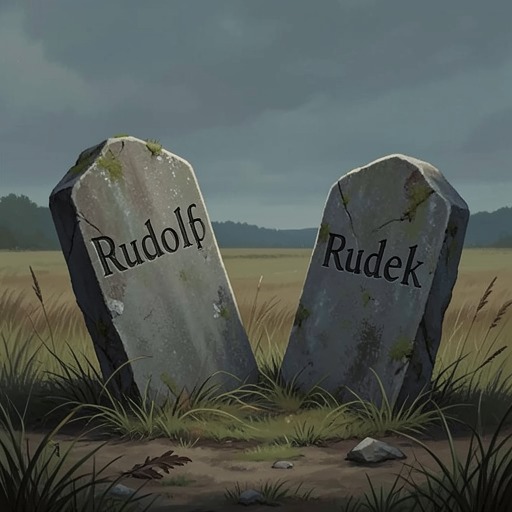
The disclosures arrive through records and conversations rather than a single complete account. At Rudek Nowack’s sparse grave, Shay recognizes the surname as his own. Ollie explains that Rudek is a form of Rudolph, connecting the name to Shay’s maternal ancestry. A newspaper report then identifies Rudek as the man who murdered Ava Martin, his former girlfriend, and records that he was convicted and later died by suicide in Wakefield Prison after receiving a life sentence. The biological connection therefore arrives attached to a violent history, not as an uncomplicated source of belonging.
Loss, Separation, and the Missing Years
A separate report reveals that Francesca King, Shay’s biological mother, died in a house fire on a Leeds housing estate at the age of twenty-six. Shay connects her surname to Joyce King, whose family history Ollie had already traced, and realizes that both of his biological parents are dead. Ollie can offer some information about Francesca, including that she had no siblings and had been an accomplished hockey player, but this record cannot restore a personal relationship or answer every question about her life.
The timing of the fire opens a gap in Shay’s own early history. He would have been only a few months old, but the archived report makes no mention of a baby. Shay asks whether he was present; Ollie says that, as far as he can determine, he was not. Shay knows that he was adopted at two, after spending six months in foster care, but the intervening circumstances remain unclear. The absence of a documented answer matters: genealogy supplies names and events, yet it does not make the missing parts of a childhood fully recoverable.
The records also reveal that Artur and Zofia Nowack, Rudek’s parents, cared for Shay after Francesca died and fought to keep him. Social services did not allow them to do so, probably because of circumstances connected to Rudek, and Shay entered foster care. Ollie believes Shay never saw his grandparents again. When Shay asks whether they wanted him, the answer is unequivocal: they did. This disclosure complicates the meaning of his removal. Foster care and adoption form part of his history, but so does the fact that his biological grandparents tried to keep him.
Care as a Form of Family
The grandparents’ story gives Shay a larger map of kinship, even though it cannot reverse their separation. Artur and Zofia had come to London in the 1960s and run a café in Vauxhall for many years. Their sons later moved to Leeds. After Zofia became frail, she lived in a care home in Pimlico; Artur continued the café with help from a grandson, and after the café was sold and Zofia died, he took her home to Warsaw. Artur and Zofia are buried there, a mile from Ollie’s family home. Their history links Shay to Poland and to a family life that continued beyond the period he can remember.
The scene in which Shay learns this history makes care present in the moment rather than merely an item in the archive. He clings to Ollie, who steadies him, and asks him to finish the story. They sit on a bench with their knees touching and hands clasped; the camera is no longer there, but Shay is too absorbed to ask about it. The physical reassurance does not replace the grandparents or erase the pain of losing them. Instead, it shows another relationship of care helping Shay remain with information that is difficult to hear.
Care also appears in less dramatic, everyday forms. Early in the tour, after Shay has taken insulin and eaten breakfast, Larry sits with him; Shay, who finds relying on others unsettling, dozes with his head on Larry’s shoulder. Later, Larry tells Ollie that Jumbo is upset about a falling-out with his own kin, but loves Shay. These moments place Shay within a network of practical and emotional support that is not reducible to descent. Biological kinship, adoptive family, and chosen bonds are distinct, but the story allows them to coexist as sources of attachment.
Names, Identity, and Choice
After learning about his ancestry, Shay fast-masters the Polish hurdy-gurdy and considers using Rudzio Maloney as a performer’s name. He rejects Rudzio Nowack as a name that is not his to use, adding that he cannot be entirely one identity and none of the other. The choice is neither a denial of his Polish background nor a claim that a newly discovered surname automatically belongs to him. Maloney remains part of his identity because it names the family and life that formed him; Nowack remains part of his history without becoming an identity he feels obliged to perform.
Shay has spent considerable time coming to terms with his family history, yet he has not travelled far from the people who raised him. He chooses, for now, not to seek surviving members of his biological family. That decision is presented as a continuing choice rather than a final rejection: the story leaves open what he may want later, while making clear that biological discovery does not give others the right to dictate his next step.
The idea of family thus develops through several kinds of evidence: surnames and graves, official reports, remembered care, and present-day acts of support. The records establish biological relationships and reveal deaths; they also expose the limits of what a documentary investigation can know. Shay’s response gives those findings their personal meaning. His ancestry expands, but his identity is not transferred from the Maloney family to the Nowacks. It holds the histories together, including both the people who wanted to raise him and the people whose care sustains him now.