Denmark
The Edge of the WorldDenmark is a point of connection between Shay’s family research and the history of the 1864 war with Prussia. It gives him a newly discovered strand of maternal ancestry, while the story of Rudolph Kaspersen places that ancestry within a specific military crisis. The country’s significance is therefore both personal and historical: it helps Shay understand where part of his family came from, but does not reduce his identity to a single national origin.
Denmark in Shay’s Family History
Ollie explains that the Danish ancestry comes from Shay’s maternal side. The account also identifies Anna as Lithuanian and notes that the region where records connected to her were found would have been considered part of Prussia at some point. These details do not make the family line geographically simple: Danish, Lithuanian, and Prussian associations overlap across changing historical boundaries. Denmark matters as one strand in a family history that Shay is learning to hold alongside other origins, rather than as a complete explanation of who he is.
Rudolph Kaspersen and the 1864 War
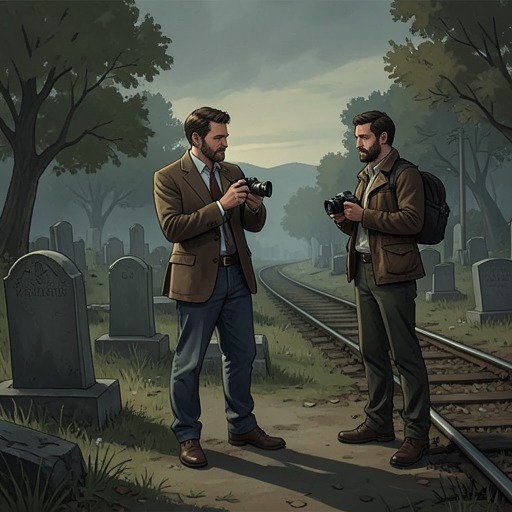
The family research brings Denmark into focus through Rudolph Kaspersen, a Danish second lieutenant. A photograph shows him on 17 April 1864, the day before the Battle of Dybbøl; he was eighteen years old. Shay is struck by how young Rudolph was for his rank, while Ollie places the image in the circumstances of a war Denmark was losing. Before the battle, Prussian forces had besieged the Danes and bombarded them for two months. The photograph thus links a particular family ancestor to a moment of national vulnerability, making Danish history part of the personal genealogy Shay is examining.
Ancestry and Identity
Shay’s response to the discovery shows that the Danish connection carries emotional weight: he initially worries that the ancestry might instead mean he was German, then takes relief in Ollie’s clarification that Rudolph was Danish. The exchange makes national labels feel consequential to Shay, even as the surrounding research complicates any neat division between them. Later, he recognizes that his family history cannot be contained by one name or origin. He remains a Maloney because of the people who raised him, while the newly uncovered biological history adds another inheritance rather than replacing that one. Denmark’s role in the story is consequently less a destination than a recovered part of a layered identity.