Healing from Trauma
The Edge of the WorldHealing from Trauma is presented as a difficult movement from bodily experience that cannot yet be understood toward a more deliberate recognition of what happened and what might help. Through Ollie Pietruska’s account of his burns, nightmares, fear of travel, and first week of therapy, healing is neither a sudden revelation nor the disappearance of fear. It begins with naming an experience, accepting its effects, and cautiously changing the patterns built around it.
Delayed Pain and the Return of the Event
Ollie describes watching his arm burn during the crash without feeling pain at the time. The sensation arrived weeks later, leaving him to wonder for a long time whether the event had been a bad dream. The delay matters: his body registered the injury, but not on the timetable he expected, and the gap between witnessing the burn and feeling its pain made the experience harder to place. When he tells Shay Maloney that he felt guilty because it had not hurt when he thought it should, he reveals a second burden layered over the injury: not only what happened, but the belief that his response to it was somehow wrong.
The pain’s later appearance in sleep gives the past a recurring form. Ollie distinguishes between bad dreams and replays, struggling over whether an experience that has already happened can still be called a dream. Shay identifies the replay as a flashback and says it could be classed as PTSD. Ollie objects that he was tested and did not have it, a resistance that keeps the conversation from becoming a neat diagnosis. The exchange instead shows how hard it can be to describe symptoms when the experience feels real, returns involuntarily, and does not fit the explanation a person has already been given. Naming a flashback offers a possible frame; it does not erase Ollie’s uncertainty or settle what happened to him.
Fear, Effort, and Another Person’s Care
When Shay asks what changed, Ollie first answers that nothing and everything changed. He says he grew tired of wallowing in misery and began making himself do things that frightened him. Riding as a passenger on the tour bus is one example. It remains distressing: he describes waiting for the engine to cut out and explode. Yet he also says it is not as bad as it used to be. The account holds improvement and continuing fear together. Progress is not measured by comfort alone, but by a widening capacity to do something that still feels threatening.
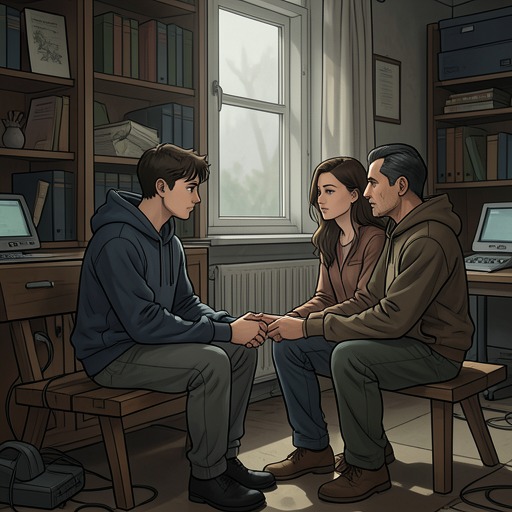
Shay responds not by treating this effort as proof that Ollie should manage alone, but by asking whether help could make the fear less unbearable. He tells Ollie that the crash was not his fault and that he should not have to suffer. Ollie answers by invoking Shay’s diabetes, but Shay rejects the comparison: he was born with it and is not traumatized by being diabetic. Their disagreement clarifies the kind of care the scene offers. Shay can recognize Ollie’s suffering without claiming that their experiences are interchangeable, and he can encourage outside help without demanding that Ollie be instantly well. The conversation makes support an invitation rather than a substitute for Ollie’s own account of what he can endure.
Therapy and a Changed Understanding of Fear
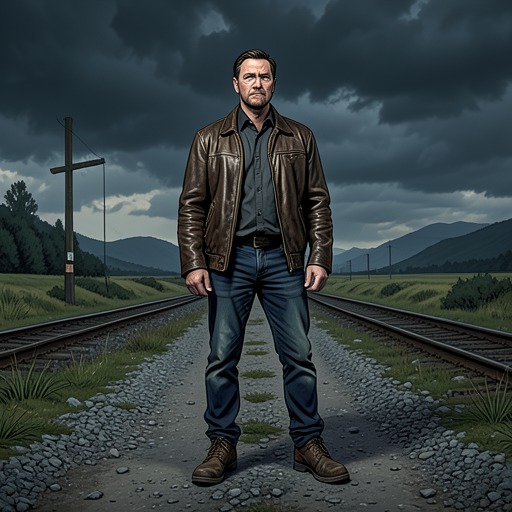
In a letter to Shay, Ollie reports that he has started therapy that week. The arrangement is modest and practical—an hour each week, in London or online when he is away—but he calls it everything when he considers what beginning means. The letter gives the decision a concrete setting: Ollie is on a train toward Leeds when a car crashes near the tracks, stopping the train at a level crossing while the fire is put out. He watches the burning car for a long time. A week earlier, he says, he would have hidden under the table; now he can recognize that staying and watching marks progress. The scene does not establish that the fear has vanished. It shows a changed response to a reminder of the crash.
Therapy also gives Ollie a new interpretation of the fear he has carried around cars, roads, and fire. He has learned that holding on to the fear may have served to protect him from reliving what happened, and that assuming he was simply afraid had been easier than accepting the event’s impact. This understanding does not make the work effortless. Ollie says that accepting what happened is easy compared with unlearning years of unhealthy behavior and thought patterns. His distinction keeps insight from being mistaken for completion: understanding why a pattern formed is a beginning, while changing it remains a sustained task.
An Unfinished Practice of Healing
The account’s movement between a face-to-face conversation and a later letter makes telling part of the process. In the conversation, Ollie has difficulty understanding how he and Shay arrived at such a vulnerable point, and he worries about losing the warmth of Shay’s smile to a concerned expression. In the letter, he sets out what therapy has helped him understand and tells Shay what he has begun to do. Disclosure does not instantly resolve his fear, but it makes the experience more speakable and gives Shay a way to witness the effort without defining it for him.
Ollie ends with confidence in his persistence, describing himself as a dog with a bone when he sets his mind to something. That determination is not evidence of a completed recovery; it is a commitment made alongside uncertainty, recurring fear, and the hard work still ahead. Healing from Trauma therefore appears as an uneven practice: the past can return as pain, sleep, or a burning car beside the tracks, while new responses become possible through recognition, therapy, and the willingness to face what once demanded avoidance.