Shay enters foster care after being raised by his grandparents
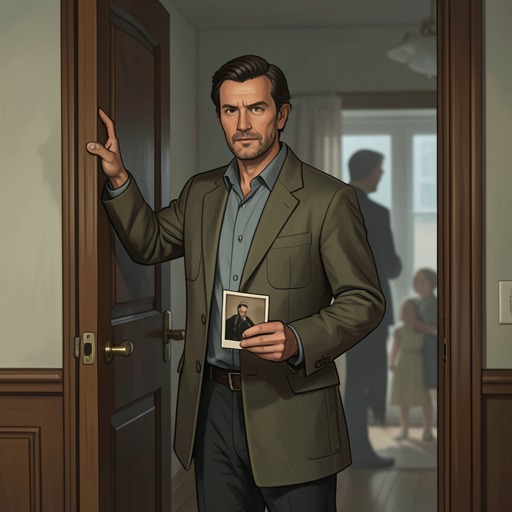
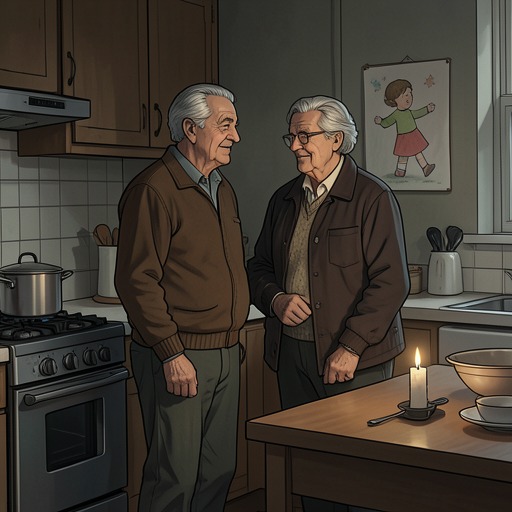
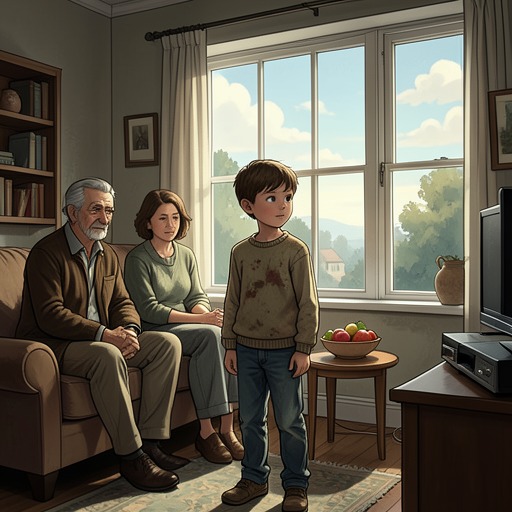
The Edge of the WorldShay enters foster care after being raised by his grandparents, Artur and Zofia Nowack, in a revelation that fills in part of the childhood obscured by his adoption. The account establishes that his grandparents wanted him and tried to keep him, but it does not explain exactly why social services took him from them or what happened across the gaps in his early history. The disclosure gives Shay a new connection to his biological family without making that history complete or replacing the family who raised him.
The investigation becomes personal
Shay first believed Ollie Pietruska was researching his adoptive family. Ollie corrected him by laying out a thick folder and explaining that the project was about Shay himself. The change in focus made adoption not simply background for a genealogy project but the reason the studio had chosen him. Shay later told Ollie that he had already challenged Corina Hussain over the studio’s interest in him as an adopted person, as though that made history more compelling. He had signed the contract, but asked to wait before beginning until he could speak to his father; exploring a history that also implicated his family felt wrong to do without telling him.
What the account establishes—and leaves open
At his father’s grave, Shay asked about Francesca King and whether he had been present when the fire that killed her occurred. Ollie Pietruska said an archived report contained no mention of a baby and that, as far as he could tell, Shay had not been there. The available ages sharpened the question rather than resolving it: Shay would have been only a few months old at the time of the fire, was adopted at two, and had spent six months in foster care before the adoption. He asked what had happened to him in between.
Ollie’s account supplied one crucial part of that missing history. After Francesca King died, her parents, Artur and Zofia Nowack, cared for Shay and fought to keep him. Social services nevertheless would not let them retain him, and he was taken from their care and placed in foster care. Ollie thought the decision might have had something to do with Rudek Nowack, but presented that only as a possibility, not an established explanation. The disclosure confirms the separation and the grandparents’ efforts; it does not identify the decisive reason or give a full chronology of Shay’s placements.
The disclosure at the graveside
The history came out during a visit to the graveyard, where Shay had been looking toward his father’s grave and trying to connect the missing parts of his past. Ollie Pietruska had proposed moving the camera onto a gimbal and heading toward the trees, but when Shay asked who his grandparents were, Ollie answered that they had cared for him and fought for him. Shay’s immediate question was whether they had wanted him. Ollie told him they had, very much.
Ollie then drew Shay away from the willow planted in their grandparents’ honour to a nearby bench. They sat with their knees pressed together and their hands clasped; Shay only belatedly noticed that the camera was no longer there. He held Ollie’s hands tightly and asked him to finish the story. The physical closeness and the absent camera mark the exchange as more than documentary exposition: Shay receives the news as a family disclosure, in a moment when the filming recedes behind the need to hear what happened to him.
Aftermath and belonging
The revelation adds biological grandparents who wanted Shay to remain with them, but it does not turn blood into his sole measure of family. In his later reflections, Shay considers using the Polish name Rudzio Maloney as a performer, rejects Rudzio Nowack as a name he does not feel is his to use, and says he cannot be entirely one identity and none of the other. He remains a Maloney and, for the time being, chooses not to seek surviving members of his biological family. The distinction preserves both histories: learning that Artur and Zofia Nowack fought for him changes what he knows about his origins, while his chosen name and attachment to the people who raised him remain part of who he is.
That coexistence also appears in the ordinary care surrounding Shay. Corina Hussain brings him porridge, a banana, and coffee, and he takes insulin and eats; Larry comforts him with his steady presence. During a later blood-sugar crisis, Ollie Pietruska uses a glucose monitor and can help because Corina had shown him how in case they were alone. The band’s willingness to leave Shay in Ollie’s care reflects a network of practical, reciprocal attention. These moments do not answer the questions about his first years, but they show why the account of his grandparents’ love can matter without displacing the relationships built through raising and caring for him.