Bruno and Lara's Romantic Partnership
The Eight Mountains: A NovelBruno and Lara’s partnership joins affection to the demanding work of building a life on the mountain, but the same farm that gives them a shared purpose also exposes their incompatible responses to failure. Lara comes to embrace the place and its work; Bruno’s attachment to the mountain ultimately leaves little room for the alternatives she is willing to consider. Their relationship ends not in a single dramatic rupture but through mounting financial strain, unequal hopes for the future, and Bruno’s retreat into work and silence.
Beginning and return to the mountain
In the summer of 2007, Lara and Pietro had been together for only a couple of months when he began withdrawing and avoiding her, expecting that she would leave before their relationship became more painful. Lara confronted him about this pattern. After one upset night, they accepted that their time together was ending, and the remaining days in the mountains became enjoyable precisely because neither mistook them for a beginning. The encounter reveals Pietro’s tendency to retreat from intimacy, but it also lets him see Lara more clearly: she walked the paths around Barma alone, was comfortable with the austere conditions, and spoke of having grown up in another mountainous region before leaving to study.
Lara’s relationship with Turin had been a genuine attachment, formed through its streets, people, nights, work, and homes. She did not regret choosing city life, even as she missed the mountains she had left. Her ease at Barma therefore did not amount to a simple rejection of the city. The mountain held memories and habits she could return to, while the city remained part of the life she had chosen.
The next decisive turn came when Lara went to see Bruno on her own. She wanted to learn about his alpine pasture and his plans. Bruno described a proposed agricultural business: buying thirty cows and making cheese from their milk rather than selling it to a dairy. The work would require another employee, and Lara, who liked the place and had experience around cattle, offered to take the job. Bruno was pleased by her interest but uncertain about having a woman there. Pietro thought she would manage the work well; Bruno recognized her determination. The practical offer brought Lara back into Bruno’s life on terms that joined employment, shared place, and the possibility of a closer partnership.
A shared life made through work
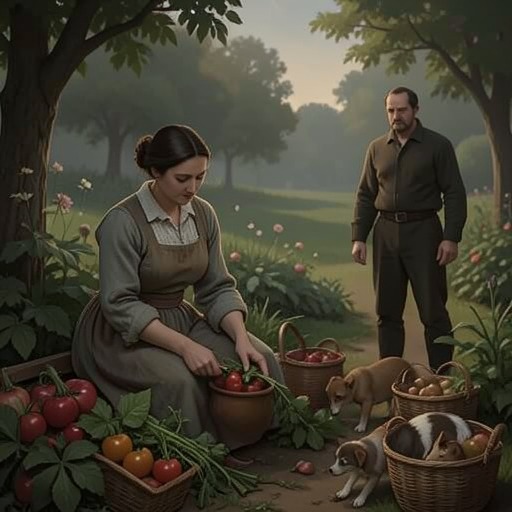
By the following year, Bruno and Lara were together. Pietro observed a change in both of them: Bruno seemed more serious, while Lara appeared happier and more at ease. Bruno showed his affection openly, repeatedly touching her at the table and seeking contact while he spoke. Lara, in turn, seemed less anxious in his presence, reassured by small gestures and looks. Their intimacy was visible in ordinary behavior rather than explanation; their relationship had developed without needing to be narrated as a formal decision.
The farm gave that partnership a demanding daily structure. Bruno insisted on milking the cows by hand because he considered them delicate and easily frightened. Each cow took about five minutes to yield several liters, making the morning milking a long routine that began before daylight. He valued the task and would not delegate it. Lara brought him coffee and biscuits at seven, then took the herd out to pasture twice daily. The division of labor reflected their shared commitment, but it also required each of them to give their time to the farm with little respite.
Cheese-making extended the work from the stable into production. Bruno combined about 150 liters of morning milk with the previous evening’s milk, added rennet, and strained and pressed the mixture into wooden molds. Three hundred liters produced no more than thirty kilos of toma. The outcome remained uncertain to him: he could care for the cows and follow the method he had learned, but could not guarantee how the cheese would form. He also made butter from the cream and cleaned the equipment, work surfaces, and stable before turning to repairs and pasture maintenance. The care and skill invested in the process did not ensure that the business would be viable.
The first delivery made their enterprise tangible beyond the farm. After six weeks of maturation, Lara took twelve cheeses, weighing sixty kilos altogether, down to the village on a mule with a wooden packsaddle. A buyer inspected and weighed them, recording the transaction in a ledger and giving Lara a receipt with their first earnings. Bruno stayed behind to clean the stable; he considered transportation no part of his own work and expected the mountain man to remain in the mountains while his partner carried goods down. The scene marks both achievement and an emerging division: the cheese reached the valley through Lara’s labor, while Bruno maintained his chosen place above it.
Financial pressure and family strain
The farm’s rhythm could sustain the couple through summer, but its accounts grew more difficult. By the time Pietro returned after an absence, the enterprise was in the red. Cheese receipts did not cover the mortgage, and money passing through the business left no surplus to reduce the bank debt. In winter, stable rent and other expenses made the situation worse, and the partners took out another loan to pay existing debts. Lara tried to improve sales by bypassing the distributor and delivering directly to shopkeepers. Twice each week she left Anita with Pietro’s mother in Grana and drove to make deliveries, while Bruno managed the farm alone. Hiring help might have eased the workload, but would have added costs they could not afford.
The business pressure altered the atmosphere between them. Lara repeatedly raised the finances, while Bruno became angry at having to discuss money and wanted their limited time with Pietro to be about something else. The dispute was not merely a difference in temperament: the farm’s debt affected their shared prospects, while the work of finding more buyers fell heavily on Lara. Pietro’s mother helped care for Anita, often keeping her in Grana during the summer so that her parents could work. She also kept Pietro informed as the couple’s crisis worsened. In her account, Lara was exasperated by debt and Bruno had withdrawn into silence and labor; the strain was reshaping both the household and the partnership.
Separation and its aftermath
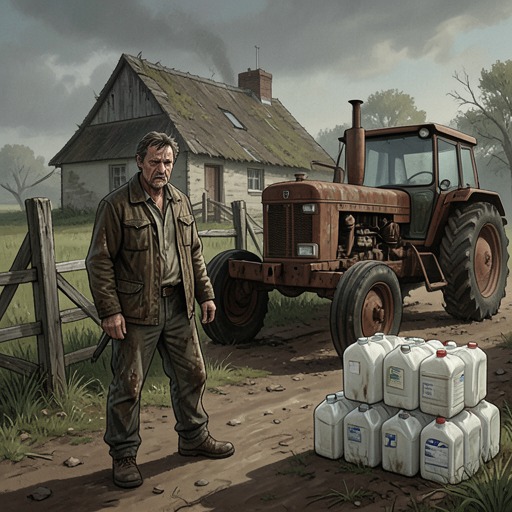
In autumn 2013, Bruno declared bankruptcy, closed the agricultural business, and handed the farm keys to the bailiff. Lara went to live with her parents with Anita. Pietro’s mother described the sequence differently: in her telling, Lara had decided to leave, and Bruno had then given up. The accounts differ over which action came first, but converge on the end of the enterprise and the separation. The farm had not failed for lack of labor or commitment. Its income could not meet its costs, and the partners did not share a workable alternative once the original plan became untenable.
Later, Lara explained that she believed they could have changed course while the farm’s failure was already apparent. They might have sold the cows, rented out the farmstead, and sought other jobs. Bruno could have worked at a building site, a dairy-processing unit, or on the ski slopes; she could have taken work as a shop assistant or waitress. She was prepared to live more ordinarily until their situation improved. Bruno, she said, could not accept the possibility of another life. She concluded that neither she nor Anita, nor the life they had been trying to build together, mattered to him as much as his mountain. Once she reached that conclusion, she began imagining a future with her daughter but without Bruno.
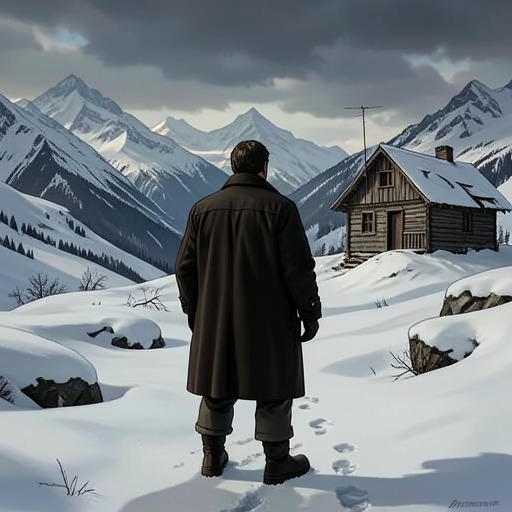
Lara’s later visit to Bruno at Barma confirms that separation has not dissolved his commitment to the mountain. She tells Pietro that Bruno wants to stay there and will not come down, describing him as the last of the mountain men. The partnership’s ending is therefore also a divergence of futures: Lara chooses to leave with Anita, while Bruno remains at Barma. Their story holds together two truths the farm had once seemed to reconcile—the value of shared care and work, and the cost of making a life around a place when one partner will not consider leaving it.