Grenon mountain region
The Eight Mountains: A NovelGrenon mountain region is the high country above Grana: a landscape of rock, scree, snow, glacier, and scattered traces of human settlement. Its name applies to the region rather than to an individual summit, a distinction that shapes how the characters understand the mountains. For Pietro, Grenon becomes more than terrain to cross. Its river, abandoned buildings, inherited ruin, and remembered routes hold different layers of family history, until the act of rebuilding a house there makes the landscape part of a shared future.
A Region Rather Than a Single Peak
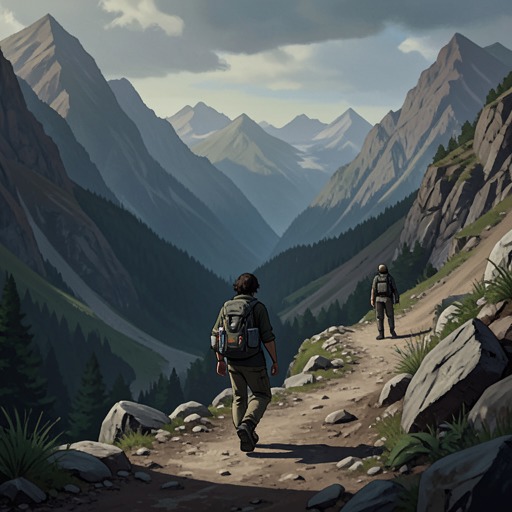
When Pietro’s father asks what the mountains above him are called, Bruno’s uncle names Grenon and clarifies that it means the mountain of Grana: the name belongs to all the peaks together, not to one separately identified summit. The region is consequently understood as a broad, connected territory. From Grana, its upper world rises through woods and high settlements toward bare rock and stone; in one account, the thinning trees mark an ascent to about two thousand meters, where larch replaces the lower trees and the riverbed becomes scree.
The approach to this high country also reveals the long history of habitation below its rocky slopes. Above the tree line, Pietro’s father points out abandoned or partly abandoned villages, isolated stables, a working fountain, and a maintained chapel. Flattened ground, piles of collected stones, irrigation ditches, and terraced riverbanks show how earlier residents made fields and vegetable gardens on difficult land. His account credits medieval settlers from the northern Alpine region with the techniques and endurance needed to live there through winters while producing food and other necessities for themselves. The remaining structures preserve that labor even as their deteriorating condition marks its withdrawal.
River, Snow, and Changing Terrain
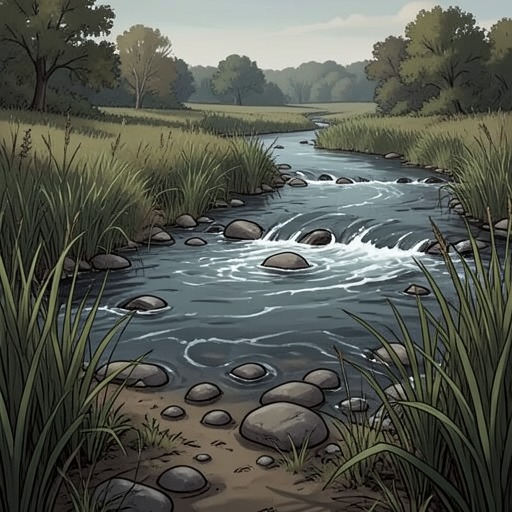
In 1987, at fourteen, Pietro and Bruno spend a month exploring the river by moving upstream through its current rather than following its banks. They climb from the bridge at Grana, wading, jumping between rocks, and finding ways past rapids. Where the water is too difficult to cross directly, they rig a rope or wedge a fallen tree between rocks to make a pontoon; even a small waterfall can take hours to negotiate. Their plan is to solve these obstacles one by one and eventually traverse the river’s full length in a single day.
The search for its source takes them beyond Bruno’s uncle’s territory, past a large tributary supplying the alpine farmsteads and a rough bridge made from planks. Higher up, the water disappears beneath the scree among the twisted roots of a juniper. This concealed ending disappoints Pietro, who had imagined the river reaching a more definite source. The episode gives Grenon a character that resists the boys’ plans: the river that seemed continuous below becomes hidden within the stone above.
Snow alters the region’s appearance again when Pietro returns with Bruno years later. Old, rain-soaked snow lies in the shade, while broader fields of it remain in the gullies on Grenon’s north side. The snow and exposed rock form contrasting bands, with warmth reaching the sunlit stone while snow persists in shadow. The lake appears suddenly as it did on their first visit. In October, the valley presents a different seasonal record: frost hardens the ground, and ice forms slides and galleries over the river’s wet stones, trapping dry grass in shapes described as found sculptures.
Settlement, Abandonment, and Damage
The changing vegetation makes visible how much of the mountain landscape depends on continued human use. Luigi Guglielmina predicts that the pastures, once wooded, may become woodland again; Pietro imagines weeds and shrubs overtaking the grazing land and eventually obscuring its ditches, drystone walls, paths, and houses. Later, at Bruno’s uncle’s farmstead, a hut roof has collapsed and forced out a supporting wall, while an outdoor bath has rusted and doors lie off their hinges. Larch saplings have begun to grow across the pastures, giving the earlier prediction a concrete form.
Flood damage further changes access to the upper landscape. Beyond the cabins, rain has brought down a large section of mountain, carrying trees and rocks into an unstable landslide. Four years later, the ground still gives way underfoot; the path has disappeared beneath mud, fallen trunks, and rubble. Bruno crosses without stopping, and says that although few people used the route even before, he may now be the only one who does. The damaged path records both a physical upheaval and the increasing isolation of places already losing their residents and customary traffic.
The Lakeside Ruin and Inheritance
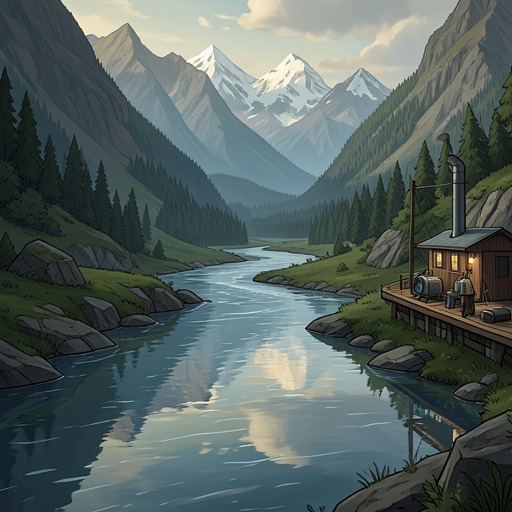
At the lake, snow partly conceals the remains of the place Pietro has inherited. The site lies on a wooded terrace beneath a high, unusually white rock face. Three surviving drystone walls emerge from the snow: two short walls and a longer one measuring four meters by seven. The rock face forms the fourth side and supplied stone for the construction. The roof has vanished, and a small Swiss pine has grown among the rubble to the height of the walls. Pietro understands his inheritance not as a completed dwelling but as rock, snow, shaped stones, and a living tree.
Bruno recalls that Pietro’s father chose the site at first sight during an earlier search, after Bruno had accompanied him to inspect other places. The ruin therefore joins the father’s remembered judgment to Pietro and Bruno’s later work. They rebuild a house there together. On a short September day, Pietro’s mother visits; Bruno lights the stove, and she looks from the window toward the lake, scree, peaks, and house, taking in the place she will remember. Pietro has carved Giovanni Guasti’s name and dates into the rock wall and painted the inscription black: “IN MEMORY IS THE MOST BEAUTIFUL REFUGE.” He then declares that the house should belong to both him and Bruno, because they built it together. The rebuilt dwelling turns an inherited fragment into a shared home without erasing the ruin from which it came.
Routes as a Record of Memory
Grenon also becomes legible through records that preserve journeys after their travelers have left. In the kitchen, Pietro finds his father’s old mountain map still fixed to the wall, transformed over twenty years from a map of valley trails into a dense record of routes across summits, alpine pastures, and refuges. Black, red, and green lines overlap or diverge. Pietro recognizes the glacier route where the red and green lines end together while the black continues, and works out that black marks his father’s journeys, red accompanies him, and green marks Bruno. The map reveals not only where Giovanni went but that he repeatedly went into the mountains with Bruno as well as with his son.
A summit notebook supplies another, more public trace. Pietro finds his father’s 1997 entry in the Grenon summit logbook: he had climbed from Grana in three hours and fifty-eight minutes and recorded that he was still in great shape. The water-blurred writing places Giovanni’s effort on the same barren mountain that casts a shadow over Pietro’s house. Routes on a wall map, a few lines in a summit notebook, an inscribed name, and the rebuilt refuge preserve different versions of the past. Together they make Grenon a landscape where physical traces outlast absence, and where Pietro’s return to the mountain becomes a way of carrying his father’s memory forward.