Piero
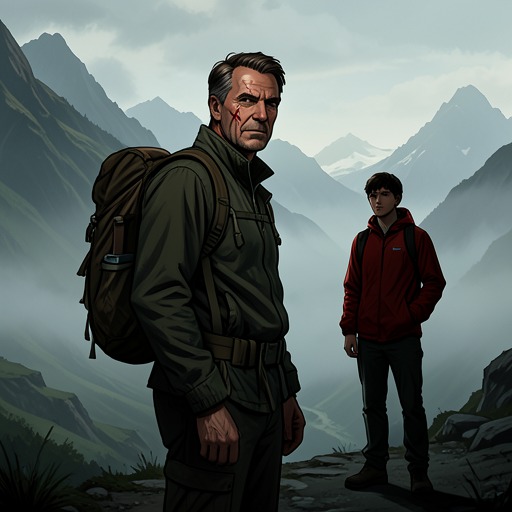
The Eight Mountains: A NovelPiero was the narrator’s maternal uncle, a would-be doctor, and Giovanni Guasti’s closest friend before becoming his climbing companion. His death in a spring avalanche on Sassolungo ended their shared mountaineering and changed the course of the family: Giovanni was blamed and isolated, while Piero’s sister drew close to him. The narrator learns about Piero chiefly through his mother’s account, which restores a person who otherwise survives in the story through relationships, recollection, and the consequences of his absence.
Identity and Background
Piero and Giovanni Guasti were both born in 1942, five years after Piero’s sister. As boys, they met at a campsite where the village priest took children to spend a month in the Dolomites. They slept in a tent, played in the woods, learned mountain skills, and practiced looking after themselves. The shared summers laid the foundation for a friendship that continued into adulthood.
Piero did well at school and was reflective and taciturn. His sister remembered him as sensitive to other people and capable of compassion, qualities she thought would have suited him to medicine. He had long wanted to become a doctor. Giovanni, by contrast, was more absorbed by the material world and went on to study chemistry. Their different interests did not prevent their closeness; they gave the friendship a balance between Piero’s attention to people and Giovanni’s fascination with the elements of the mountain world.
Giovanni was an orphan, and the priest who organized the camping trips watched to see whether he would form bonds with the other children. Piero’s grandfather agreed to welcome Giovanni into the family home, both offering him a place in the household and helping provide for his future. Piero’s sister recalled that Giovanni did not lack shelter so much as a family. By his late teens, he was a regular presence at the farmhouse on weekends and throughout the summer, helping with harvest work, winemaking, haymaking, and cutting wood. Piero and Giovanni shared youthful adventures there, including pressing grapes together and being discovered drunk in the cellar.
Friendship and Life in the Mountains
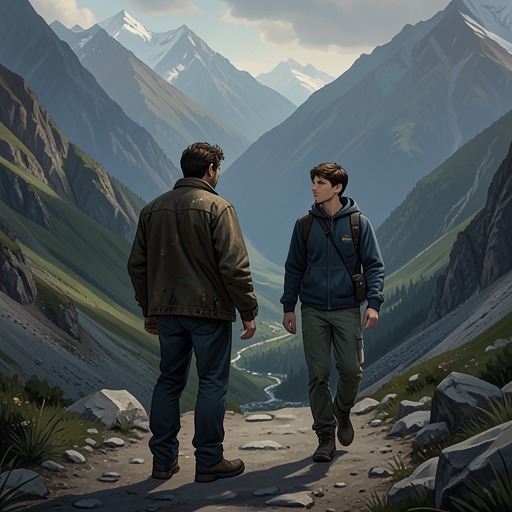
As young men, Piero and Giovanni began making mountain trips without their families. From June through September, they went out almost every Saturday. They travelled by bus toward Trento or Belluno and hitchhiked back up into the mountains, sleeping in meadows or haylofts. They had little money, and their trips belonged to a time when the Alps offered young people a faraway landscape for adventure without requiring wealth.
The two men approached these expeditions differently. Giovanni studied maps and planned routes; Piero was more cautious, but also more stubborn. He could be difficult to persuade to begin a plan and even harder to turn back once committed. That persistence made him a fitting companion for Giovanni, who was prone to give up when events failed to follow his expectations. Piero’s caution and resolve thus both complemented and countered his friend’s adventurousness.
After completing his chemistry degree, Giovanni performed military service in the Alpine artillery, moving with his company along mountain tracks. During that year, he grew interested in winter mountaineering and spoke to Piero about snow and the mountain as a different world. At Christmas in 1968, the friends began their first winter season together. They borrowed skis and sealskins, returned initially to familiar places, and paid to stay in refuges rather than sleeping outside. Neither had the money for an Alpine guide. Giovanni was exceptionally fit, while Piero was less so after concentrating on his final examinations, but Piero shared his enthusiasm for making new discoveries.
The Sassolungo Avalanche
In March, Piero and Giovanni crossed a slope on a fork of Sassolungo in the afternoon sun. It had snowed recently, and the conditions were too warm for a safe crossing. Giovanni was somewhat ahead and had taken off one ski when he felt the slope give way. Piero was on the steeper, smoother part of the slope as the snow began to move. The avalanche was made of damp spring snow rather than the dry, powdery snow of winter; it rolled downhill and stopped where the slope flattened, about two hundred metres below.
Giovanni searched the avalanche area, but the snow had settled and there was no sign of Piero. With no shovel and unable to make progress through the softer snow, Giovanni returned to the refuge to summon emergency services. Rescuers arrived after dark and found Piero the following morning, dead beneath the snow. He was still a young man whose intended medical career and partnership with Giovanni had been cut short.
Blame and Family Consequences
Those around Giovanni considered the accident his fault. The two friends had been ill-equipped and had attempted the crossing at the wrong time, after recent snowfall and in warm conditions. As the more experienced mountaineer, Giovanni was expected to recognize the danger, avoid the slope, and retreat. Piero’s grandfather could not forgive what he saw as Giovanni’s mistakes. He did not formally bar him from the house, but his manner changed, and he eventually avoided Giovanni altogether. At the memorial Mass for Piero, he sat on the other side of the church. Giovanni eventually stopped coming around.
Piero’s sister had known Giovanni for years as her brother’s friend and had gradually become his own friend. After Piero’s death, she met with Giovanni because he was in a terrible state and, in her view, had been left alone to bear the blame. Their bond deepened into love, and about a year after the accident they married. The family refused their wedding invitations, so they married without relatives present and left for Milan to begin a new life. Piero’s death therefore marked both the end of a friendship’s mountain partnership and the start of the relationship that would become the narrator’s parents’ marriage.
Memory and Narrative Significance
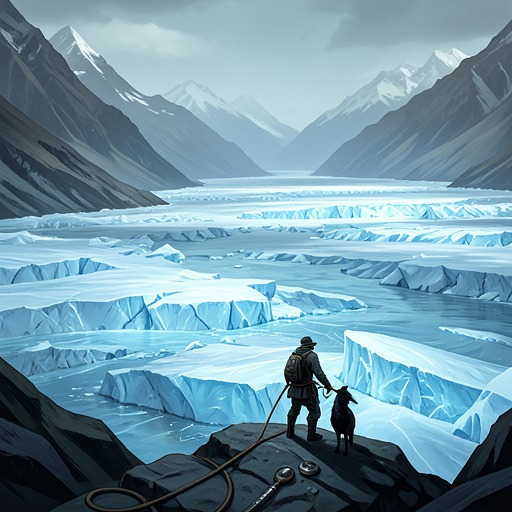
The narrator hears Piero’s history from his mother while back in the mountains, where the account changes how he understands Giovanni. Giovanni had avoided revisiting unhappy memories, but glaciers could bring the past back to him. His way of thinking about them—as snow from winters long gone, holding a memory that summer’s melting cannot erase—acquires a painful context in the story of Piero’s death. The narrator comes to distinguish the father he knew in the city from the mountain-going father whose grief and past he had only partly understood.
Piero is consequently present in the narrative less through later actions than through what his loss set in motion: Giovanni’s estrangement from Piero’s family, his relationship with Piero’s sister, and the family life begun in Milan. His mother’s recollection gives Piero a character beyond that loss: a sensitive aspiring doctor, a committed friend, and a mountaineer whose caution and stubbornness made him Giovanni’s natural counterpart. The narrator’s later work of remembering his father’s mountain life cannot undo Piero’s death, but it brings the concealed history of that friendship into the present.