The Sassolungo Avalanche Accident
The Eight Mountains: A NovelThe Sassolungo Avalanche Accident is the fatal winter accident in which Piero, the brother of Pietro’s mother, was buried by an avalanche while skiing with Giovanni Guasti. Its importance extends beyond the death itself: the accident reshaped Giovanni’s place in the family, preceded his marriage to Pietro’s mother, and later became part of Pietro’s understanding of the father he had known only imperfectly. The event is recounted to Pietro by his mother and preserved in his narration as both a mountain disaster and a turning point in the family’s history.
Background and Conditions
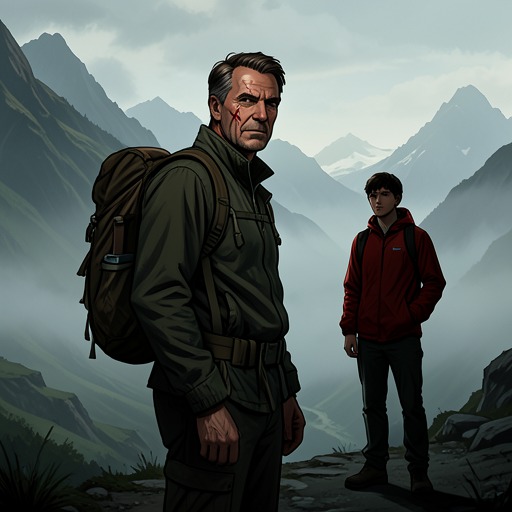
Giovanni and Piero began their first winter season together at Christmas in 1968, shortly after Giovanni’s discharge from military service. They borrowed skis and sealskins and returned first to places they already knew, now travelling in winter and paying to sleep in refuges rather than staying outside. Giovanni was the fitter skier; Piero had spent the previous year preparing for his final exams, but shared his enthusiasm for exploring. They had little money for food and lodging and none to hire an Alpine guide. Their winter technique was still developing, and Giovanni’s confidence in their ability to get down from the mountains did not amount to the preparation the conditions required.
In March they set out for a fork of Sassolungo and crossed a slope in the afternoon sun. It had snowed recently, and the weather was too warm for a safe crossing. The two men were poorly equipped for winter travel. In retrospect, the danger was not obscure: Giovanni had more experience and should have recognized the conditions, avoided the crossing, or led their retreat. That judgment became central to the blame laid on him after Piero’s death.
The Avalanche and Search
Giovanni was ahead when the ground began to move. He had taken off a ski to prepare for the ascent and felt the slope give way beneath him. He moved sideways and caught hold of a rock, but lost the ski as it slid down the slope. Piero, on a steeper, smoother section, also lost his balance and slid on his stomach, unable to find purchase. The snow gathered speed as it descended.
This was not a cloud of dry winter powder. The avalanche consisted of damp spring snow that rolled and accumulated as it went. It passed over Piero with little apparent impact and continued downhill; about two hundred metres below, where the slope flattened, it finally stopped. Giovanni ran down before the movement had ended, searching for his friend, but could not find him. The snow had compacted and become hard. He called out and looked for any sign of movement, but the slope had gone still again in less than a minute.
Giovanni had no shovel, and the possibility that Piero might have survived in an air pocket offered no practical means of reaching him. Giovanni first headed toward the refuge where the two had spent the night, but sank into softer snow. He turned back for the remaining ski and used it to make his way down, falling repeatedly but avoiding the worse difficulty of sinking at every step. He reached the refuge in mid-afternoon and called the emergency services. Rescuers arrived after dark. The next morning they found Piero dead beneath a metre of avalanche snow, suffocated under the covering.
Blame and Family Rupture
Responsibility was assigned to Giovanni almost immediately. The circumstances supported the accusation: the pair were ill-equipped, had crossed at the wrong time, and had chosen a slope made dangerous by recent snowfall and warmth. As the more experienced skier, Giovanni was expected to recognize the risk and turn back first. The account does not present the avalanche as an inexplicable misfortune that erased human judgment; it holds the mountain’s force together with the preventable errors that exposed the two men to it.
Piero’s father, Pietro’s grandfather, regarded Giovanni’s mistakes as unforgivable. His anger did not diminish with time. He did not formally bar Giovanni from the house, but his manner changed whenever Giovanni appeared, and he began to avoid him. A year after the accident, at the memorial Mass for Piero, he sat on the other side of the church. Giovanni eventually stopped trying to disturb him. The death therefore continued to shape family life after the search had ended: grief hardened into blame, and blame into distance.
Marriage, Memory, and Afterlife
Pietro’s mother had known Giovanni for years as her brother’s friend, and over time had become his friend too. After the accident, they began meeting to talk because she felt it was unfair that Giovanni had been left alone to bear the blame. Their companionship became love, and about a year later they married. Their relatives refused the wedding invitations; the couple married without family present and prepared to begin again in Milan, with a new home, work, friends, and mountains. The accident thus lies immediately behind a new family life, but that beginning did not reconcile Giovanni with the family he had left behind.
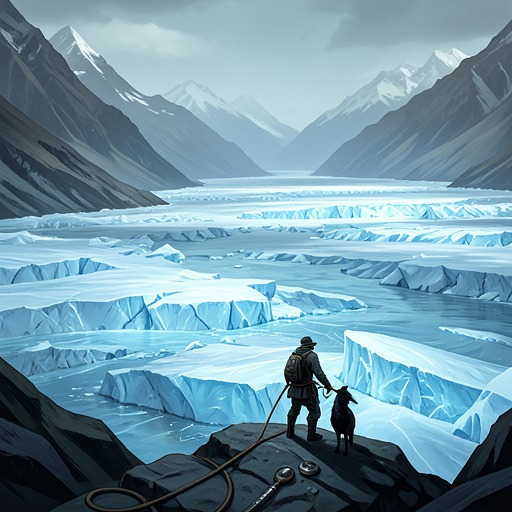
Years later, Pietro’s understanding of the accident changes through his mother’s telling and through signs of his father’s life in the mountains. His father’s map, still pinned in the old kitchen, had become a dense record of routes made over two decades. Its colored lines distinguished the journeys Giovanni had taken alone from those he had made with Pietro or Bruno. The map did not explain the accident, but it revealed a life in the mountains that Pietro had not seen during their years in the city. Remembering how his father spoke of glaciers as the snow of winters long past, Pietro came to recognize a second, mountain-dwelling father: a man marked by an earlier loss and by a life that continued beyond it.
The accident also stands within a larger pattern of mountain danger without being confused with later disasters. Much later, while Pietro and Bruno were together at Barma, an avalanche on Grenon passed nearby and broke through the frozen lake; the following winter, extraordinary snowfall buried the house and Bruno disappeared. These events recall the mountain’s capacity to overwhelm human plans, but the Sassolungo accident remains distinct in its immediate human aftermath: Piero’s death, Giovanni’s isolation, and the family rupture that preceded his marriage to Pietro’s mother. For Pietro, reconstructing his father’s story becomes inseparable from the work of preserving his memory and rebuilding the mountain refuge Giovanni had left behind.