Turin
The Eight Mountains: A NovelTurin is the city the narrator chooses after leaving Milan at twenty-three, and the first place where he begins to shape a life distinct from his father’s expectations. The relationship that brought him there ends, but his attachment to the city lasts: its rivers, arcade cafes, and mountain-lined horizon offer both a sense of home and the possibility of becoming someone other than the person his family had imagined.
A Chosen City
Fresh from military service, the narrator leaves Milan to join a girlfriend in Turin. The move belongs to a family pattern: he has inherited the idea that a young person must leave the place where he was born and raised in order to develop elsewhere. But the pattern does not dictate the outcome. The relationship does not last, while the city does. He feels immediately at ease among Turin’s ancient rivers and arcade cafes, and, as he wanders around penniless, reads Hemingway and remains open to encounters, work, and whatever possibilities may appear.
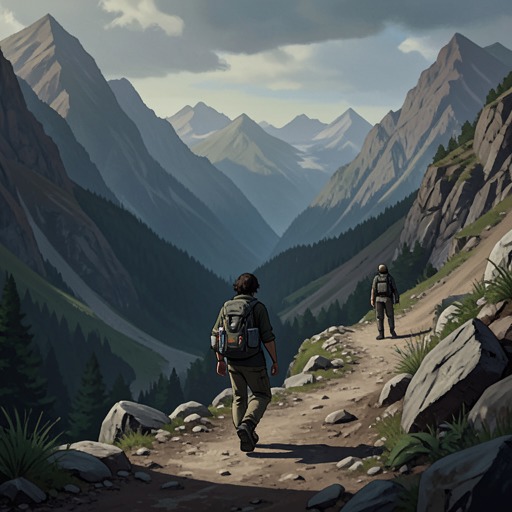
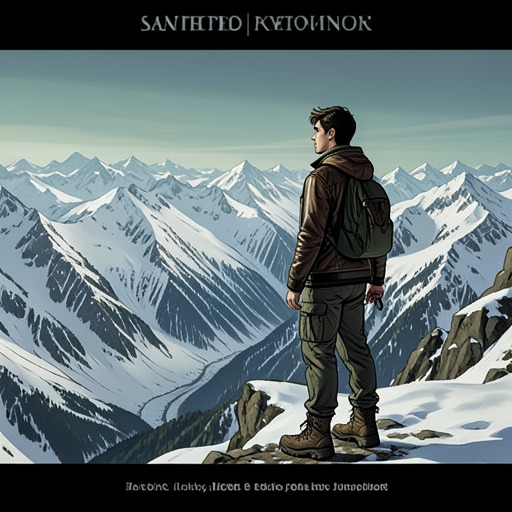
The mountains stay in view even after he has moved to the city. They form the background to what he thinks of as his moveable feast; whenever he leaves his apartment, catching sight of them on the horizon feels like a blessing. Turin is therefore not presented as a clean break with the mountain world. It is a place from which that world remains visible, at once distant and available to memory.
Work, Study, and Correspondence
The narrator’s life in Turin takes shape amid financial insecurity and uncertain ambitions. He wants to make a living as a documentary filmmaker, but accepts work of every kind to pay the rent. After abandoning university studies, a decision that renews conflict with his father, he follows his own path rather than the future his father had anticipated for him. Enrolling in film school gives that path a more definite direction, and it is there that he makes his first friends in Turin.
His interest in documentary film rests on a sense that he is suited to observing and listening. His mother encourages him in that belief, and their relationship is sustained through letters: because he rarely talks much on the phone, she writes, and he replies by sitting down at a table in the evening to tell her what is happening. He shares his decision to attend film school and, over the years, sends her the portraits of people and places and explorations of the city that he makes as short films. They are films nobody else sees, but he is proud of them. His mother also sends him money as he tries to establish himself. The correspondence gives his uncertain creative life a witness and an ongoing source of reassurance.
Turin’s promise does not make the narrator’s private life settled. He tells his mother that he likes the life taking shape around him, but avoids her questions about girlfriends. Those relationships rarely last more than a few months; when one becomes serious, he withdraws. The city offers openings and new acquaintances, but it does not by itself resolve his difficulty with intimacy or turn creative aspiration into a secure profession.
A Relationship with the City
The narrator’s attachment to Turin outlasts the first romance that brought him there. A later account of Lara makes clear that the city is not simply a backdrop to his relationships. When they meet, she too has a history of leaving a mountainous region to study in the city. She does not regret that choice: Turin’s streets, people, nights, work, and homes have made her feel that her life there has been a love story, though one approaching its end. Her account echoes the narrator’s own divided attachment: leaving a place can open a life, yet the new place can itself become something loved.
By the time the narrator leaves his Turin apartment, it has been his home for ten years, although he has used it less and less. Emptying it in a single day, gathering the mixed-up belongings accumulated one by one, feels to him like taking back an engagement ring and accepting defeat. The image makes the departure carry the weight of a failed promise. He does not know whether the hopes he once attached to the city were only his own illusion or whether the city failed to fulfill them. The uncertainty matters: his melancholy is not proof that Turin was false to him, but evidence that the future he once imagined there has become difficult to recognize.
Leaving and Returning
After giving up the apartment, the narrator keeps a room in Turin for his stays, paying only nominal rent, and takes boxes of his possessions to his mother’s home in Milan. The transfer leaves him feeling as if he is pointlessly moving his things from place to place, climbing apartment stairs to atone for some unknown past sin. The city has not vanished from his life, but it no longer provides a settled home. His belongings are divided between temporary accommodation and his mother’s apartment, just as his sense of belonging is divided between city and mountain.
During a later period when his mother is in Grana, he spends more than a month alone in the old Turin apartment. By day he visits the offices of the producers with whom he is working; by night he watches traffic from the window and imagines the river hidden beneath the avenue. He feels that nothing there belongs to him and that he belongs nowhere. He is trying to secure production for a documentary series on the Himalayas, a project that would keep him away for a long time. After many fruitless meetings, he finds someone willing to back him. The funding will cover travel and little else, but he considers that enough. Turin is at once a place of professional struggle and the base from which he prepares to leave again.
City and Mountain
The narrator’s return to Italy in 2010 places Turin within a wider atmosphere of economic disillusionment. The production companies, advertising agencies, and television channels he had worked for are closing through bankruptcy; friends nearing forty are reduced to occasional work and help from retired parents. The surrounding construction boom seems at odds with the talk of money having run out, and the narrator encounters anger over a future that appears to have been taken from his generation. He is relieved that he already has a ticket allowing him to leave.
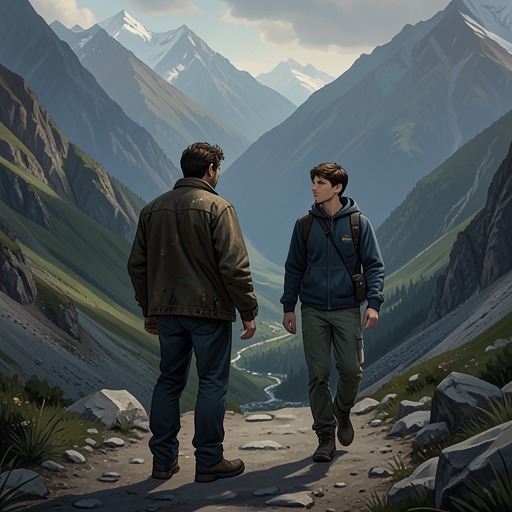
The contrast between the city and the mountain route becomes especially concrete when he travels by coach toward Grana. He gets off at the bar where he and his mother once went to make calls, though the red phone box is gone. The old mule track is choked with brambles and leaves; beyond the ruins of a tower, a mobile-phone mast has appeared, while a cement dam interrupts the river below. These changes register differently from Turin’s urban disappointments. Once beyond Grana, he feels that he is leaving poisoned things behind, and the neglected valley seems preserved not by design but because it has been considered worthless. The city remains part of his history—his education, work, friendships, and attempted future—but the mountain journey exposes how far his sense of home has shifted. Turin’s lasting significance lies in that tension: it was where he learned to begin a life on his own terms, even as he came to understand that beginning elsewhere did not mean belonging there forever.