Bruno’s farmstead
The Eight Mountains: A NovelBruno’s farmstead is both a family property and the center of Bruno’s effort to build a life in the mountains through cattle raising and cheese production. Restored from an older group of stone buildings, it becomes a place of skilled, intimate labor and seasonal independence—but also a business burdened by debt, whose collapse contributes to the breakup of Bruno and Lara’s partnership.
Property and Setting
Bruno first told Pietro of his plan one rainy evening at Barma. He wanted to buy his uncle’s farmstead, and had already put aside money for a down payment; his cousins were willing to sell, eager to be rid of the place and their bad memories of it. Bruno hoped to borrow the balance from the bank. Living and working at Barma had served as a trial: he believed he could cope with the demands of the mountain, and imagined rebuilding the huts, buying cattle, and having the farm running within a few years.
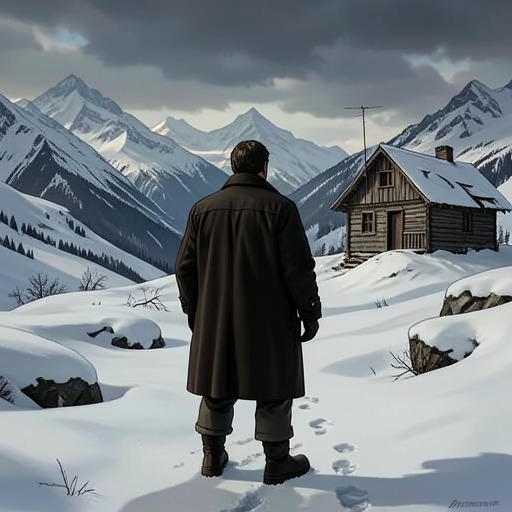
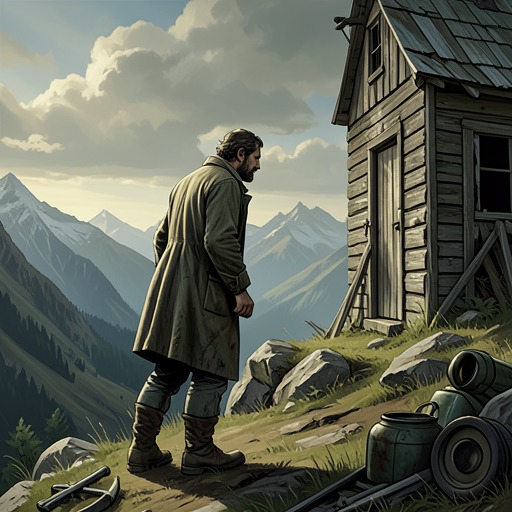
The property’s appeal stood against a broader landscape of abandonment. In Grana, where only fourteen people lived in 1984 compared with as many as a hundred in the past, Pietro and Bruno explored empty stables, haylofts, granaries, and other disused buildings. Around the farmstead, makeshift objects and refuse—plastic buckets, half-rotted wood, a stove made from a diesel-oil drum, and a bathtub repurposed as a drinking trough—suggested neglect rather than care. Luigi Guglielmina explained that the economics of small Alpine farms no longer made sense, and that he kept working largely from passion. He predicted that within ten years of his death the land would revert to forest.
When Pietro later visited, the farmstead’s three principal buildings—a house, a stable, and a storeroom—had been reconstructed in stone, their walls and roofs returning them to what seemed a former era. They now served a modern agricultural enterprise. Bruno brought out a bottle of white wine from the cellar, repeating a gesture Pietro remembered from his uncle. The resemblance marked a change in ownership and responsibility: Bruno had become master of the place, though the toast was made standing at the stable threshold, with no furniture yet available and the cows still adjusting to the mountain.
Work and Production
Bruno insisted on milking the cows by hand, believing the method best suited to animals that could be easily startled. Each cow took about five minutes to yield its milk; at that pace he could milk twelve cows an hour, and the whole herd required two and a half hours. He began before dawn, with no weekends or leisurely mornings. Yet he loved the work and would not let anyone else do it. In the warmth of the stable, milking became a repeated act of care, as he worked through the hours between night and day.
Lara brought him coffee and biscuits at seven and took the herd out to pasture twice a day. Bruno combined 150 liters of morning milk with the same amount from the previous evening, after skimming off the cream. He heated the mixture, added rennet, and by nine strained and pressed it into wooden molds. The yield was five or six cheeses—no more than thirty kilos of toma from 300 liters of milk. He made butter from the cream, then washed the boiler, churns, pails, work surfaces, and stable, sluicing the dung into the gutters. The sequence left little separation between animal care, production, and cleaning: the day’s work continually renewed itself.
Cheesemaking also carried uncertainty. Bruno knew how to care for the cows and follow the steps he had been taught, but could not be certain whether the cheese would form properly or turn out well. He regarded that stage as an alchemical process beyond his control. After a brief midday rest, he returned to practical tasks such as building a calf enclosure or digging drainage where rain had waterlogged the pasture. The cows came in for a second milking at four; Lara took them out again at seven, after which the farmstead settled into the evening.
From Farmstead to Market
The first cheese delivery made the farm’s connection to the valley tangible. Toward the end of July, Pietro accompanied Lara down to the village as she carried the first batch, matured for six weeks. Bruno had acquired a smaller, dark-coated female mule for the work and built a wooden packsaddle. It carried twelve cheeses weighing sixty kilos in total—the farm’s first valuable load dispatched downhill.
Bruno stayed behind to clean the stable. As he had decided during the rebuilding work, transport was not work he wanted to do: he would remain in the mountains while Lara went down and back with the goods. She led the mule carefully over the steepest parts of the path, where the forward weight of the packsaddle could unbalance it. At Grana, a buyer examined each cheese by feeling its crust, smelling it, and tapping it for air bubbles. He weighed the cheeses, entered the figures in a ledger, and gave Lara a receipt recording their first earnings. She returned up the path with the mule and dog. The delivery was a concrete beginning, but it also made clear that the farm’s production depended on labor beyond Bruno’s work in the stable.
Debt and Collapse
The enterprise’s domestic and financial strains became increasingly difficult to separate. While Pietro was away, the summer farmstead could be nearly self-sufficient, but winter brought stable rent and other expenses. The cheese income did not cover the mortgage payments, debts accumulated without reducing what was owed to the bank, and Bruno and Lara took out another loan to pay older debts. Lara tried to improve the returns by bypassing the distributor and selling directly to shopkeepers. This added work: twice a week she left Anita with Pietro’s mother and drove to make deliveries, while Bruno managed alone. Hiring help would have increased costs and erased the advantage of the change.
Lara wanted to preserve the work and the life they had built, even when the daily demands and poor finances made the choice seem irrational to an outside observer. Bruno, however, bristled when she raised money, insisting that Pietro rarely visited and that they should not spend their time discussing finances. The farmstead that had once offered a shared project was turning them into antagonistic financial partners. Pietro’s mother, who kept in touch with him and watched Anita, recognized the worsening crisis: Lara was exasperated by the debts, while Bruno withdrew into silence and work.
In autumn 2013, Bruno declared himself bankrupt, shut down the agricultural business, and handed the farm keys to the bailiff. Lara went to live with her parents with Anita. Pietro’s mother understood the separation somewhat differently, believing Lara had decided to leave and Bruno had then given up; either way, the farm and the family life built around it had ended. Lara later said that alternatives had existed when the business first proved unviable: they could have sold the cows, rented out the farmstead, and found other work. She was willing to live more ordinarily until their situation improved. Bruno could not imagine an alternative life, and Lara concluded that his attachment to the mountain had outweighed his commitment to her and Anita. The farmstead’s failure was therefore not only economic: it exposed a conflict over what their shared life was for, and what each of them was willing to give up to keep it.