Lara
The Eight Mountains: A NovelLara’s story turns on a distinction between loving the mountains and being willing to make every other part of life answer to them. She arrives in Grana as someone at ease with hard physical work and mountain routines, helps Bruno revive an alpine farm, and becomes the mother of Anita. But when the farm’s debts deepen, she is prepared to abandon it and make a different life; Bruno is not. Her eventual separation from him reveals the cost of treating the mountain as the only possible home.
Identity and Introduction
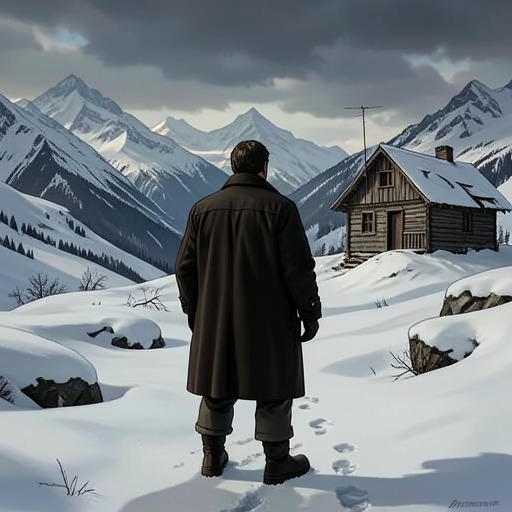
Lara first comes up to Barma with Pietro in the summer of 2007, when they have been together for only a couple of months. Pietro recognizes that he has begun withdrawing from her and avoiding the relationship; when she makes him acknowledge this, she is hurt for a night, then recovers. Once they accept that their time together is ending, their days in the mountains become more relaxed. Lara likes the house, lake, rocks, and peaks of Grenon, and takes long walks alone on the paths around Barma. Pietro is struck by her strength and by how naturally she manages the spare conditions there. Their time in the mountains gives him a fuller understanding of her than their preceding weeks together in the city.
Lara tells Pietro that she grew up in another mountainous region, which she left years earlier to study. She misses those mountains but does not regret moving to Turin: she describes her life there, its streets, people, nights, work, and homes, as a love affair that is nearly over. This combination matters to her later choices. She is not simply driven back to the country by a rejection of city life; she can value both places, and has already made a deliberate life away from the mountains.
Returning to Grana and Building the Farm
When Lara later goes to see Bruno, she wants to visit the alpine pasture and learn about his work and plans. Bruno tells her that he expects his agricultural business to begin operating in the spring, hopes to buy thirty cows, and intends to make cheese rather than sell the milk to a dairy. Since he will need another worker, Lara offers herself for the job. She likes the place and has experience around cattle. Bruno is pleased by her offer but has not imagined a woman joining him there; Pietro, asked for his view, believes she will do the work well.
By the following year Lara and Bruno are a couple. Pietro observes that she seems transformed by life outdoors: her earlier air of disappointment has disappeared, and she laughs freely. Bruno is openly affectionate, continually touching or reassuring her, while she appears more at ease in his presence. Their relationship becomes part of the new life taking shape at the farm, rather than a private attachment separate from its labor.
Lara is there when Bruno’s twenty-eight dairy cows arrive in Grana. The unsettled animals come down the truck ramp in a rush, and Lara joins Bruno, his mother, and Pietro in containing them before they scatter. The group then drives them up the mule track with the help of two local herding dogs. The animals’ return past ruined huts and overgrown stone walls makes the abandoned valley seem newly alive. Lara’s part in this work is practical and immediate: she is among the people who turn Bruno’s plans into a working herd.
Motherhood and Work
Lara remains active through her pregnancy. While Pietro is in Mustang, his mother writes to tell him that Lara is five months pregnant. Her reports follow the summer: Lara twists an ankle while out in the pasture, suffers sunstroke while making hay, and, despite backache and swollen legs, continues taking cheese down twice a week by mule. Bruno suggests hiring someone to take over her work, but Lara refuses. She compares the pregnant cows, which continue their routine without alarm, to her own situation; seeing them calm helps her feel calm too. An August scan confirms that she is expecting a girl. By then, her pregnancy restricts her movement to walking in front of the herd and sitting beneath a tree to watch it.
Anita is born in autumn. Lara’s work and care continue to be closely entangled: the farm depends on her labor, while the child becomes a growing responsibility shared across the family. Pietro’s mother often keeps Anita in Grana during the summers, giving Lara and Bruno some relief from childcare. She becomes deeply attached to the girl and watches her grow into a wild and fearless child. Her concern for Anita also makes her attentive to the strain between the child’s parents, even when Pietro is far away.
Debt and Separation
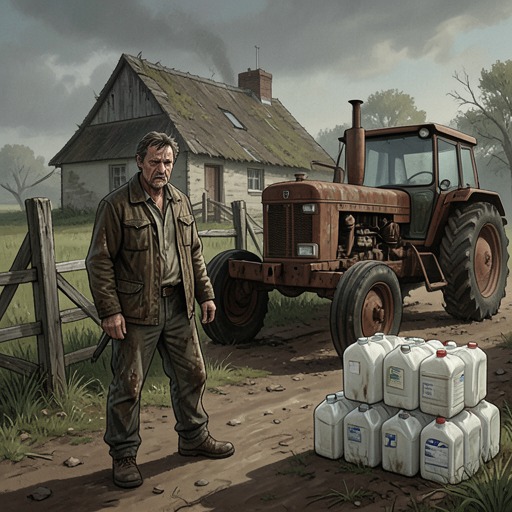
Over time, the farm’s daily life becomes inseparable from its financial trouble. Lara tells Pietro that cheese sales do not cover the mortgage payments; income disappears into costs without reducing the bank debt. Summer offers some degree of self-sufficiency, but winter brings stable rent and other expenses, forcing Bruno and Lara to take out another loan to service earlier debts. Lara tries to improve the business by cutting out the distributor and selling directly to shopkeepers. The change brings more work: twice a week she drives to make deliveries, leaving Anita with Pietro’s mother and Bruno to manage the farm alone. Hiring help would add costs they cannot afford. When Lara discusses the strain, Bruno becomes angry and asks to change the subject, resenting how often money dominates their limited time together.
The business and relationship end in autumn 2013. Bruno declares bankruptcy, shuts down the agricultural enterprise, and hands the farm keys to the bailiff; Lara goes to live with her parents with Anita. Pietro’s mother understands the breakup as Lara’s decision to leave and Bruno’s surrender to failure, while the practical sequence can also be told as the farm failing first and the family separating afterward. The distinction does not alter the outcome: the shared life at the farm has ended, and Bruno is left alone.
Lara’s Choice and Aftermath
When Pietro later speaks with Lara, she explains that the crisis had not always been beyond repair. Two or three years earlier, she believes, they could have sold the cows, rented out the farm, and found ordinary jobs until circumstances improved. She was willing to work as a shop assistant or waitress and accept a less exceptional life for a time. Bruno, by contrast, could not imagine an alternative. Lara came to feel that neither she nor Anita, nor the future she thought they were building together, mattered as much to him as his idea of the mountain.
That realization ended the relationship for her. She began imagining a future elsewhere with Anita, rather than waiting for Bruno to change his mind. Later, when Pietro says Bruno is at Barma and refuses to come down, Lara tells him that he cannot help someone who does not want help. Her response is not presented as indifference: she has already tried to build a life with Bruno and knows what it cost when he rejected other possibilities. At the counter where the conversation ends, she returns to her work as a waitress. The contrast with her earlier days guarding cattle beneath the rain marks not a repudiation of her mountain competence, but the life she has chosen after the farm and the relationship could no longer hold together.