Mezzalama refuge
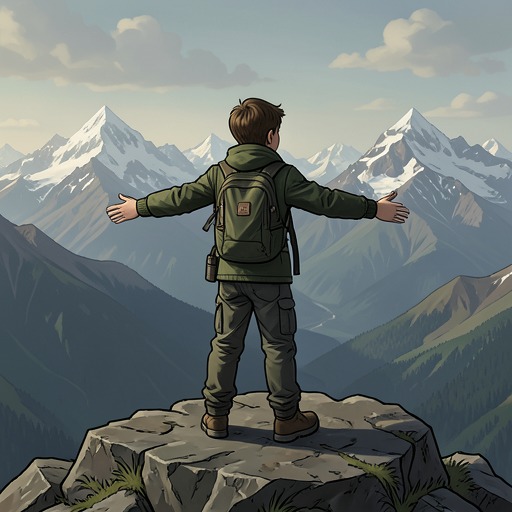
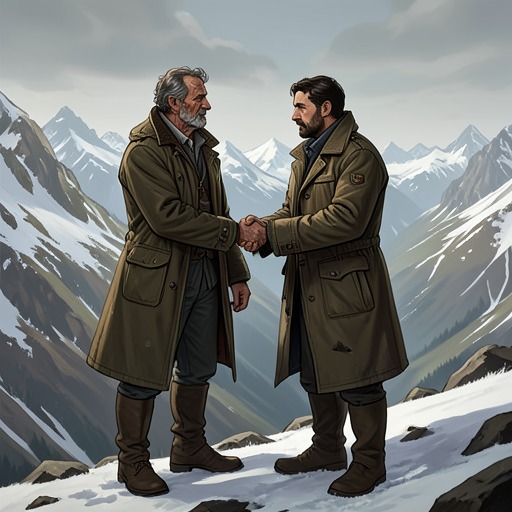
The Eight Mountains: A NovelThe Mezzalama refuge is the staging point for Giovanni Guasti’s first glacier excursion with Bruno and Pietro, and the last shelter before the boys encounter the glacier on foot. The stay gathers together the father’s scientific and mythic account of ice, the crowded social world of mountaineers, and Pietro’s physical unease; the departure at daybreak turns the refuge into a threshold between shelter and exposure.
Approach and Setting
As the three climb toward the Mezzalama refuge, Giovanni explains that the glacier preserves the memory of past winters. Snow that survives summer is buried by later snowfall, gradually becomes ice, and forms layers that can be read like tree rings. Yet the glacier is not a still archive: it continually slides down the mountain. His account joins the scientist’s explanation of snow and ice to a mythic image of the mountain safeguarding the past.
The refuge first announces itself through signs in the worsening weather and fading light. A few drops of rain have fallen; fog gathers as they reach the end of the moraine. The smell of generator fumes precedes the wooden, two-story building, while voices sound in a language Pietro does not recognize. Its entrance platform is marked by crampons and crowded with climbers’ rucksacks, ropes, sweaters, vests, and thick socks left to dry. The building is not simply a distant landmark: its noise, equipment, and human presence make it a sudden point of arrival in the fog.
A Crowded Night
The refuge is full. Its rule of hospitality means nobody is turned away, though some climbers must sleep on benches or tables. Bruno and Pietro, by far the youngest members of the gathering, eat early and go upstairs to make room for others. They share a bed in the large dormitory, remaining fully dressed beneath a rough blanket while they wait for sleep.
The boys cannot see stars or the valley lights through the window. Instead, cigarette tips glow as men go outside to smoke, while voices carry up from the ground floor. After supper the mountaineers compare routes for the next day, discuss uncertain weather, and trade accounts of earlier nights in refuges and past climbs. Giovanni orders a liter of wine and joins them, exchanging jokes in Veneto dialect with people from his own region. Though he has no summit attempt planned, the role of leading two boys onto a glacier fills him with pride. Pietro, shy and uncomfortable, feels embarrassed by his father’s confident sociability; Bruno sees the same scene differently, recognizing that Giovanni knows his way around the mountains.
The refuge’s warmth does not erase Pietro’s homesickness. He longs for his own bed and for his mother near the stove. At lights-out, the supervisor switches off the generator, and the building falls dark. Headlamps soon appear as late-arriving climbers search for sleeping places. Giovanni passes the boys’ room, his breath heavy with grappa, to check on them; Pietro keeps his eyes shut and pretends to be asleep. The refuge offers communal shelter, but for him the night remains marked by discomfort and distance from home.
Daybreak and Departure
The party leaves before daybreak. Fog fills the valleys below while the sky is clear and mother-of-pearl colored; the last stars fade as light spreads. Climbers bound for more distant peaks have already departed, and some are visible roped together high above, tiny against the expanse of white. The refuge is the point from which these different journeys disperse into the glacier landscape.
Giovanni attaches the hired crampons and ties the three together at five-meter intervals, with himself first, Bruno next, and Pietro behind. The rope arrangement around their anoraks takes time: he has not tied such knots for years, and the preparation is laborious. They are the last to leave, slowed by scree that catches against the crampons and by the rope that makes Pietro feel clumsy and overburdened. Once he steps onto the snow, however, the sensation changes. The crampons’ steel points bite into the hard surface and grip securely, giving his legs an unexpected strength.
That first experience soon tests him. The warmth of the refuge wears off and nausea grows as Giovanni presses ahead, apparently in a hurry. Pietro suspects his father hopes to reach a peak after all and appear there with the boys. Each time Pietro stops to catch his breath, the rope tightens and makes Bruno stop too; the tension reaches Giovanni, who turns back to look at him with annoyance. The transition from the refuge to the glacier therefore carries both exhilaration and strain: the equipment connects the three climbers, but it also transmits the consequences of Pietro’s struggle through the whole party.
Narrative Significance
The Mezzalama refuge joins explanation to experience. Giovanni’s account presents the glacier as a record of earlier winters, but the boys encounter that idea from a crowded building reached through rain and fog, then leave it at dawn for the moving ice itself. The sequence makes the refuge a temporary human shelter beside a much older natural archive.
For Pietro, the refuge is also a boundary in his first glacier journey. Its dormitory, warmth, and crowded company stand opposite the exposed snow, where his body—not his father’s explanation—first tells him what the ascent demands. The refuge’s significance lies in this passage: from listening to Giovanni describe the glacier, through an uneasy night among mountaineers, to setting foot on the ice with Bruno and his father tied to him by rope.