
The Old Farm and the Unbroken Ground
The EmigrantsThis flow traces the novel’s recurring contrast between inherited land that confines its people and land imagined as the basis of freedom.
increasing Bearing strength in each event
 decreasing
Bearing strength in each eventdecreasingA World Made by the Farm
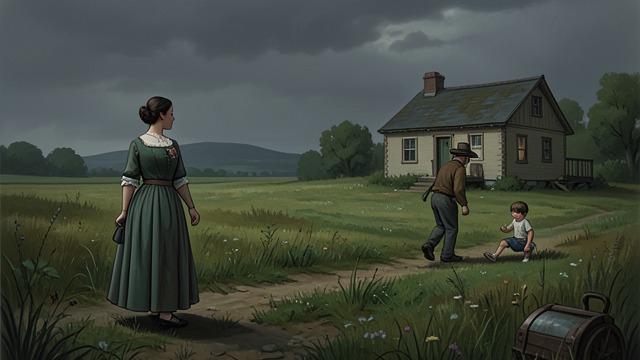
A World Made by the Farm
Sustenance and belonging
The farm supplies food, clothing, labor, and family continuity. Generations live within a familiar order shaped by weather and the limits of the soil.
Security with a price
The same arrangement ties people to small holdings and inherited roles. Familiarity can shelter a household while making its future narrow.
Stones as a Boundary
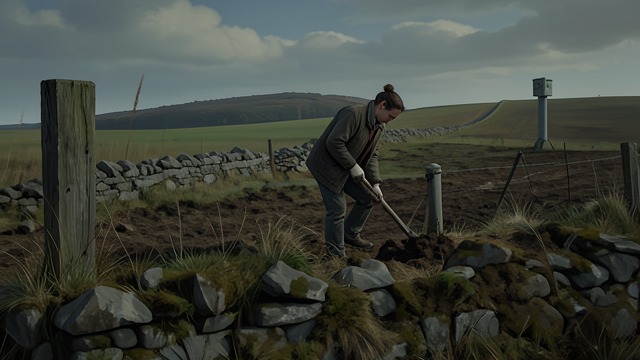
Stones as a Boundary
Labor made visible
Nils Jakob’s Son clears stones until they define the fields and fences at Korpamoen. The landscape records years of physical work.
A limit inherited
Karl Oskar Nilsson gains the ground his father opened, but finds almost no new acreage to cultivate. Inheritance carries both achievement and constraint.
The Cursed Harvest
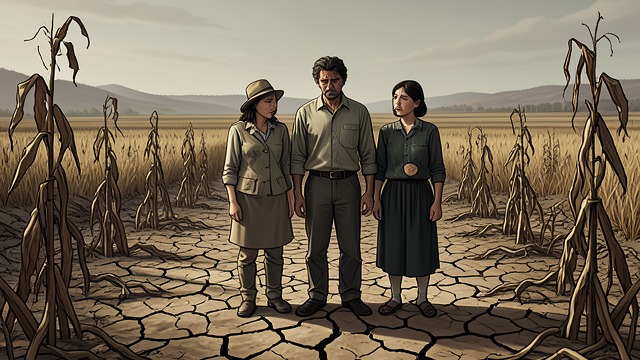
The Cursed Harvest
Work defeated by weather
Drought, crop failure, and hunger make the land seem hostile rather than sustaining. The family’s labor cannot prevent loss or protect every child.
Faith contested
Karl Oskar Nilsson questions whether hardship should be accepted as divine order. The idea of cursed soil gives economic suffering a spiritual dimension.
A Wheat Field Elsewhere
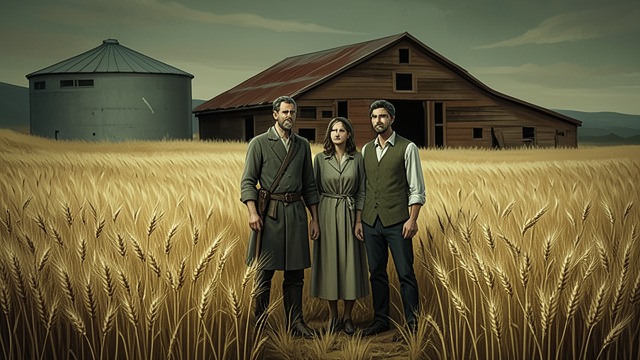
A Wheat Field Elsewhere
A new image of soil
A picture of a broad North American field lets Karl Oskar imagine land without stones or boundaries. It provides a visible answer to the limits of Korpamoen.
Hope tested by reality
The image is not a guarantee or a deed to land, and Kristina recognizes that gap. The imagined field nevertheless gives the family a reason to risk departure.
Green Ground After the Sea
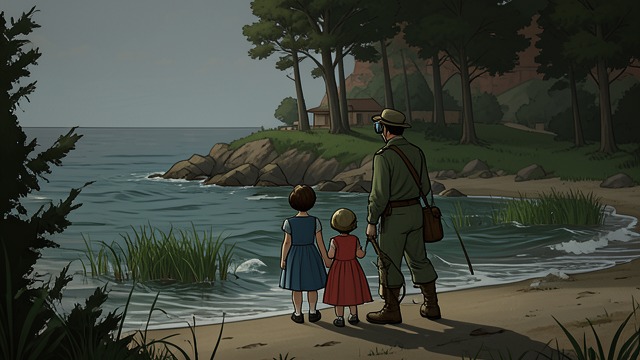
Green Ground After the Sea
Land regained
After weeks surrounded by water, the emigrants see trees and grass and feel the return of life. The land is powerful before it is understood.
A future not yet owned
The shore offers no immediate home or farm. The contrast between green promise and material uncertainty keeps the American dream unresolved.
The historical opening on rural life in Ljuder
During Karl Oskar Nilsson’s first years at Korpamoen
The drought and famine year, 1848–1849
After Karl Oskar sees the newspaper illustration
The first sight of New York’s green shore
