
The Charlotta’s Living Cargo
The EmigrantsThis flow traces the uneasy relationship between the ship’s command and the passengers whose bodies become the vessel’s most demanding cargo.
increasing Bearing strength in each event
 decreasing
Bearing strength in each eventdecreasingA Captain Who Prefers the Sea
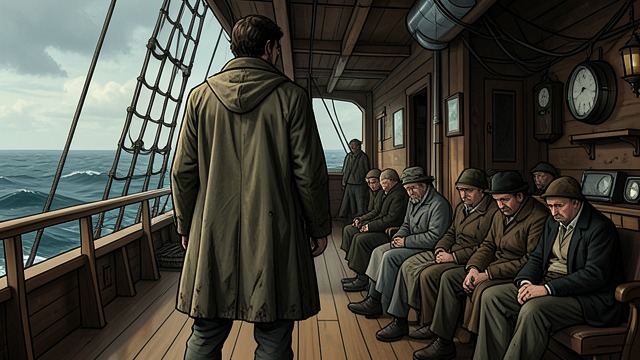
A Captain Who Prefers the Sea
Seaman’s perspective
Captain Lorentz considers the sea a proper home and farming a repetitive land-bound labor. He views the emigrants as a difficult cargo rather than fellow travelers.
Responsibility imposed
Carrying people requires care and funeral duties that ordinary freight does not. He resents the burden but understands that lives depend on his command.
Passengers Under Rules
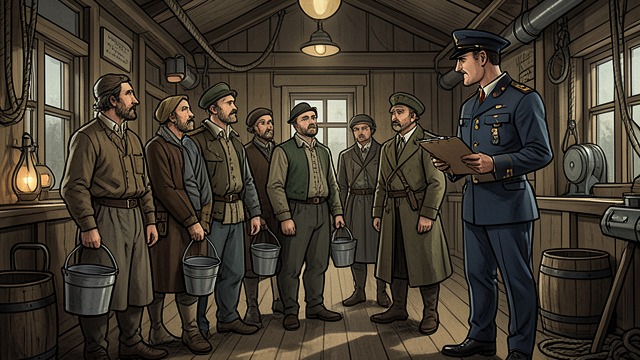
Passengers Under Rules
Shipboard order
The second mate explains weekly food rations, water limits, cleaning duties, and rules about fire and waste. Passengers must adapt to an authority they do not understand.
Unequal power
The emigrants’ lives depend on decisions made by officers. Their former independence on land gives way to strict limits on movement and resources.
A Protest Against Crowding
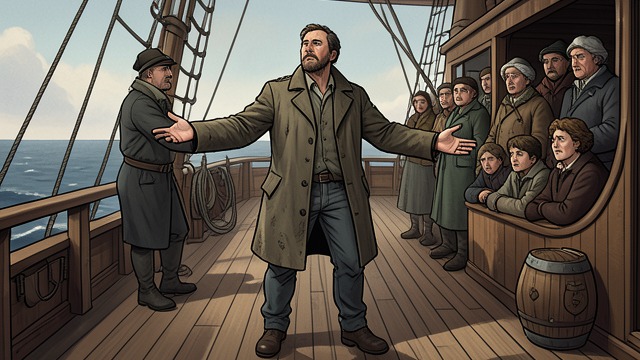
A Protest Against Crowding
A peasant objects
Karl Oskar Nilsson challenges the ship’s officers over cramped and unhealthy sleeping quarters. He believes the passage purchased should include more humane conditions.
A hierarchy encountered
The crew can threaten and dismiss him because the passengers cannot leave. His protest establishes him as outspoken without changing the ship’s capacity.
The Captain as Healer
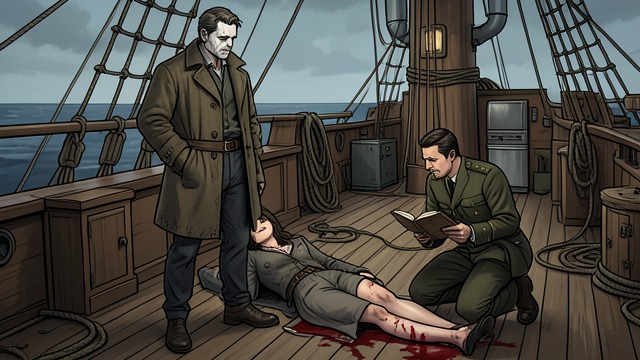
The Captain as Healer
Help requested
Karl Oskar Nilsson crosses a dangerous deck at night to ask Captain Lorentz to stop Kristina Johansdotter’s bleeding. The captain consults his medical manual and acts.
Command turned care
The captain’s authority becomes a source of practical help, though he cannot guarantee recovery. His role shifts briefly from overseer to caregiver.
The Captain’s Funeral Duty
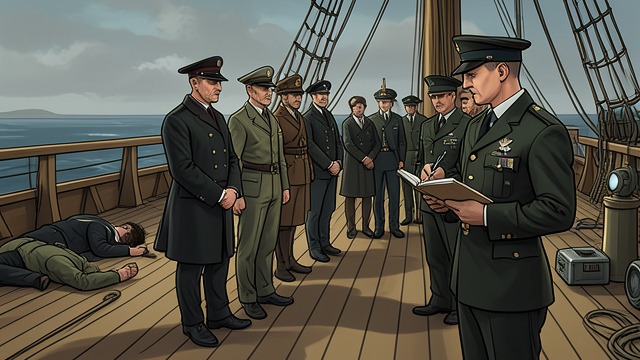
The Captain’s Funeral Duty
Repeated loss
Captain Lorentz prepares another shipboard burial and records a death in a place where the emigrants have no settled parish. He is both navigator and officiant.
People as cargo
The voyage reveals the cost of transporting human beings through illness and death. The captain can bring survivors to harbor, but cannot preserve everyone he carries.
At the Charlotta’s departure from Karlshamn
The first week aboard
The first days in the hold
The storm night of Kristina’s hemorrhage
At Inga-Lena’s burial in June 1850
