
The Famine and the Cost of Staying
The EmigrantsThis flow traces how repeated agricultural failures turn subsistence into crisis and make emigration seem like an answer to more than ambition.
increasing Bearing strength in each event
 decreasing
Bearing strength in each eventdecreasingThe Farm’s Narrow Margin
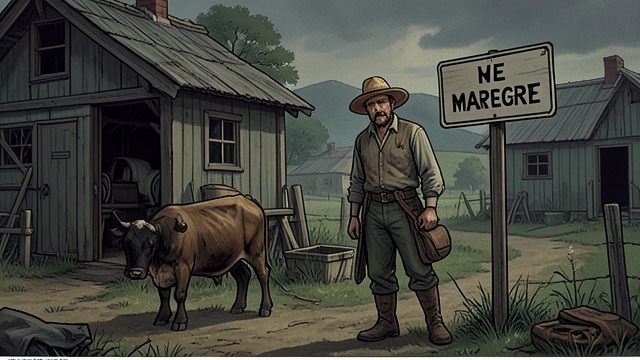
The Farm’s Narrow Margin
Debt from the start
Karl Oskar Nilsson inherits a small holding burdened by mortgage interest and support obligations. A single bad season can undo months of work.
Labor without reserves
The farm has little spare land or money to absorb losses. Poverty is not a sudden event but a condition that makes every setback dangerous.
Weather Turns Against Them
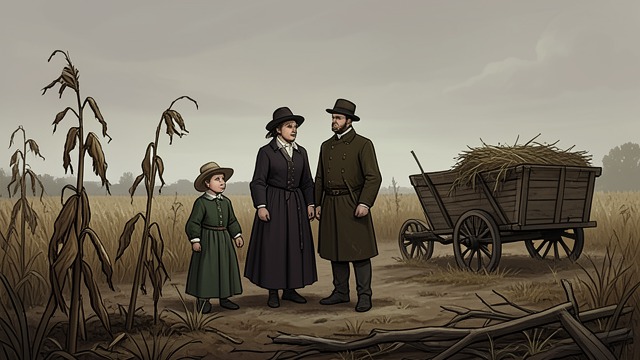
Weather Turns Against Them
Crop trouble accumulates
Potato rot, spoiled hay, and failed harvests reduce the family’s food and income. The sequence leaves Karl Oskar Nilsson deeper in debt.
Dependence exposed
Neither practical skill nor hard labor can control the weather. The family’s survival depends on conditions outside its power.
Drought and Fire
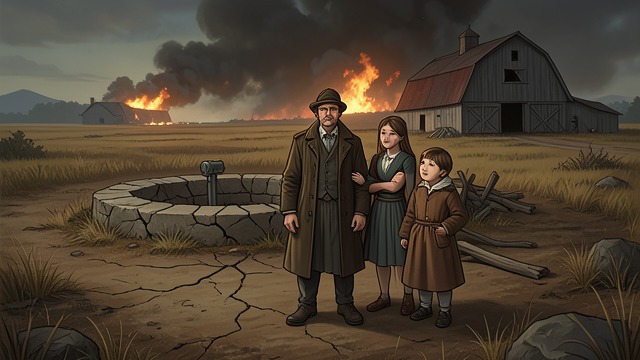
Drought and Fire
Land dries up
The fields produce little hay, the well fails, and cattle suffer from thirst. Karl Oskar Nilsson’s frustration turns into anger at the weather and at God.
A further loss
Lightning burns the hay barn, destroying what the family managed to save. Kristina Johansdotter interprets the fire as punishment; the event deepens both material and spiritual distress.
Hunger in the Parish
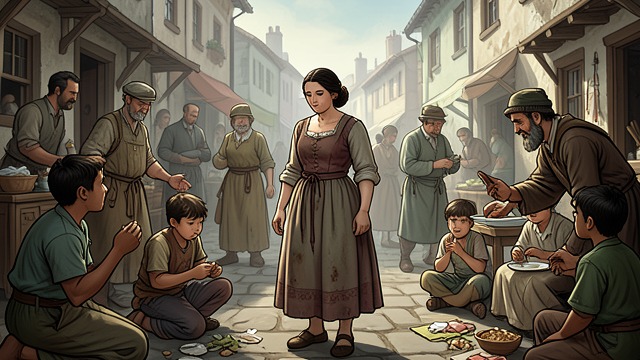
Hunger in the Parish
Famine made public
Children beg at farmhouses for scraps and adults disguise requests for bread as attempts to sell goods. Hunger becomes visible across Ljuder Parish.
Family pressure
Kristina Johansdotter stretches food with famine substitutes while caring for her children. The household’s scarcity culminates in Anna’s death after she eats the christening porridge.
Emigration as a Response
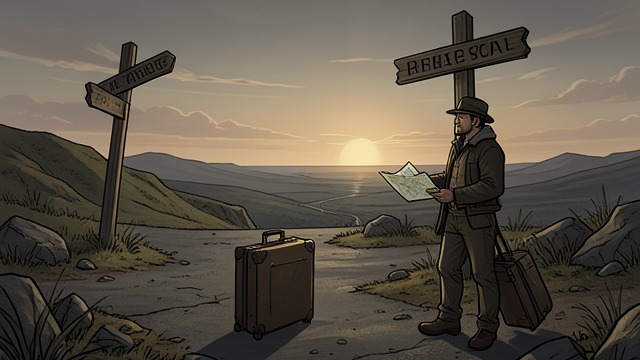
Emigration as a Response
A choice shaped by hardship
Karl Oskar Nilsson sees that Korpamoen cannot provide enough land or security for the growing family. Leaving becomes a way to resist a future of recurring scarcity.
Risk remains real
The voyage may bring new dangers, and America offers no guaranteed refuge. Emigration changes the location of uncertainty rather than abolishing it.
The first years after Karl Oskar takes over Korpamoen
1847–1848, from potato rot to spring snow
Summer 1848, during the drought
The winter following the failed harvest
After the famine and before the spring 1850 departure
