
The Parish Left Behind
The EmigrantsThis flow follows the people and duties left in Ljuder as emigration removes workers and challenges the community’s inherited order.
increasing Bearing strength in each event
 decreasing
Bearing strength in each eventdecreasingA Small Parish Under Pressure
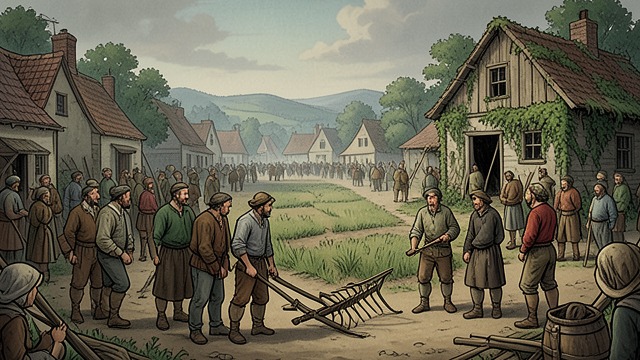
A Small Parish Under Pressure
More people, less land
The population of Ljuder Parish grows while farms are repeatedly divided. Servants, cottagers, and poor households have few paths to property.
A social structure exposed
The parish’s apparent stability rests on unequal access to land and authority. Emigration becomes plausible where local opportunity is scarce.
The First Household to Leave
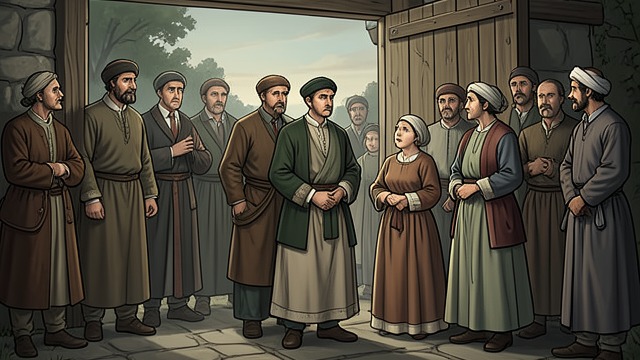
The First Household to Leave
A visible precedent
Karl Oskar Nilsson’s plan alarms neighbors because no one from the local community has previously made this kind of family departure. The choice makes emigration public.
A challenge to custom
His action suggests that staying is not the only possible response to hardship. The parish reacts as if the departure reflects on everyone who remains.
Parents and Descendants
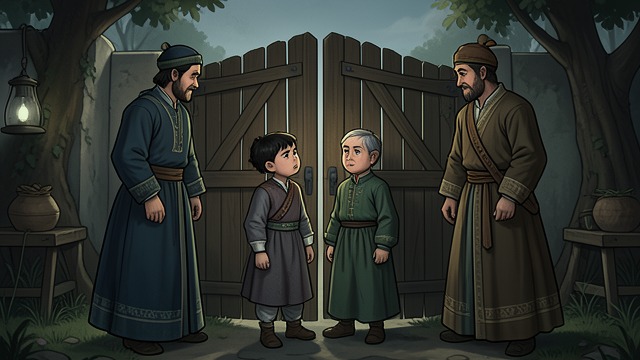
Parents and Descendants
Nils’s objection
Nils reminds Karl Oskar Nilsson that the departure affects descendants not yet born, as well as the parents left behind. His concern makes the family’s choice span generations.
A duty divided
Karl Oskar believes he must act for his children, while Nils also thinks of his sons. No generation can claim a simple answer to the responsibility of staying or leaving.
The Gate Closes Behind Them
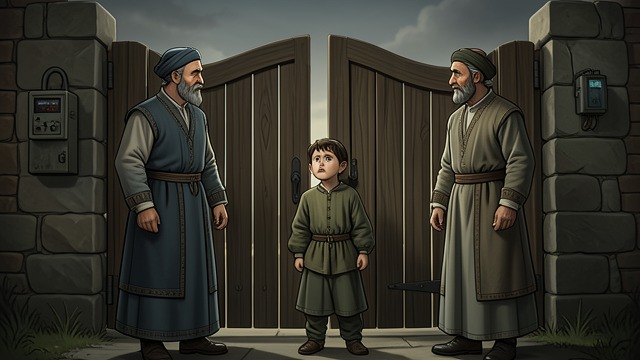
The Gate Closes Behind Them
The old household remains
Nils and Märta watch their sons depart while their daughter Lydia stays behind. The leaving generation and the staying generation occupy opposite sides of the gate.
Care transferred
Karl Oskar Nilsson asks Lydia to help look after their parents. The departure does not end family obligations; it hands them to those who remain.
A Parish Name in the Register
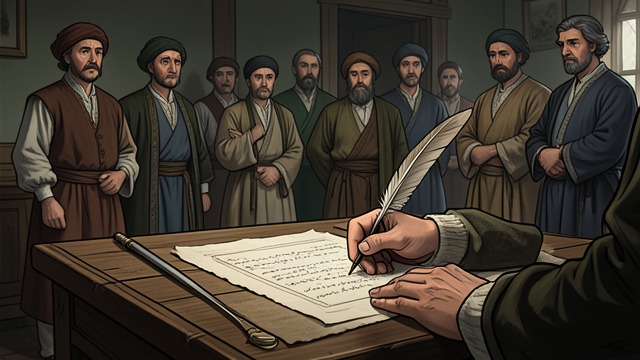
A Parish Name in the Register
Departure recorded
Dean Brusander writes that Karl Oskar Nilsson and his household have requested records for emigration. The parish register gives an official form to their separation.
A larger movement anticipated
The blank pages will later hold repeated notes of people moving to North America. One departure becomes part of a migration that the authorities once assumed would fade.
The years before 1850
After Karl Oskar announces his departure
During the final preparations
April 4, 1850, as the wagons leave Korpamoen
After the emigrants request their papers
