
The Atlantic Crossing
The EmigrantsThis flow follows the emigrants’ passage from embarkation through hardship at sea to the first sight of New York.
increasing Bearing strength in each event
 decreasing
Bearing strength in each eventdecreasingAboard the Charlotta
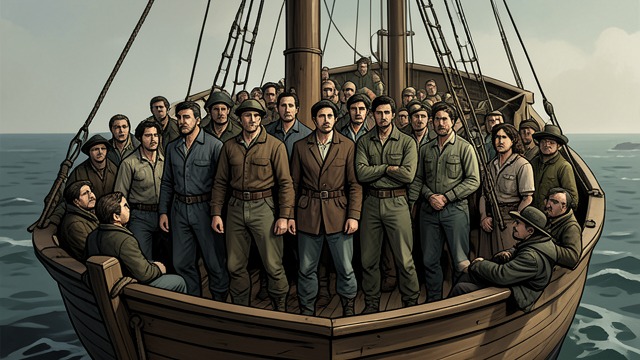
Aboard the Charlotta
A new environment
The emigrants board a cramped brig carrying cargo and seventy-eight passengers. Farmers accustomed to stable ground must learn to live by the ship’s movement.
Dependence begins
Their quarters are crowded, poorly ventilated, and divided by canvas. The voyage places people, food, water, and safety under the authority of shipboard rules.
A World Without Bearings
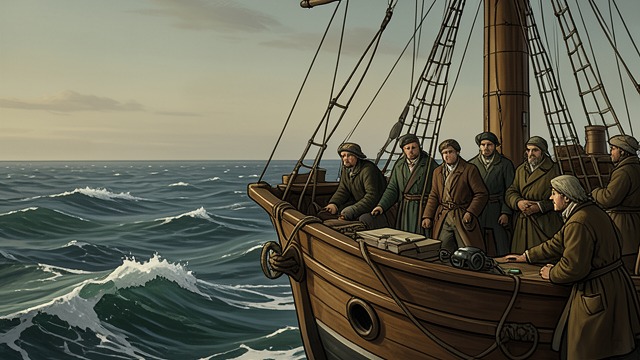
A World Without Bearings
Repeated horizons
The emigrants see water in every direction and struggle to tell whether the ship is making progress. Familiar signs of seasons, roads, and settled land disappear.
Time at sea
They mark days in an almanac and measure distance through waiting. Their lives become dependent on winds and a captain whose navigation they cannot verify.
Sickness in the Hold
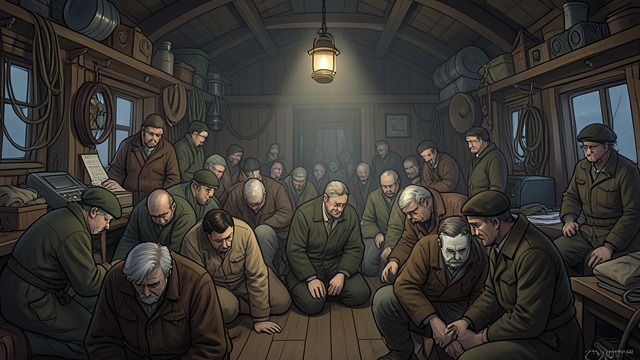
Sickness in the Hold
Bodies under strain
Seasickness, poor food, foul air, and illness weaken passengers and children. Those who are ill must endure crowded quarters with little privacy or effective care.
Human cost
Deaths turn the hold into a place where daily life and burial are close together. Each loss makes the journey’s promise harder to trust.
The Atlantic Feels Endless
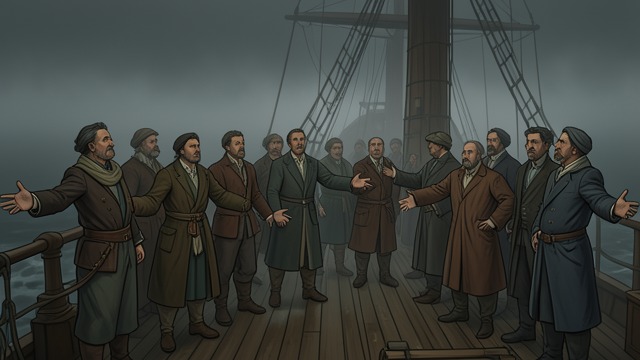
The Atlantic Feels Endless
Suspicion and delay
Persistent westerly winds and fog prolong the crossing. Passengers wonder whether the ship is lost, and their patience gives way to fear and irritation.
A voyage without return
Distance becomes emotional as well as geographical. The emigrants recognize that returning to Sweden would require another crossing they can scarcely imagine making.
Land at Last
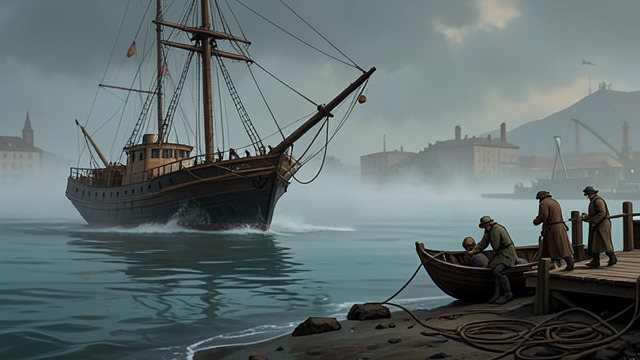
Land at Last
First American shore
The Charlotta enters New York harbor, where houses, piers, and green trees appear through the morning mist. After the empty sea, the land seems almost miraculous.
Arrival without security
The passengers disembark weak and shabby, carrying what remains of their possessions. They have reached North America but still must discover where and how to live.
April 14, 1850
The first weeks after leaving the Baltic Sea
During the long middle passage
The eighth week, in the fog and contrary winds
Midsummer Eve, 1850
