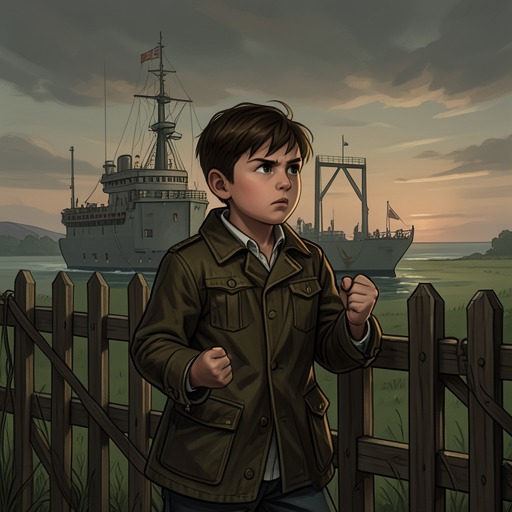
Åbro Mill
The EmigrantsÅbro Mill enters the story as a temporary stopping place on Robert Nilsson’s attempted escape from service at Nybacken. Its warmth and ordinary hospitality offer a short respite, but the miller’s recognition of Robert makes clear that refuge is precarious. The place thus stands at a threshold in his journey: Robert needs to reach the sea, yet even a brief pause on the way can expose him to being identified.
Setting and Arrival
Robert is walking barefoot in the early spring when Jonas Petter of Hästebäck, a neighbor from Korpamoen, offers him a ride on a grain wagon to Åbro Mill. Jonas Petter does not ask where Robert is going; he remarks only that the ground is too cold for bare feet. The ride brings Robert from the road into a working mill where several farmers are already waiting for their grain to be ground.
A Brief Shelter
The mill room provides a contrast to the exposed road. A fire burns in the stove, and the farmers gather there while they wait. They eat food brought from home and drink spirits; one gives Robert bread and a drink. Robert accepts the kindness, recognizing the giver as someone to thank, but the moment also sharpens his awareness of his precarious position: he feels that he may be recognized at any time and decides he cannot stay.
Recognition and the Road South
Robert knows that he must reach Karlshamn, the town by the sea, and hopes to ask one of the farmers from the southern part of the parish for a ride. Before he can make the request, the miller enters, looks closely at him, and asks whether he is Nils of Korpamoen’s son. The question interrupts Robert’s attempt to move on anonymously. Åbro Mill is therefore both a practical waypoint toward the coast and a risk: hospitality offers him temporary shelter, but local recognition threatens to undo his escape.
A Threshold in the Migration Narrative
The mill’s significance extends beyond Robert’s immediate flight. His escape from farm service forms part of the route that eventually leads him toward America with Karl Oskar Nilsson and Kristina Johansdotter. Later, the emigrants’ preparations preserve practical links to the life they are leaving: the family packs tools, food, bedding, and the old clothes chest for the voyage. Against that larger movement, the mill is a small but consequential threshold, where Robert’s need for mobility meets the limits imposed by a close-knit rural world.