Arvid
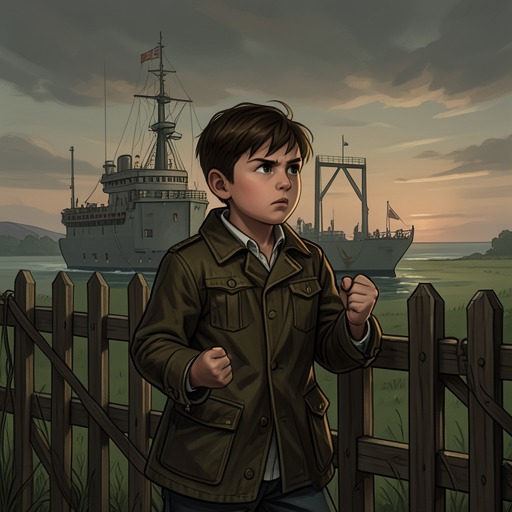
The EmigrantsArvid is the elder farmhand at Nybacken, a sturdy young man whose strength earns him the designation of Aron’s “big hand.” A false rumor that he had done something forbidden with a white heifer isolates him from the farm community and follows him beyond the farm. He and Robert form a close bond under these conditions: Robert learns the truth of the accusation, confides in Arvid, and eventually travels with him to the New World. On the Charlotta, Arvid remains Robert’s companion, waking him when land is sighted on the approach to America.
Identity and Life at Nybacken
Nybacken’s farmhands live in a barn room beside the horses’ stalls, in a crowded household that also includes the farm’s master and mistress, an old mistress with reserved rights, three maids, and two farmhands. The hired men’s room has a deal table, a bench for each man, two straw-filled beds, and a horse blanket apiece. This is Arvid’s working world: the elder hand, physically sturdy, with reddish skin and old frostbites on his nose that bleed in cold weather. Aron calls him his big hand, while Robert is the little hand.
Arvid’s position as a valued laborer does not protect him from the power of gossip. The accusation against him begins with the old mistress; the maids believe it, and the story spreads through the neighborhood. The rumor concerns a white heifer found with calf. Arvid later states plainly that he never did anything forbidden with the animal, and that God knows he is innocent. The accusation, rather than any established wrongdoing, becomes the fact that governs his reputation.
Rumor and Social Exclusion
Robert gradually realizes that the farm folk are making a serious accusation against his comrade. The consequences are immediate and social: the maids treat Arvid as if he were unclean, draw away after accidental contact, and refuse to be alone with him. A girl from a neighboring farm, whom he had been visiting, can no longer see him. As the rumor travels outward, other girls shun him too, leaving him with no ordinary route back into local society.
Arvid’s account of the accusation makes clear how little power he has to correct it. He says that if he were on his deathbed and could say nothing else, he would tell the dean, the sheriff, the authorities, and everyone on earth that he had never mixed with an animal. He knows the old mistress began the rumor and appeals to God as witness to his innocence, but the public judgment remains. The gap between what he knows about himself and what the community believes is the injury that defines this part of his life.
The nickname “The Bull of Nybacken” turns the rumor into a durable public identity. Boys mock him on the road, and Arvid hears that they are referring to him. The label reduces a complex person to the scandal attached to his name; it follows him even when he tries to find work elsewhere. The farm’s social exclusion thus becomes a practical barrier, not merely an insult.
Friendship with Robert and the Decision to Leave
Robert’s knowledge of the accusation leads him to recognize that he must confide in his friend. Arvid’s loyalty is answered by an important act of trust: when Robert agrees to leave for the New World, Arvid immediately agrees to go with him. Their shared decision joins Robert’s desire to escape service with Arvid’s need to get beyond a reputation that has closed off work and companionship at home.
Their friendship also appears in a small episode of mutual care. When Robert is suffering from ear pain, Arvid sits up, thinks over what to do, and brings out the remaining brännvin. He proposes using a wool wad soaked in it. The treatment hurts sharply at first, but the throbbing eases, and Robert is able to fall asleep. Robert interprets the relief as evidence that God sent Arvid to help him. The scene gives their bond practical form: Arvid is not only the companion who shares Robert’s plan to emigrate, but also the person who responds when Robert is in immediate need.
Leaving Nybacken and Finding Work
Arvid eventually has to leave Nybacken. Aron does not want to keep a servant known as the Bull, and the old mistress has died. Arvid believes that she returns to accuse him of having tried to kill her, an act the account confirms he did attempt. He moves away without regret, but departure does not erase his reputation: he asks at many farms before finding work, because people know him everywhere as the Bull from Nybacken.
His new employer is Danjel in Kärragärde, who cannot find another hired hand that winter. Other servants avoid the farm because of its association with the devil; people even claim to have seen the Evil One riding on Danjel’s wagon or sitting beside him. Arvid’s employment there places him in a household and community marked by another kind of public suspicion. The contrast is telling: the same social world that excludes Arvid for a rumor also treats Danjel’s household as a place to avoid, while the lack of available workers makes room for Arvid to be hired.
The Voyage and Narrative Significance
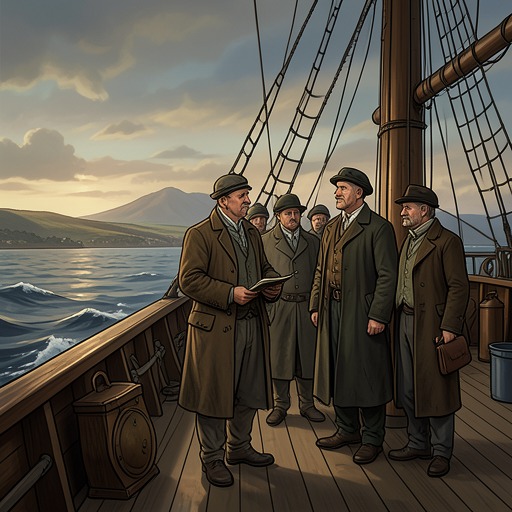
Arvid carries his fear of wild beasts in America, but he still undertakes the Atlantic crossing with Robert. Aboard the Charlotta, the emigrants live in a tightly packed hold: berths for seventy-eight people, low overhead, and little floor space once bedding, food baskets, and bundles have been stowed. In calmer weather they gather around the main hatch, pass the time with hymns played on the psalmodikon, violin tunes, songs, and stories. Arvid’s place in this community is sustained by companionship, especially his closeness to Robert, rather than by any disappearance of the hardships that drove him from home.
At daybreak, Arvid wakes Robert with the news that America is in sight. The two stand together at the prow with the second mate, who explains that the land they see is a large island called Manna-Hata, not the mainland. For Arvid, once branded and displaced at Nybacken, this sight marks arrival at the destination chosen with his friend; the first glimpse is also corrected by the mate’s account, which distinguishes the island from the larger continent the passengers hope to reach.
Arvid’s story traces the movement of a local rumor into lasting social exclusion, then into migration. His innocence is asserted but never publicly vindicated in the evidence presented; instead, the nickname and employment difficulties show how a community can make accusation function as identity. His friendship with Robert offers a counterweight: trust, assistance, and a shared departure create a relationship not governed by the parish’s verdict. On the voyage, Arvid is both an emigrant uncertain about the dangers ahead and the friend who wakes Robert to the first sight of the New World.