Robert’s lasting hearing impairment and tinnitus
The EmigrantsRobert’s lasting hearing impairment and tinnitus originate in a blow from Aron of Nybacken and persist long after the immediate pain subsides. The injury leaves him almost entirely deaf in his left ear, but also with an unremitting private hum that he eventually interprets as the sea calling him toward a future beyond service. His damaged hearing thus carries both the concrete consequences of violence and a recurring narrative image of escape.
Injury and immediate aftermath
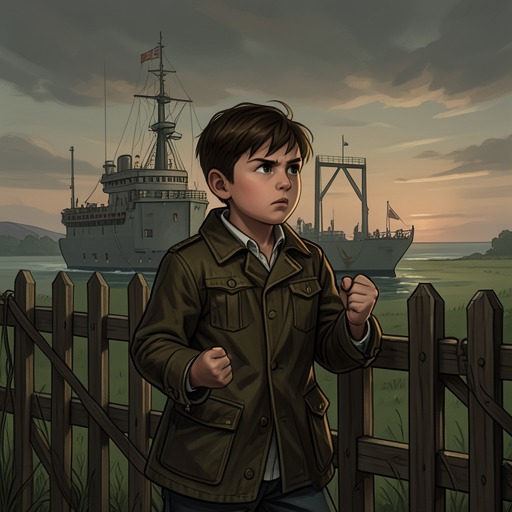
While Robert works as a farmhand for Aron of Nybacken, Aron finds him resting briefly in a ditch as breakfast is delayed. He calls the boy lazy, and when Robert drops his shovel and tries to flee, Aron’s right fist lands on Robert’s left ear. The blow folds him over and sends him face-first into a pile of dirt. Dazed and in acute pain, Robert thinks his skull may have split; earth fills his mouth, a sharp stone scratches his nose, and the world seems to whirl around him.
That evening, when the surroundings are silent, Robert hears a buzz inside his ear. He asks Arvid to listen, but Arvid hears nothing: the noise exists only for Robert. In the night the injury worsens. His left ear throbs, each heartbeat seems to stab it, and the hum swells into a stormlike roar. Alone with the pain, Robert moans, folds his hands, and prays for forgiveness, believing that the ache is punishment for having been disloyal and lazy. He remembers that he has neglected A Servant’s Prayer and recites it again, asking to be faithful and devoted to his temporal masters and to find Christian masters who will not mistreat a poor servant. The prayer does not ease the pain, and the sound continues through the night.
A sound that remains
Arvid helps Robert with a wad of wool soaked in brännvin. It stings intensely before the throbbing lessens, and Robert takes the relief as evidence that God has sent Arvid to help him. He falls asleep, though pain enters his dreams as a swarm of wasps stinging inside his ear. The following morning the pain is nearly gone, and within days it disappears; thick, yellowish, foul-smelling fluid drains from the ear. Yet the injury has not simply passed. A sound remains, inaudible to everyone else.
Robert tries to silence it by covering his ear with a bandage, holding his hand against it, and inserting wool. Nothing works. The tinnitus varies in loudness but follows him day and night, wearing him down. The lasting condition is sharply distinct from the acute wound: the throbbing subsides and the discharge ends, while the unshared noise becomes a permanent feature of his experience.
The sea’s call
One night Robert makes a decisive imaginative connection: the sound seems to be the rumble and roar of a great body of water, the voice of the sea in his ear. He understands it as a summons addressed to him alone. The hum becomes a word that follows him through night and day, urging him to come. But the call does not immediately open a way out; the gates on the road remain closed. The contrast gives the sound its double force: it is the residue of a beating inflicted within the old world, yet Robert hears in it a direction toward departure.
The sea’s summons does not erase the physical cost of the blow. When Robert is older and preparing to leave, he is still almost entirely deaf in the injured ear and still hears the sound no one else can hear. At Jonas Petter’s table he drinks brännvin, eager for more because it seems to quiet the humming. He wonders whether the echo of Aron’s fist will continue for as long as he lives. The injury therefore persists not only as an emblematic call but as an embodied limitation that shapes ordinary moments and offers no certainty of cure.
Service, memory, and narrative significance
Robert’s first response to the assault is not hatred. He has seen Aron’s wife strike Aron with a rough besom filled with cow dung, and remembers that Aron endured the blow looking frightened; Robert pities his master rather than hating him. He also interprets Aron’s authority through the religious order that governs a servant’s life, accepting the beating as punishment administered under a master’s supposed fatherly power. His later prayer repeats this logic by locating fault in his own conduct and asking for better masters rather than naming the violence as an injustice. The damaged ear exposes the bodily consequence of a hierarchy Robert has been taught to regard as legitimate.
The injury’s meaning changes without the injury itself disappearing. At first the internal sound is an alarming mystery, then a source of exhaustion, and finally a private call that gives imagined purpose to Robert’s desire to leave. The narrative holds these meanings together rather than reducing the impairment to a cure or a simple metaphor: Robert remains nearly deaf on one side, and the tinnitus continues to trouble him, even as he interprets it as a summons toward the sea. Its persistence links the violence of farm service to the possibility of emigration, making the call of another life audible in the very ear that bears the mark of the old one.