The crop failures and mounting debt at Korpamoen
The EmigrantsThe crop failures and mounting debt at Korpamoen expose the limits of hard work in a farm economy governed by weather, narrow landholdings, and inherited obligations. Between 1845 and 1847, Karl Oskar Nilsson and Kristina Johansdotter labor to keep the farm viable, but spoiled hay, potato rot, animal losses, and rising debt steadily undo their efforts. The crisis ultimately helps transform emigration from an imagined possibility into a choice made for the couple’s children as well as themselves.
A Small Farm Burdened from the Start
In 1844 Karl Oskar took possession of Korpamoen, a one-sixteenth share of a homestead. The agreed price, including cattle and equipment, was 1,700 riksdaler, of which 800 was mortgage debt. His savings from seven years in service, Kristina’s 200-riksdaler dowry, and his 210-riksdaler inheritance covered only a quarter of the price. The balance carried interest, while the agreement also required him to maintain his parents, Nils and Märta, through reserved rights to a room, fodder for a cow and sheep, land for sowing, use of the farm team, and twelve bushels of grain each year.
These terms were customary when parents transferred a farm, but they made the purchase more than a matter of acquiring land. Karl Oskar owed fifty riksdaler annually in mortgage interest and had to sustain his parents for as long as they lived; Nils was only fifty-one and Märta forty-eight. The farm was small, and the obligations were large. Karl Oskar accepted the burden because he believed work could pay down debt, but the first years would test whether labor alone could secure the household’s future.
Harvests Turn Against the Household
The first year, 1845, brought abundant crops. Karl Oskar paid the mortgage interest on time, and the household seemed to be progressing. That spring Kristina gave birth to their daughter Anna. In the next year the crops were again good, but poor harvesting spoiled the rye in the shocks. To meet the interest payment, the couple sold a calf and half a pig; Karl Oskar borrowed the remaining twenty riksdaler from his father, who had earned the money through handiwork. During the August harvest, Kristina gave birth to their son Johan.
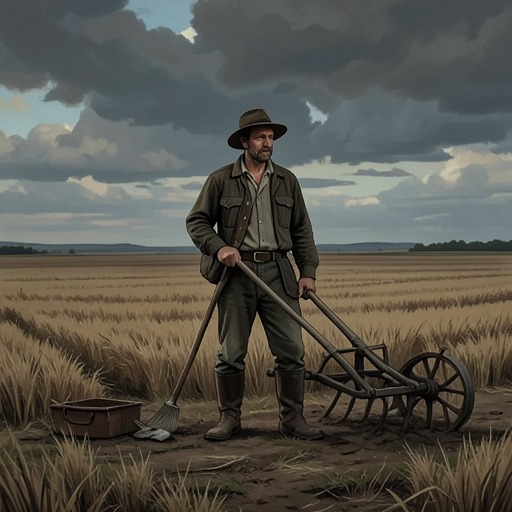
The third year brought a sequence of losses rather than a single disaster. Heavy July rain flooded the cut hay. Some of what remained was spoiled, and the animals would not eat it, forcing Karl Oskar and Kristina to sell a cow. Another cow lost its calf, and a sheep disappeared in the woods. Then potato rot affected the field: nearly every second potato was spoiled, and for each basket of good potatoes, another had to be thrown out. During the winter, the household sometimes went a day without a pot of potatoes over the fire. The crop disease was said to have come from abroad, where it had caused famine, linking the household’s local hardship to a wider crisis.
Debt Despite Work
In 1847 Karl Oskar could no longer borrow the full mortgage interest from Nils, who had no more money to lend. Karl Oskar did not want to ask his father-in-law in Duvemåla, but Kristina suggested seeking help from her uncle, Danjel Andreasson of Kärragärde. Though Danjel was related to the despised founder of the Åkian movement, Kristina considered the old events no reason to avoid asking him. When Karl Oskar made the request, Danjel gave him fifty riksdaler for the interest.
By the end of three years, the family had one fewer cow and seventy riksdaler more debt than when Karl Oskar took over Korpamoen. The result was especially discouraging because both he and Kristina had worked to the limit of their strength. Their effort had not merely failed to improve their position; it had been met by rain, crop disease, and losses among the animals, none of which they could control. The contrast between their labor and its poor return unsettles Karl Oskar’s earlier confidence that health and strength were enough to make a farm succeed.
From Economic Setback to Emigration
After four years at Korpamoen, Karl Oskar sees the accumulated cost not as a temporary setback but as a future of continued work without improvement. If the family stays, he fears that he and Kristina will spend their strength only to end in old age with the reserved room and meager provisions promised to his parents. Their children’s prospects sharpen the decision: one might inherit the farm, but the others would have to become hired farmhands or squatters. Karl Oskar and Kristina do not want that future for them, and he concludes that responsibility for the children requires leaving.
The American opportunity he imagines is defined in contrast to Korpamoen: fertile, stone-free land that could be had cheaply, and a chance to improve one’s circumstances through work. He does not know much about conditions in the United States, and the narrative presents these prospects as his understanding and hope, not as a verified outcome. What matters to his decision is the difference he sees between labor trapped under debt at home and labor that might yield advancement elsewhere. The crop failures therefore do more than impoverish the household: they make the inherited farm’s apparent security look like a continuing obligation with no adequate return.