
Home and Belonging
The ExceptionHome shifts from a childhood ideal and a lost marriage to a sense of safety created through relationships, shared places, and chosen commitment.
increasing Bearing strength in each event
 decreasing
Bearing strength in each eventdecreasingThe Childhood Home
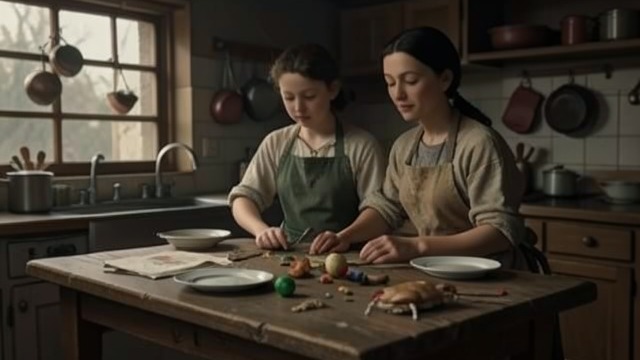
The Childhood Home
Care made domestic
Jada remembers her childhood home through meals, games, family rituals, and Anne Stanley’s steady presence. The house represents affection and routine rather than status or property.
An ideal carried forward
Jada later imagines a white picket fence as proof of a secure happy family. Her longing is rooted in real memories, even though no single house can guarantee the safety she associates with them.
A Home Lost
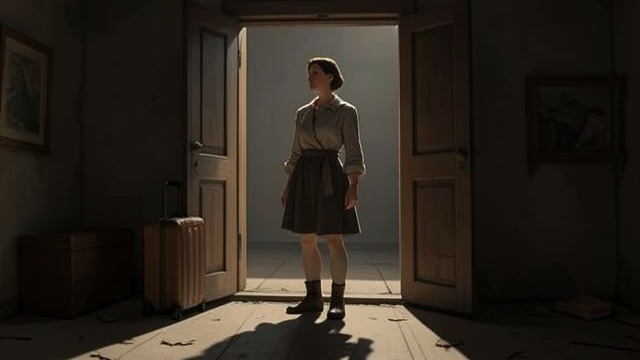
A Home Lost
Marriage without safety
Jada’s life with Decker appears to provide the home she wanted, but fear, infidelity, and emotional instability undermine that promise. The physical house cannot make the relationship a place of belonging.
Starting without a home
After leaving Boston, Jada stays with Kari and describes herself as homeless. Her vulnerability reflects the collapse of a life she thought she had built.
Cane’s Places of Memory

Cane’s Places of Memory
Private history shared
Cane takes Jada to the desert places connected to his childhood and family. The land means more than scenery because it holds memories of his father and grandfather.
Belonging through disclosure
Jada is invited into a history Cane rarely discusses. The shared landscape becomes a form of emotional shelter, showing that home can be made from remembered places as well as a dwelling.
A House Made Unsafe

A House Made Unsafe
The refuge breached
Cane’s house becomes the site of an armed intrusion and Jada’s abduction. The place associated with their private intimacy is no longer automatically safe.
Belonging challenged
After the attack, Jada cannot simply return to the same house and feel at home. The trauma demonstrates that emotional attachment to a place does not cancel the body’s response to danger.
Alexander House

Alexander House
A future made concrete
Cane shows Jada Alexander House, built as a home for the future he hopes they will share. The setting combines a beautiful view with the domestic ideal Jada once feared was lost.
Home as a relationship
Jada accepts the proposal and the house, but the novel’s deeper claim is that belonging comes from mutual commitment. Home is not simply a perfect structure; it is a place where they can build a life together.
Jada’s childhood
Before the opening
Middle of the story
Near the climax
At the ending
