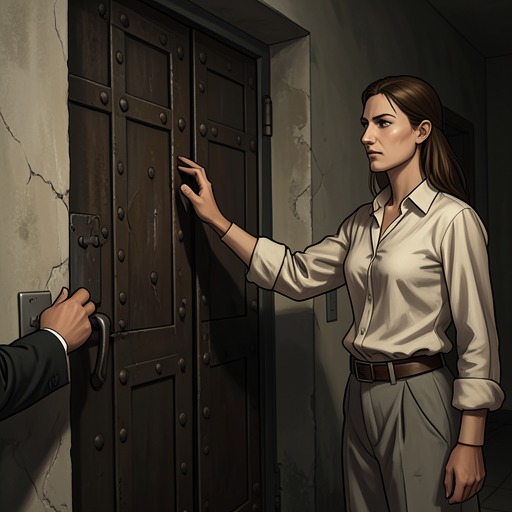
“I’m not a player. I’m the coach.”
The Exception“I’m not a player. I’m the coach.” is Cane Alexander’s teasing declaration of control in his first charged exchanges with Jada Stanley. The line presents him as someone who sets the terms of romantic pursuit, but its return as Jada’s joke makes that confident persona something she can challenge—and eventually something he must outgrow.
The Line as a Flirtatious Boast
Cane delivers the phrase while leaning close to Jada and promising that they will see each other again. Its coach metaphor recasts flirtation as a game in which he claims to know the rules and direct the action. The line is playful, but the scene leaves it double-edged: his promise sounds both like an invitation and a warning, and Jada’s response is physical attraction mixed with resistance.
That mix suits Cane’s initial approach to relationships. He says he wants only a few hours together, not an ongoing attachment, and finds Jada’s reluctance both puzzling and appealing. In another casual encounter, he pushes back when a woman’s offer to get breakfast implies more than the night they have shared; he insists that he does not want a continuing domestic arrangement. The coach’s authority, then, is less a matter of genuine intimacy than a performance of control over how much intimacy is allowed.
Jada Turns the Title Back on Him
When Cane invites Jada to dinner, she calls him “Coach,” turning his own line into a teasing answer to his confidence. He laughs and recasts the invitation as simply dinner, while Jada finds herself wavering despite her stated reluctance. The nickname changes the exchange: she is no longer only the object of his pursuit but an active participant who can name and puncture the role he has claimed.
The joke gains sharper meaning when Jada explains that she is done with bad boys, players, and games because she always ends up losing. Cane asks how that rule excludes him, and she replies that, by his own admission, he is the coach. He accepts the logic playfully, asking whether she has blacklisted him as a bad boy. The phrase has become evidence against its speaker: what Cane meant as a boast now helps Jada articulate why she distrusts his type.
Persona Against Attachment
Cane’s larger outlook gives the line its defensive force. He reflects that his life follows carefully constructed guidelines, including trusting no one and taking responsibility for his own successes and failures. His belief that involvement ends badly sits beside his attraction to Jada, whose reserve makes her more compelling precisely because she does not respond as he expects. The coach persona lets him flirt while pretending that he can keep the relationship on terms that protect him from deeper commitment.
That pose becomes harder to maintain after their connection develops. Cane eventually tells Jada that he has been unable to stop thinking about her since they met at the restaurant. He acknowledges that wanting only sex and then moving on would make his life easier, but says that is not what he wants. His explanation reframes the earlier line: the supposed coach is no longer simply managing a game; he is admitting that his feelings have exceeded the rules he set for himself.
A Recurring Joke with a Changing Meaning
The expression’s significance lies in its reversal. At first, Cane uses it to assert control and distance; Jada repeats “Coach” to tease him and hold him to the image he has presented. As their relationship moves beyond his preferred casual terms, the joke registers the difference between his words and his changing intentions. It does not erase the imbalance implied by his original boast, but it gives Jada a way to challenge that performance—and makes the phrase a small measure of how far Cane has moved from treating intimacy as a game he can direct.