Cane Takes Jada to His Childhood Haunts and Shares Family Memories
The ExceptionCane Takes Jada to His Childhood Haunts and Shares Family Memories is an intimate outing in which familiar ground becomes a way for Cane to disclose the loneliness behind his guarded manner. He brings Jada first to a modest cantina he visited as a boy, then to a mountain property tied to memories of Grandpa Ben. Along the way, he tells her how his mother left when he was young; Jada answers with the story of her own mother’s death. The event deepens their relationship not through a grand declaration, but through places, remembered details, and a willingness to be known.
The Cantina and Cane’s Childhood
Cane leads Jada to a little cantina on the outskirts of the city, a place she does not expect and quickly grows fond of. The building is a small stucco structure with a metal roof and an overhang at the order counter. Picnic tables sit beneath palm trees, while other makeshift tables use hay bales as seats; white lights are strung around the area. Its unassuming, improvised character contrasts with the polished settings associated with Cane’s adult life. He explains that he grew up nearby and used to walk there for dinner when the city had not yet spread so far. In sharing the place, he offers Jada a childhood memory grounded in ordinary routine rather than in the wealth and business pressures that otherwise define much of his world.
At the counter, an older woman greets Cane warmly, kisses both his cheeks, and speaks to him in Spanish. Cane addresses her as abuelita and introduces Jada as Mrs. Munoz. His easy affection for the woman gives Jada a glimpse of a familiar community connection. He is also visibly sheepish about bringing Jada there and describes the cantina as the closest he can take her to home. Jada receives the choice warmly, telling him she loves the place. The exchange makes the visit more than a tour of a childhood haunt: Cane is sharing a setting that carries personal meaning, and Jada’s acceptance makes that disclosure feel welcome rather than exposed.
The Family History He Shares
The conversation turns to Cane’s family. He tells Jada that his father died some time earlier and that his mother, Kellie, left when Cane was a little boy. In his account, she chose a man with greater financial means than Cane’s father, later married him, and had other children; Cane adds that the latter part is something he heard. His father, by contrast, had worked to build an enterprise of his own instead of taking a job from Cane’s grandfather. Cane says his mother resented how much his father worked. These details place the separation within a family shaped by different ideas about money, work, and what counted as security, without erasing the hurt of the child left behind.
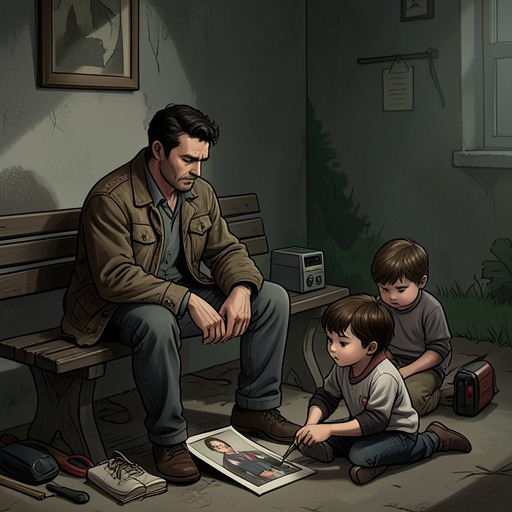
Cane remembers little about his mother, but he remembers waiting for her return. After waking to find her gone, he sat outside for days with his Tonka trucks, moving sand and reacting to each passing car as a possible sign that she was coming back. His father carried him inside at sunset as he resisted going in; at night, Cane cried in his Teenage Mutant Ninja Turtles sheets. The small objects and repeated actions give his account its force: the child’s hope persisted in the ordinary passage of days, while his father was the one who stayed and brought him inside. Cane also says he was an only child. His mother’s later family is distant from his experience, known to him only indirectly.
Jada responds by telling Cane that her mother died when Jada was fourteen. Her mother was pregnant without knowing it and died from an ectopic pregnancy before Jada’s father found her. Their losses are not the same: Jada speaks of a death, while Cane describes a mother who left and did not return. Yet the disclosure gives each a way to recognize the other’s experience of growing up without a mother. Jada’s account also makes clear why Cane’s childhood memories affect her so deeply: she understands loss from her own family history, even as the circumstances differ.
The Mountain as Private Ground
After leaving the cantina, Cane drives Jada up a winding gravel road at the base of the mountains. The homes become sparse as the road climbs; he turns onto a lane and takes the Denali higher, until the city lights lie below them. He parks and turns off the lights. The change in setting—from the scattered buildings of the city’s outskirts to a quiet height above them—slows the outing and gives Cane room to share another part of his past.
Cane lays a blanket over granite pieces on the desert ground and draws Jada close. He tells her that the property is his: his grandfather once owned much of the surrounding land, but sold most of it over the years, leaving this remaining piece in Cane’s ownership. He calls the place sacred to him and says he has never brought a woman there before. The admission marks a change in the visit’s meaning. The overlook is not simply a scenic stop; it is a private place associated with his family and his own history, and bringing Jada there makes her presence an exception to a boundary he has kept.
Cane recalls spending time in the area with Grandpa Ben while his father worked. With no one else available to watch him, Grandpa Ben took him hiking, where Cane searched for gold, snakes, and interesting rocks while his grandfather walked nearby. Cane says he believes he has walked across every part of the desert there. He points out a rock ledge and suggests Jada ask Max about it another time, hinting at a further shared history without explaining it during this outing. The memories establish Grandpa Ben not as a distant name but as the person who accompanied Cane through the landscape of his childhood.
Trust, Disclosure, and the Future
Cane admits that he does not usually talk about his family and is surprised by how readily he has spoken around Jada. Rather than pressing him for more, she responds with affection, sitting on his lap, running her hands through his hair, and kissing him. She tells him she likes that he shares these things with her. The gesture and response turn disclosure into a mutual act: Cane has opened a part of his past, and Jada answers by making room for his vulnerability rather than treating it as a weakness.
Jada also describes her life as a book whose author is herself, with a future she can write as she chooses. The idea links the painful histories they have just shared to a possibility beyond them. Cane responds with humor and desire, but the scene’s emotional movement lies in the more serious exchange beneath that levity. He has shown Jada the places where he felt closest to childhood and family; she has trusted him with the story of her mother. The cantina, the desert, the blanket, and the memories attached to them make the outing a turning point in their closeness: a private history is no longer carried by Cane alone, and Jada’s answer is to imagine a future that remains open.