Cane’s family loss and isolation
The ExceptionCane’s family loss and isolation begin with two different absences: his mother leaves when he is a small child, and his father later dies in a car crash. The first leaves him with a vivid memory of waiting for someone who never returned; the second removes the parent who had carried him through that abandonment. As an adult, Cane keeps busy and maintains a close friendship with Max, but neither work nor routine replaces the security he associates with family. His account to Jada makes that absence concrete—and lets him imagine, if only tentatively, a family he might create himself.
Identity and Background
Cane is an only child. His mother, Kellie, left when he was about five or six, choosing a wealthier man over Cane’s father. Cane says she married that man and had other children, though he knows this only by report. He describes her contemptuously and says he no longer loves her; for a long time, he was unsure whether he could love anyone again. His estrangement is not presented as a reconciliation left pending: Cane says he has no present capacity for love toward his mother.
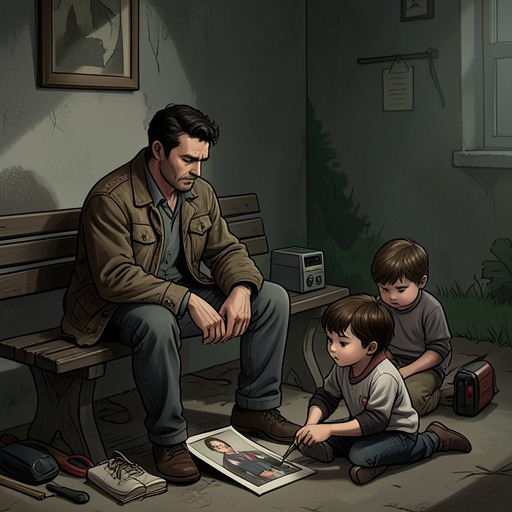
His father remained the parent who raised him. Cane recalls that his father carried him inside every evening when the sun went down, even as the boy protested, and was there to take him to bed after another day of waiting. The contrast is central to Cane’s account: his mother vanished, while his father repeatedly came back for him. When his father later died, Cane lost not only a parent but the person who had made childhood survivable after that first separation.
The Childhood of Waiting
Cane’s sharpest memory of his mother’s departure is an ordinary stretch of days made into a vigil. He sat outside with his little Tonka trucks, pushing sand back and forth, and jumped up whenever he heard a car, convinced that it would be her. At night, his father carried him indoors; Cane climbed into bed beneath Teenage Mutant Ninja Turtles sheets and cried himself to sleep. The toys, the sand, the passing cars, and the familiar bedding give the memory its particular shape. The child does not understand the departure as final; he keeps organizing each new sound around the possibility of her return.
As an adult, Cane says that he has few memories of Kellie beyond the morning he woke to find her gone. He distinguishes that thin store of recollection from his settled judgment of her: whatever the limits of his childhood memories, he now calls her cold-hearted and says he could not love someone like her. The account holds both the child’s expectation and the adult’s rejection without resolving them into a reunion or forgiveness.
His Father’s Death and Its Aftermath
Cane recounts his father’s death while describing the history behind a property in Queen Creek. The property belonged to a widow, and a neighboring landowner wanted it; Cane says that the neighbor drove potential buyers away in the hope of acquiring it more cheaply. That landowner was Simon’s father. Cane’s own father had decided to buy the property, and during a phone call he spoke about the deal and criticized Cane for having made a mistake with Ashley, saying Cane should have been there to learn from him and help him.
The call changed when Cane’s father said he needed to hang up because he thought he was being followed. He reported that the car behind him was driving erratically. About an hour later, Max called to tell Cane that his father had died in a car crash. Cane relates the sequence, but it does not establish who caused the crash. Its placement beside the conflict over the Queen Creek property leaves the family history entangled with the later hostility between Cane and Simon, while preserving the distinction between suspicion and confirmed fact.
The loss also echoes Cane’s childhood abandonment in a different register. His father had been the dependable presence who brought him inside at night; now that presence was gone for good. When Cane later refuses Simon’s offer for Solomon Place and tells Jada that all his properties are unavailable to Simon, his decision carries the weight of their family history. He also asks Mr. Stanley to reassign another realtor to Simon. The evidence connects Cane’s resistance to Simon with the history involving their fathers, though it does not make Cane’s bereavement a complete explanation for every choice he makes.
Family, Memory, and Jada
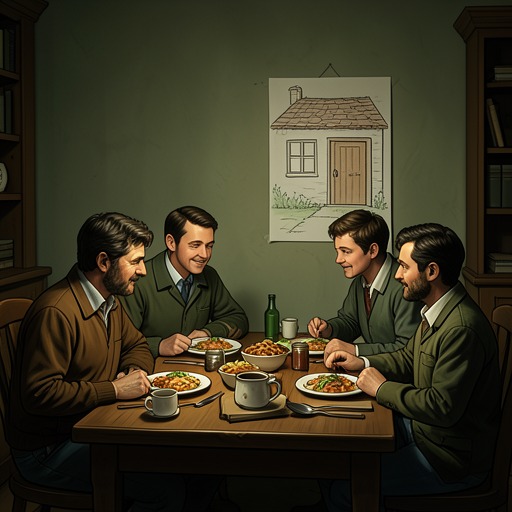
Cane shares these memories with Jada at a place that brings his family to mind. He says he does not know why he is telling her so much, but finds her easy to talk to and associates the setting with memories he has few people with whom to share. Max is the other person he mentions; Cane jokes about him, but the joke underscores how narrow his circle is for these recollections. Jada listens without treating the disclosure as a demand for a solution.
Their conversation makes room for both of their losses. Jada tells Cane that her mother died when Jada was fourteen, after an ectopic pregnancy, and says she understands what it is to lose a mother. Cane responds by setting down his fork and describing the morning he discovered Kellie was gone. Jada’s loss came through death, while Cane’s began with abandonment; the difference remains clear even as their shared grief allows him to speak. He questions whether his mother ever loved him, and Jada answers that she believes he must have loved her as a child. Cane does not take up that possibility as a reason to forgive Kellie.
He also explains the family phrase he inherited from his grandmother: the tie that binds. He did not understand it until his father died. Cane says that ordinary days are manageable because he stays occupied with work and exercise, but holidays are lonely. Max invites him to his large Southern family gatherings, yet Cane says their affectionate, touch-oriented style is not really his own. Those invitations offer company, but they also sharpen the absence: at those times, he wishes his own family were still there. What he misses is the assurance that someone would love him regardless of how badly he had behaved, a safety net he describes as built by blood.
Isolation and the Possibility of a New Family
Cane’s account does not suggest that he is entirely without companionship. He has Max, accepts invitations to Max’s family occasions, and can confide in Jada. But these relationships do not erase the particular loneliness of losing the family he grew up with. His work and workouts give shape to ordinary days; holidays expose the limits of that routine. Even his joke that having no family means having no gifts to buy sits beside his admission that he misses the protection his father’s love once gave him.
Jada suggests that Cane could have a family of his own someday. He answers tentatively, then jokes that it would be a shame not to carry on the Alexander name and raises his fist in a playful declaration that they are Alexanders. The gesture is comic rather than a promise or a plan, but it marks a shift in the conversation: family is no longer only the bond he lost. For a moment, it is also a possible future. Cane’s history remains unresolved—his mother is still estranged and his father is still dead—but his disclosure to Jada turns inherited loss into an opening, however cautious, toward belonging he might someday make rather than merely remember.