Decker
The ExceptionDecker, Jada Stanley’s former husband, is a largely off-page but consequential figure whose conduct helps explain both her decision to leave the marriage and the fears she carries into a new relationship. Jada remembers a pattern of warmth alternating with verbal intimidation and manipulation, alongside repeated infidelity. The marriage ends decisively when she witnesses him with their neighbor Sarah; afterward, his resistance to the divorce and later return to her life keep the separation from feeling settled.
Identity and Background
Decker is identified through Jada’s memories and the events that follow her departure from their marriage. Their shared past includes college, a wedding, and a house in Boston that Jada remembers choosing with pride. A photograph from Tempe Town Lake Marina shows them during their college years, while another records their small wedding ceremony. These images preserve a version of their relationship that Jada once valued, even as she recognizes that the happiness in the pictures did not describe what the marriage eventually became.
Jada describes Decker’s behavior as unpredictable: at times he brought home takeout for an ordinary evening together; at others, he yelled insults and backed her against a wall. She says he had never hit her, but she was uncertain how he would react if she left. Her account presents intimidation and fear as part of the marriage without equating them with physical assault. The contrast between domestic gestures and frightening outbursts also helps explain why leaving was difficult: the relationship did not feel uniformly hostile, and its shifts repeatedly unsettled her judgment.
Marriage, Control, and Separation
Before leaving, Jada had suspected Decker was cheating. She describes his alternating behavior as confusing and says he used her insecurities to make departure seem costly: he emphasized that she would be starting over with very little, questioned whether she wanted to abandon what they had built, and invoked her earlier wish to start a family. In Jada’s account, these arguments repeatedly made her reconsider leaving. The pattern exhausted her and prolonged the marriage despite her growing conviction that something was wrong.
The discovery of Decker with Sarah changes suspicion into knowledge. Jada witnesses the affair in their bedroom and regards that moment as the point at which she can no longer continue overlooking his conduct. After Decker leaves for work, she calls her friend Mandi and moves her belongings into Mandi’s home. Mandi’s husband, Mason, is a professional fighter, and Jada considers their home the safest place to go. Her decision is shaped not by a claim that Decker had struck her, but by uncertainty about what he might do when confronted with her departure.
Decker reacts with alternating pleas and anger, continuing the instability Jada had experienced during the marriage. During a drunken episode, he appears at Mandi’s door. Jada does not know what happens between him and Mason, but Decker does not return there afterward. He continues to complicate her life from a distance by fighting the divorce, and he repeatedly insists that she will come back. His refusal to accept the separation keeps the struggle going after Jada has physically left the shared home.
The Past Returns
The marriage resurfaces through a nondescript parcel containing photographs Jada had left in the back of Decker’s closet. The package has no clear sender, so its provenance is not established at the moment Kari and Jada open it. The photographs nevertheless make Decker’s past presence tangible: Jada finds the image from Tempe Town Lake Marina, the wedding picture, and a photograph of their first house in Boston. As she looks through them, she recalls a former life she had wanted to leave behind and wonders when the relationship’s emotional balance changed. The parcel therefore brings back not only Decker but also the memories of the home and future she once believed they shared.
Decker also calls Jada. She has already told him not to call again, but had not informed Cane Alexander about the contact. When she answers, the voice that once affected her romantically no longer has the same power: she meets the call with resolve rather than the response she remembers from earlier in the marriage. Her willingness to answer reflects an attempt to face the contact on her own terms, though the situation also shows how easily Decker’s return can unsettle her sense of security.
Confrontation and Continuing Impact
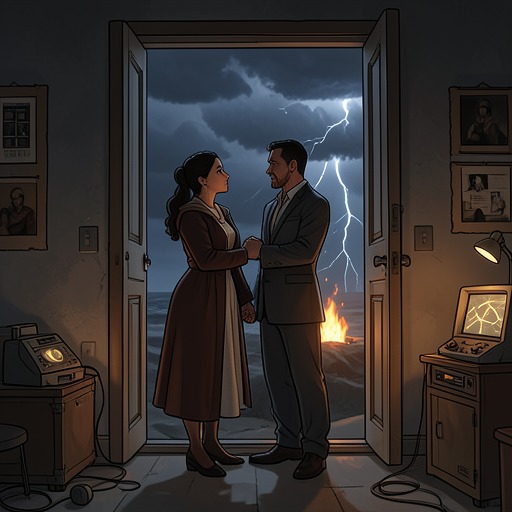
Decker later arrives at Cane Alexander’s home asking for his wife. Jada recognizes his voice immediately, and Cane confronts him. Cane tells Decker to leave and identifies Jada’s future as being with him; Decker leaves after warning Jada that he will not be available if she changes her mind. The confrontation gives physical form to the separation Decker had resisted, but it does not erase the emotional pressure of his return. Jada had kept the earlier call from Cane because she did not want to create trouble unnecessarily, a choice that becomes relevant when Decker appears in person.
Decker’s lasting influence is especially clear in Jada’s response to Cane’s periods of distance. After the confrontation, she notices Cane seeming busier and quieter, and fears that their relationship is changing in the way her marriage did. She later tells Heather that Decker’s gradual withdrawal was how the end began; Heather rejects the comparison, pointing out that Cane’s conduct, as Jada has described it, differs from Decker’s. Even so, Jada’s fear persists. When Cane’s secrecy and apparent withdrawal coincide with the danger surrounding Simon Powers and Ashley’s presence in Cane’s office, she explicitly connects those events to the pattern that preceded her marriage’s collapse.
Decker thus remains important less through sustained presence than through the expectations his behavior has left behind. Jada’s memories of intimidation, manipulation, and betrayal inform how she interprets new uncertainty, while her departure and later confrontations show her increasingly willing to defend the end of the marriage. The old photographs preserve the relationship’s earlier promise; the divorce dispute, unwanted contact, and doorstep confrontation show why that promise cannot simply be recovered. In the novel’s account of Jada rebuilding her life, Decker is both the person she left and the measure against which she fears repeating the past.