Family Bonds and Building a Family of One’s Own
The ExceptionFamily Bonds and Building a Family of One’s Own names a central tension in Cane’s reflections: family is both the blood relationship he has lost and a future source of belonging he may still create. His memories make the absence tangible, while his conversations with Jada begin to turn family from a condition inherited at birth into a possibility shaped by choice, change, and a shared future.
Family as Inheritance and Loss
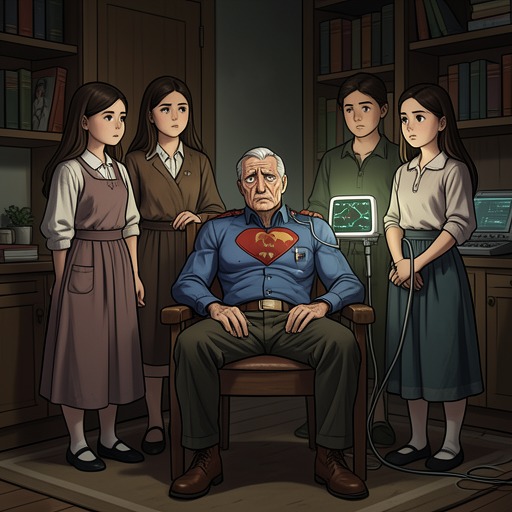
Cane explains that his grandmother called family the tie that binds, a phrase whose meaning became clear to him only after his father died. In his account, family is not merely a name or a group of relatives. It is a source of lasting attachment whose importance can become most apparent after it is gone. His grandmother’s expression gathers that attachment into an image of connection, but Cane’s loss gives the image its weight: the bond remains meaningful even when the people who formed it are no longer present.
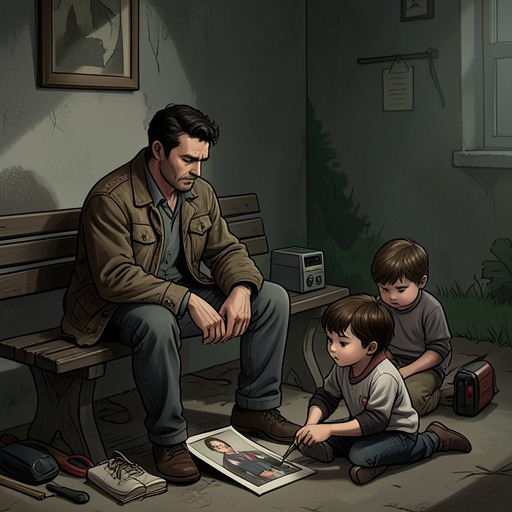
The absence is part of his ordinary life, not only an occasional recollection. Cane says he keeps busy with work and exercise, describing that routine as normal for him. Holidays, however, make the loneliness more pronounced. He can find a practical benefit in not having gifts to buy, but the joke does not erase what he misses. His account holds humor and grief together: the small relief is real, yet it sits beside the recognition that holidays once meant being surrounded by people who belonged to him.
Cane is invited to Max’s family gatherings, but their large, affectionate Southern family is not really his kind of setting. The invitation offers company without reproducing the particular security he associates with his own family. What he longs for is the assurance he remembers from his father: that someone would love him regardless of his mistakes. Cane describes that assurance as a safety net built by blood. The image clarifies why another family’s hospitality cannot simply replace his own; the missing bond was tied to a long history of being known and accepted.
The Alexander Name and Its Legacy
Cane’s attachment to family also carries a sense of inheritance through the Alexander name. When Jada suggests that he might have a family of his own someday, he responds by imagining that it would be a shame for the family name not to continue. His joking declaration that they are Alexanders draws on a saying from his grandfather, rather than presenting the thought as a solemn plan. Even so, the humor opens a serious subject: the possibility that a family legacy can extend beyond the people Cane has lost.
He explains that Grandpa Ben connected the surname with strength, saying that its Greek meaning made the Alexanders naturally stronger. In Grandpa Ben’s teaching, hardship was a reason to become stronger and add to the meaning of the name. Cane remembers this as one of his grandfather’s characteristic sayings, and he can laugh at its grandness without dismissing its place in the family’s memory. The name therefore carries two related inheritances: a story about endurance and a reminder of the people who taught it to him.
This legacy is not presented as a simple cure for bereavement. Cane’s recollection of his father and grandfather cannot restore them, and his thought about carrying on the name remains tentative. Instead, inherited language gives him a way to speak about strength and continuity at a moment when he is also acknowledging loneliness. Family history gives him a vocabulary for imagining what might continue, even as his memories make clear what cannot return.
From Getting Through Each Day to Imagining a Future
When Jada asks whether he has looked far into the future, Cane says he has rarely thought beyond the day in front of him unless work required it. That answer establishes how limited his usual horizon has been: each day was something to get through, rather than part of a deliberately imagined life. He has begun to think ahead in smaller increments, wondering what they will do in a few days or the following weekend, but he distinguishes those plans from the much larger prospect of five years from now.
Jada’s question gives that change a shape. Cane does not claim to have a settled long-term vision; he acknowledges that five years is different from a few days. The difference matters because the conversation makes room for a future not defined solely by work or immediate routine. His emerging short-range plans do not amount to a complete promise, but they mark a shift from treating the future as something beyond consideration to imagining time that he and Jada might spend together.
Jada, in turn, recalls a future she once pictured for herself: a home of her own with a white picket fence, a partner, and perhaps a family. She says that vision was overturned. The contrast places their uncertainties alongside one another without making them identical. Cane is only beginning to look beyond the day-to-day; Jada has already experienced the collapse of a particular expectation. Their conversation allows both the remembered plan and the unformed prospect to remain visible.
Change, Intimacy, and the Prospect of a New Family
Cane presents change as the reason Jada could have become part of his life. He says that he changed the way he lived and that, without that change, he would never have had her. He also tells her that she is the best thing that has happened to him, and she says she feels the same way. In this exchange, the possible family of the future is linked not just to preserving a surname but to a relationship that has already altered how Cane thinks about his life.
His account of contentment deepens that connection. Cane says he has not felt so content for a long time, probably not since his father died. The comparison does not equate Jada with his father or treat a new relationship as a replacement for family loss. Rather, it measures the depth of his present feeling against the last time he remembers comparable ease. When Jada asks about his father, Cane chooses to answer because he wants her to know him. He remembers his father as reliable, even-tempered, and exceptionally hardworking, and recalls that his father wanted him to commit himself to Alexander Industries.
Family Bonds and Building a Family of One’s Own therefore holds continuity and change in the same frame. Cane carries forward his grandmother’s image of family, his grandfather’s teaching about strength, and his memory of a father whose love offered security despite his mistakes. At the same time, Jada’s encouragement and their mutual expression of feeling make another kind of belonging imaginable. The evidence establishes this as a developing possibility rather than a completed family or settled five-year plan: its significance lies in Cane beginning to picture a future where, for much of his life, he had expected only to get through the present.