Jada Receives Decker’s Old Photos and Refuses to Reconcile
The ExceptionDecker’s unexpected parcel turns memories of his marriage to Jada into a test of whether the past still has a claim on her. The photographs preserve moments she once cherished, but his subsequent call exposes the familiar presumption that she will return. Jada’s refusal, the blocking of his number, and the fire in which she destroys the pictures mark a practical and emotional boundary: the marriage is over, and she intends to keep her life her own.
The Marriage Behind the Photographs
The parcel matters because Jada’s marriage to Decker had made leaving difficult long before the photographs arrived. His conduct alternated between ordinary gestures of companionship and episodes of anger and verbal degradation. Jada describes how that instability left her uncertain about what would happen next, while Decker used her fears about starting over, losing what they had built, and abandoning the prospect of a family to make her reconsider leaving. She had recognized that he was unfaithful, but suspicion alone had not ended the marriage; discovering the affair firsthand became the decisive rupture.
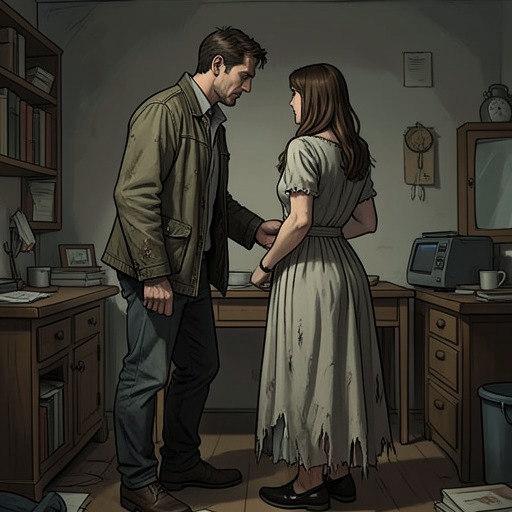
After that discovery, Jada moved her belongings out while Decker was at work and stayed with a friend, choosing a place she considered safer because the friend’s husband was a professional fighter. Decker responded inconsistently, alternating appeals for her return with hostility, and later contested the divorce. His conduct continued to intrude after the separation. In an earlier confrontation, Jada finally challenged the version of their marriage in which she had supposedly failed to make it work. She named the fear and repeated betrayal she had endured, then asserted that she was no longer his wife or anything else of his. The shift from absorbing his accusations to answering them directly establishes the change visible again in the photograph episode.
The Parcel and the Life It Recalls
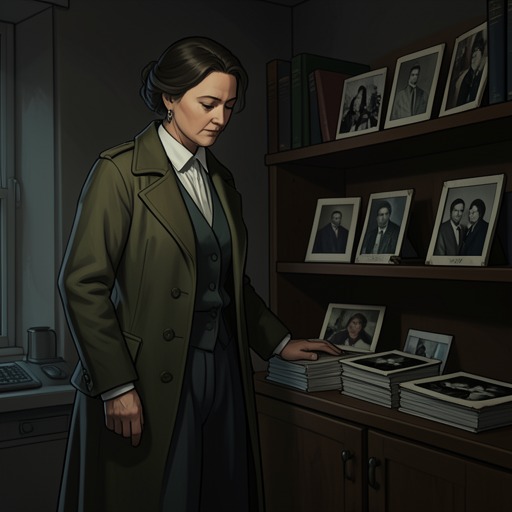
The photographs arrive while Kari is making dinner. She mentions that a box has come for Jada, although the plain package bears no sender’s name and Jada does not recognize it. Inside are pictures she had left in the back of Decker’s closet. Their contents trace different stages of the relationship: a college photograph at Tempe Town Lake Marina, a blurry image from their small wedding ceremony, and a picture of their first house in Boston, which they had chosen together on a rainy summer day. The pictures hold real markers of a shared life, not simply images of the marriage’s worst moments.
That history makes looking through them unsettling rather than straightforwardly nostalgic. Jada wonders whether the smiles in the old pictures reflect happiness as she once understood it, or whether Decker’s apparent warmth could coexist with deception. The uncertainty is sharpened by what she already knows about his infidelity. The images cannot settle what the marriage meant, and their familiar scenes do not erase the confusion that defined it. Instead, the parcel brings the contradiction back into view: a relationship capable of affectionate memories and of conduct that made Jada doubt those memories.
A note accompanies the photographs, and Jada reads it, but the note’s wording is not disclosed in the scene. What is clear is her response. She recognizes the same pattern she associates with Decker: an initially sweet approach that gives way to something less reassuring. Her comparison is with her present experience of Cane, whose steadiness has shown her a way of living without the same constant uncertainty. The contrast helps explain why the photographs can move her without persuading her to reconcile. Remembering a former happiness is not, for Jada, proof that returning would be right.
Refusing Decker’s Return
After the parcel, Jada answers Decker’s call while Kari watches. Decker has found Jada’s new number and treats the separation as if it were a temporary dispute that she should stop prolonging. Jada corrects that assumption: they are divorced, she does not want him calling, and he has no say over her life. When he turns the conversation toward Cane and suggests that Cane is influencing her, Jada rejects the comparison. She says that Cane’s character is evident in his actions, rather than something Decker can define for her.
The call shows that Decker’s attempt at contact has not restored his former authority. Jada’s anger and shaking hand indicate that the exchange affects her, but she does not soften her boundary to manage his reaction. She ends the call, and when his name appears again on the phone, she lets it ring out before turning the device off. Kari helps her block the number. Jada recognizes that this blocks him from that number, at least; the action is a concrete limit on access, not a claim that every possible route has been closed.
Burning the Photographs
With the box still in view, Jada asks Kari for matches and suggests a fire on the patio. The choice converts the parcel’s emotional pressure into a decisive action. The next morning, Cane notices the smell of smoke and asks what the fire was about. Jada tells him that she burned things from her life before and does not explain that Decker’s photographs were among them. She believes that Decker is not a threat to Cane and expects Cane to overreact, so she keeps the details to herself rather than inviting another source of conflict into an already painful history.
The photographs therefore end not in reconciliation but in destruction, while the effects of the fire briefly remain on Jada: Cane still detects the smoke, and she tries to wash its smell away before they go out. The act does not mean the memories were unreal or that Jada can erase what happened. It expresses a decision about what she will carry forward. Decker’s parcel brings back the shared milestones; his call repeats the pressure to return; Jada’s refusal and the fire answer both. The episode makes separation more than a legal fact: it becomes a boundary she actively maintains.